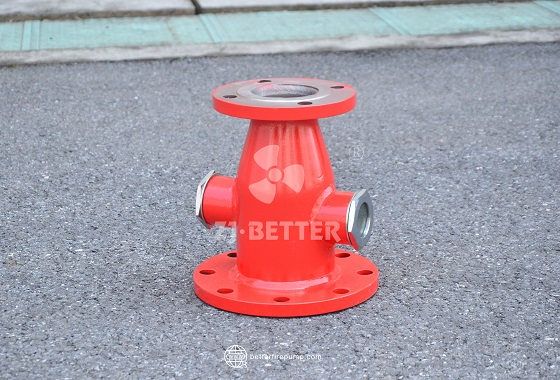
Automatic Fire Exhaust Component for Complex Fire Pipeline Efficiency
Automatic exhaust components for fire protection systems offer advantages such as automatic exhaust, stable pressure supply, high reliability, and energy-saving operation, and are widely used in high-rise buildings, industrial fire protection, and complex fire protection piping systems.
In modern fire protection engineering, the stability of the fire water supply system directly determines the fire extinguishing efficiency and overall fire safety level during a fire. With the rapid development of high-rise buildings, large commercial complexes, underground spaces, industrial parks, and smart city projects, fire pipeline structures are becoming increasingly complex. Traditional fire water supply systems, under conditions of long-distance water transport, pressure differences in elevation, and complex pipeline layouts, often experience problems such as air retention, pressure fluctuations, unstable water flow, and localized air blockages. These problems not only reduce fire water supply efficiency but may also affect the normal operation of sprinkler systems, fire hydrant systems, and fire monitor systems, and even cause water supply delays during emergency firefighting. To effectively solve the problems of air accumulation and water supply stability in complex fire pipelines, automatic air venting components for fire protection systems have gradually become an indispensable auxiliary device in modern fire water supply systems. These devices effectively improve fire water supply efficiency and system reliability by automatically expelling air from inside the pipelines, stabilizing system pressure, and optimizing water flow, providing more stable, safe, and efficient operational guarantees for modern building fire protection engineering.
The core function of automatic air venting components for fire protection systems is to automatically remove air from fire pipelines. During the operation of fire-fighting water supply systems, air continuously enters the network due to pipe filling, evacuation during shutdown, pressure changes, and external environmental influences. If this air cannot be expelled in time, it can easily form air pockets at high points or in localized areas, obstructing normal water flow. Especially in large fire-fighting networks and high-rise building systems, air accumulation can lead to localized pressure drops and even water flow interruptions. Automatic air venting components, through their internal float structure and automatic control principles, can quickly open venting channels to expel air when it accumulates, and automatically close the valves once water flow returns to normal, thus maintaining a continuous and stable water supply within the fire-fighting system. This automatic air venting capability effectively avoids airlock phenomena and improves the overall water supply efficiency of the fire-fighting system.
In modern fire-fighting engineering, water supply stability is crucial for fire-fighting efficiency. Automatic air venting components in fire-fighting systems can effectively reduce pressure fluctuations in the fire-fighting network. When air accumulates inside pipes, it causes irregular vibrations and pressure changes in the water flow, and in severe cases, may even trigger water hammer, causing impact damage to fire-fighting pipes and equipment. Automatic air venting assemblies continuously release air from the system, maintaining a stable full water level within the piping network and reducing water flow fluctuations and pressure surges. Stable pressure supply not only improves the uniformity of sprinkler system spraying but also ensures that fire hydrant and fire monitor systems can quickly establish a stable water supply during a fire, buying valuable time for firefighting.
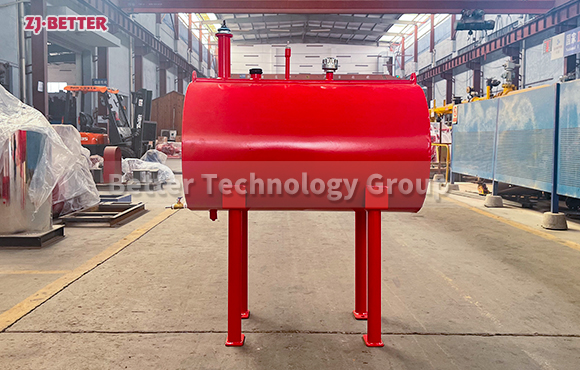
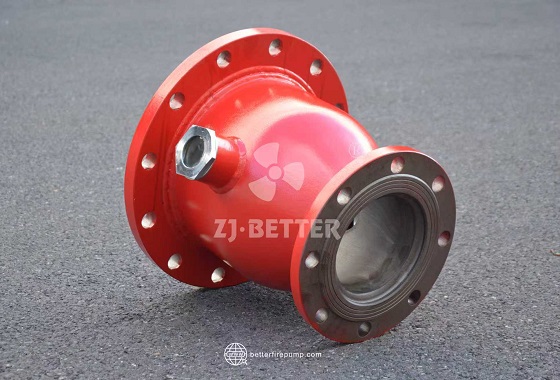
Automatic air venting assemblies for fire protection systems employ a high-efficiency structural design with optimized internal flow channels, maintaining stable venting performance under various operating conditions. The equipment typically uses a large-diameter design, allowing air to be quickly expelled without affecting normal water flow. Simultaneously, key internal components are made of wear-resistant and corrosion-resistant materials, enabling long-term operation under high humidity, high pressure, and complex fire protection environments. Even under high-frequency operation and complex conditions, the equipment maintains stable venting efficiency and good sealing performance. This high-efficiency operation effectively reduces system failure rates and improves the overall reliability of the fire water supply system.
Modern fire protection engineering demands increasingly higher levels of equipment automation; therefore, automatic air venting assemblies for fire protection systems typically possess fully automated operation capabilities. The equipment automatically opens and closes based on changes in air volume within the pipeline without manual intervention, continuously managing air venting during normal operation of the fire protection system. Some advanced units can also be linked with the fire control system for remote monitoring and operational status feedback. Management personnel can view the equipment’s operating status and pipeline pressure changes in real time through the control platform, promptly identifying and addressing any anomalies. This intelligent operation mode not only improves the efficiency of fire protection system management but also reduces the workload of manual inspections and maintenance costs.
Automatic air venting components for fire protection systems are highly adaptable to modern, complex fire protection pipeline networks. Whether it’s a high-rise building fire protection system, an underground integrated pipe gallery, an industrial plant fire protection pipeline network, or a large commercial complex fire protection system, the equipment can be flexibly configured according to different operating conditions. Especially in long-distance water supply systems and fire protection projects with significant elevation differences, the problem of air accumulation is more pronounced. Automatic air venting components can achieve efficient air venting through appropriate installation locations, significantly improving the overall water supply operation of the pipeline network. For large-scale industrial fire protection projects, its ability to stabilize pressure and reduce water hammer impact effectively protects the fire protection pipeline network and equipment.
In terms of energy conservation and environmental protection, automatic air venting components for fire protection systems also have significant advantages. Traditional fire protection systems, due to air accumulation and pressure fluctuations, often require fire pumps to operate at high loads for extended periods to maintain stable pressure. This not only increases energy consumption but also accelerates equipment wear. Automatic air venting components, on the other hand, optimize water flow, reduce pipe network resistance and pressure loss, thereby lowering the operating load of fire pumps and improving overall energy efficiency. The equipment achieves automatic air venting without additional power, resulting in extremely low operating energy consumption, which aligns perfectly with the development trends of modern green buildings and energy-saving fire protection engineering.
Durability is another key advantage of automatic air venting components for fire protection systems. Since fire protection systems are often in standby mode but must ensure immediate and reliable operation in emergencies, the equipment must possess extremely high reliability and durability. Automatic air venting components are typically manufactured using high-strength cast steel or ductile iron structures, combined with anti-corrosion coatings and precision machining processes, enabling them to withstand complex fire protection environments for extended periods. Internal floats and sealing components undergo rigorous testing to maintain stable performance under high pressure and high-frequency operating conditions. Even during long-term operation, the equipment maintains good air venting and sealing performance, thereby improving the overall safety of the fire protection system. Modern fire protection system automatic exhaust assemblies offer high convenience in installation and maintenance. Their compact structure and small footprint allow for flexible installation at high points in fire pipelines, pump room outlets, and critical water supply nodes. Installation requires no complex commissioning, enabling rapid deployment and significantly reducing on-site construction difficulties. Furthermore, their simple and rational internal structure facilitates subsequent maintenance, allowing management personnel to quickly complete routine inspections and parts replacements. This convenient installation and maintenance model effectively reduces construction costs and subsequent maintenance expenses, improving the overall operational efficiency of the fire protection system.
With the continuous development of smart fire protection and digital building technologies, automatic exhaust assemblies for fire protection systems will be further upgraded towards intelligence in the future. Future equipment will integrate the Internet of Things, big data analytics, and remote monitoring technologies to achieve more precise pressure monitoring and exhaust control. Through real-time data acquisition and intelligent analysis, the system can predict pipeline anomalies in advance and automatically adjust exhaust strategies, thereby further improving the stability and safety of the fire water supply system. Combined with modern smart building management platforms, automatic exhaust assemblies will become an important component of future digital fire protection systems.
From a practical application perspective, automatic air venting components for fire protection systems have been widely used in fire protection projects such as high-rise buildings, commercial complexes, industrial parks, underground spaces, airports, hospitals, schools, and large-scale warehousing and logistics centers. In these complex fire protection environments, the equipment effectively solves problems such as air accumulation, unstable water flow, and pressure fluctuations, improving the overall operational efficiency and safety level of the fire protection system. Especially in large-scale industrial fire protection projects and long-distance water supply systems, its role in stabilizing pressure and preventing water hammer is even more significant, providing crucial technical support for modern fire protection engineering construction.
Overall, automatic air venting components for fire protection systems, with their advantages of automatic air venting, efficient pressure stabilization, energy-saving operation, and high reliability, have become an indispensable and important piece of equipment in modern complex fire protection pipe networks. They not only significantly improve fire water supply efficiency and system stability but also reduce equipment wear, lower operating costs, and enhance overall fire safety levels. With the continuous expansion of modern building scale and the ongoing development of smart fire protection technologies, automatic air venting components will play an even more important role in future fire protection system construction, providing more efficient, safe, and intelligent operational guarantees for fire water supply systems in industrial, commercial, and public buildings.