Deep-Well Fire Water Supply Pump with Long Shaft Drive and Multistage Head Options
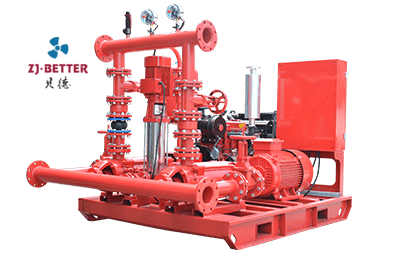
The deep-well fire-fighting water pump features a vertical long-shaft drive and an optional multi-stage impeller configuration, making it suitable for deep wells, fire-fighting reservoirs, rivers, and large-scale water storage facilities. It can be configured based on flow rate, head, water source depth, and drive method, offering a professional water supply solution for industrial complexes, energy facilities, and large-scale fire protection systems.
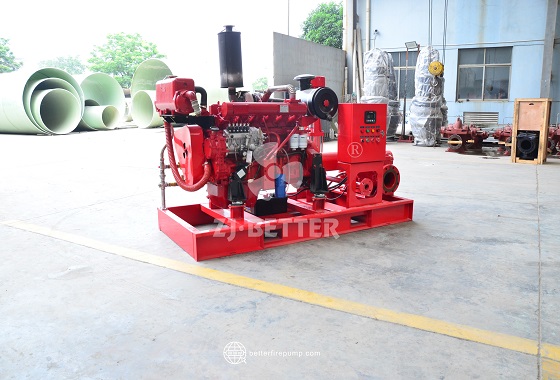
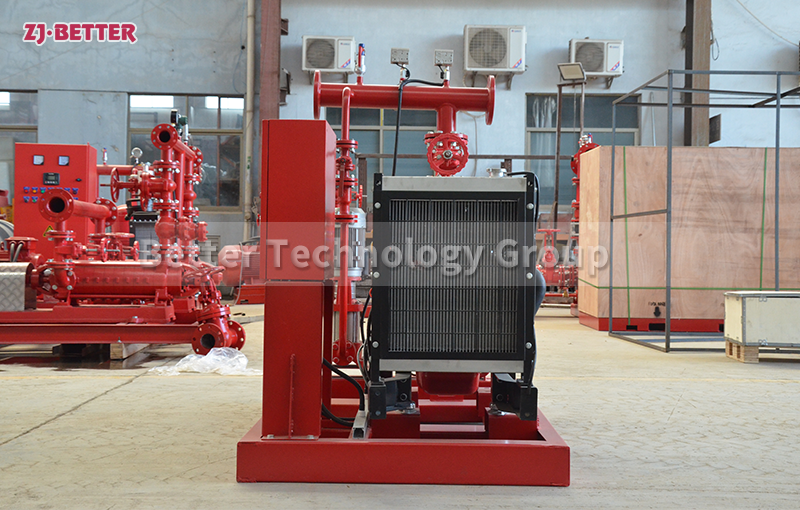
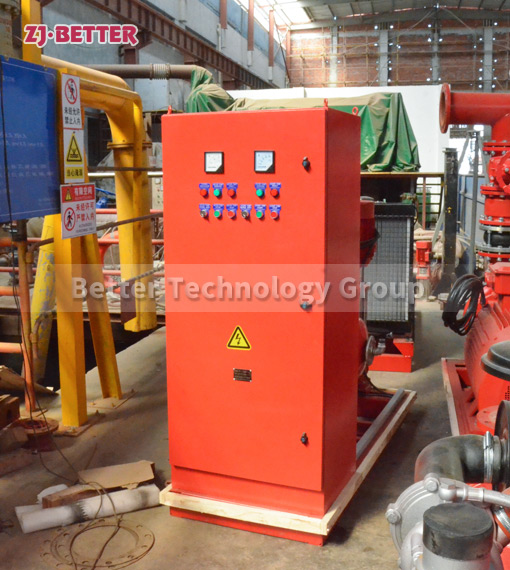
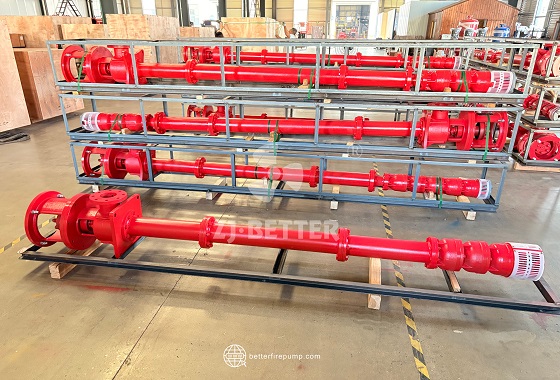
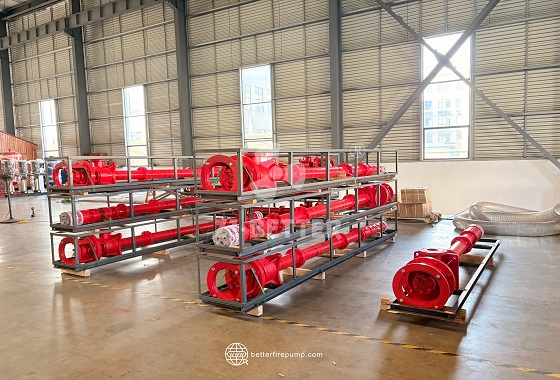
Deep-well fire water supply pumps are specialized units designed for water sources such as deep wells, fire water reservoirs, rivers, lakes, and large-scale water storage facilities. For large industrial complexes, logistics centers, energy facilities, and infrastructure projects, factors such as the location, depth, and supply distance of the fire water source significantly influence the overall configuration of the fire protection system. These pumps feature a unique vertical long-shaft design: the drive unit is positioned above ground or above the water source, transmitting power via a long shaft to the submerged impeller. This allows the pump assembly to extend to the appropriate intake depth, thereby meeting fire water extraction and delivery requirements under challenging source conditions. Compared to conventional horizontal fire pumps, this configuration offers distinct advantages in deep-water extraction, vertical space utilization, and installation adaptability—making it particularly suitable for projects requiring continuous fire water supply from deep sources. The long-shaft transmission system is a core component of the pump. During operation, the drive unit rotates the long shaft, which in turn drives the submerged impeller; this draws water into the pump body and conveys it upward through the flow-guiding structures and column pipes. Careful design of the shaft length, bearing supports, and connection mechanisms allows the equipment to adapt to varying water source depths and installation environments. Positioning the pump body and impeller deep underwater facilitates extraction from deep wells and reservoirs, while the above-ground drive unit allows for convenient daily inspections, operational monitoring, and maintenance. This split-level configuration maximizes vertical space utilization, offering greater flexibility in equipment layout for fire protection projects with limited pump room space or unconventional water source locations. Regarding hydraulic performance, the impeller converts mechanical energy into the kinetic and pressure energy of the water flow, while flow-guiding components direct the water along the designed flow path. For fire protection systems requiring high discharge heads, a multi-stage impeller configuration can be employed; multiple impellers progressively increase the water’s energy to meet the pressure and flow capacity requirements of the piping network. These product series offer various configurations regarding flow rate, head, and rotational speed; the standard product range covers flow rates of approximately 5–1,800 m³/h and total heads of 20–234 meters, with specific performance determined by the selected model and operating conditions. Selection for a project requires a comprehensive assessment of the design flow rate for fire protection, required head, pipeline resistance, minimum water source level, installation depth, and drive power to ensure the pump unit’s operating point aligns with the fire protection system’s actual needs. Drive mechanisms for deep-well fire pumps can be tailored to project conditions, ranging from direct vertical motor drives to configurations connecting horizontal motors or diesel engines via belts or gearboxes. As different drive types entail varying installation space, maintenance requirements, and energy needs, the choice must be based on on-site power availability, equipment layout, and project design. Material selection should also be appropriate for the water quality and operating environment; for water sources with high sand content, corrosion risks, or unique water chemistry, the suitability of materials for components such as impellers, pump casings, shafts, bearings, and column pipes must be carefully evaluated to avoid using standard configurations for specialized media. An optimal combination of structure and materials enhances the equipment’s compatibility with actual operating conditions. With capabilities such as deep-water intake, long-shaft power transmission, multi-stage head configurations, and flexible drive options, vertical turbine fire pumps are suitable for large-scale factories, energy projects, port facilities, warehousing complexes, and fixed fire protection systems utilizing deep wells or large reservoirs as water sources. These pumps prioritize the coordination of pump structure, hydraulic performance, drive mechanisms, and on-site installation conditions, rather than focusing solely on individual flow or head metrics. Through professional selection, proper installation, and regular maintenance, deep-well fire pumps ensure reliable water delivery and pressure support for fire protection networks, establishing a robust fire water supply configuration for the project. Prior to procurement, it is recommended to verify the water source depth, minimum operating water level, design flow rate, target head, drive method, and water quality, and to finalize the model selection based on specific performance curves and project fire protection design requirements.