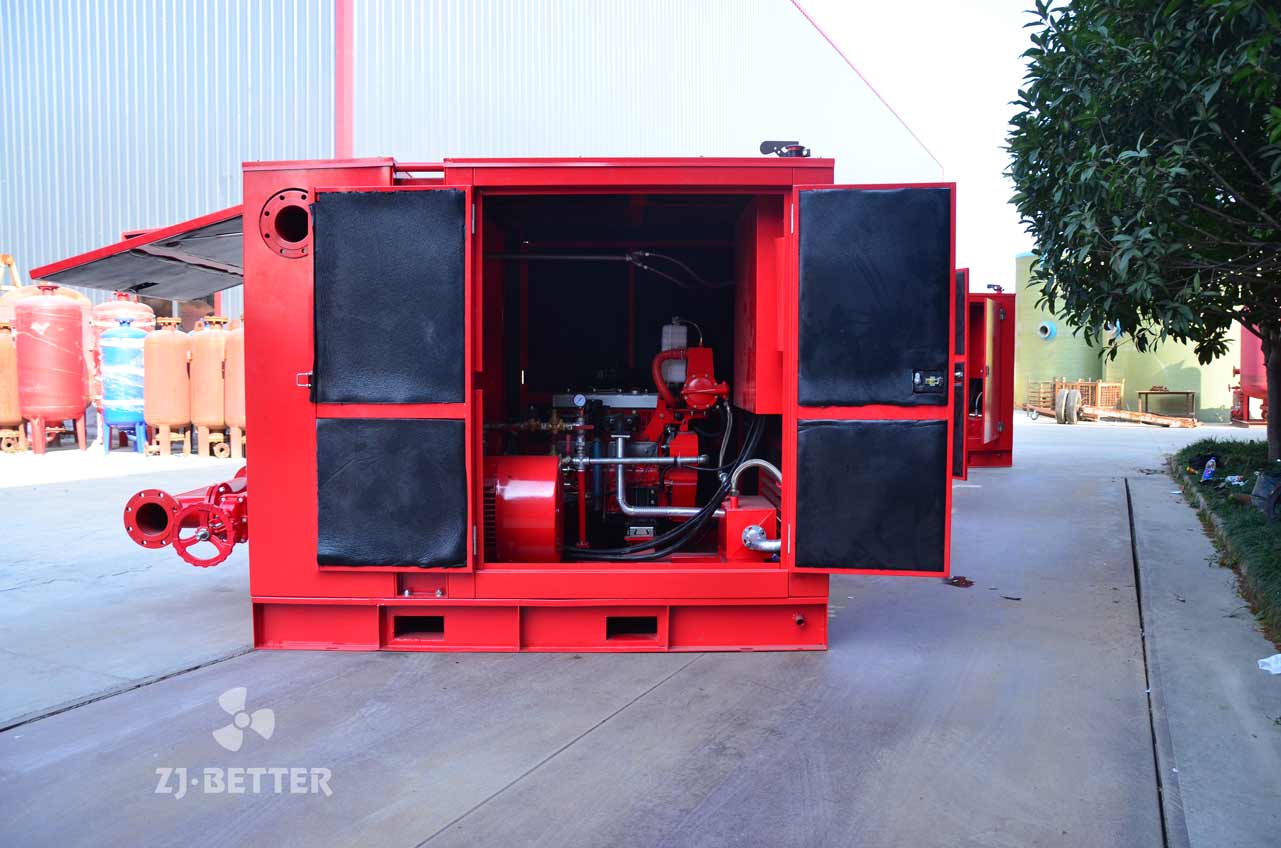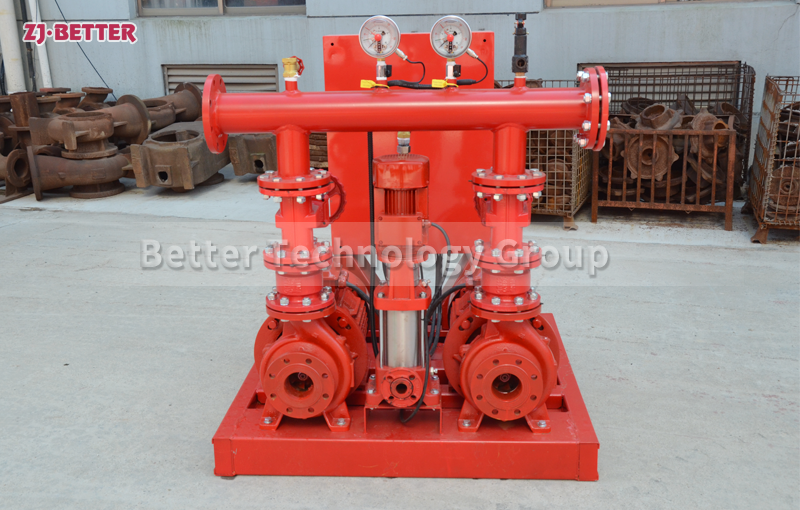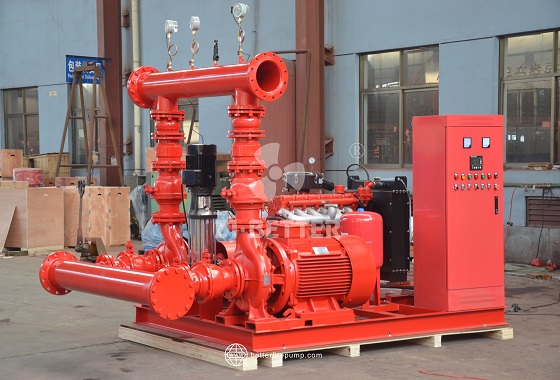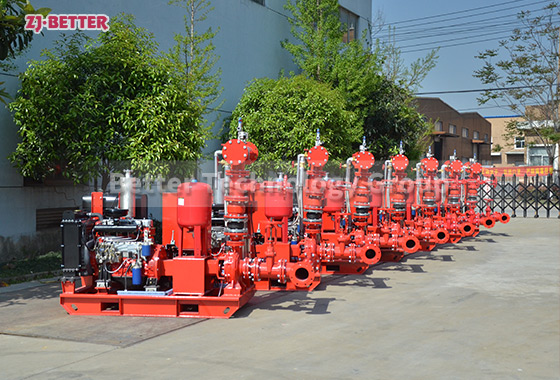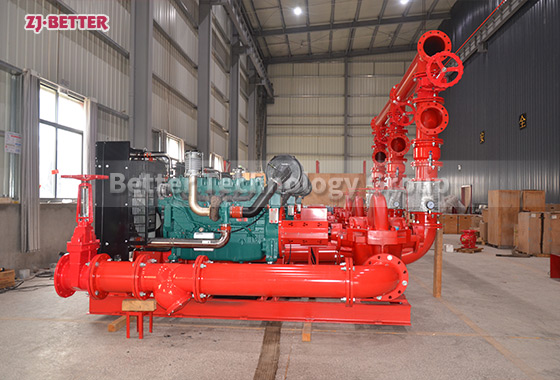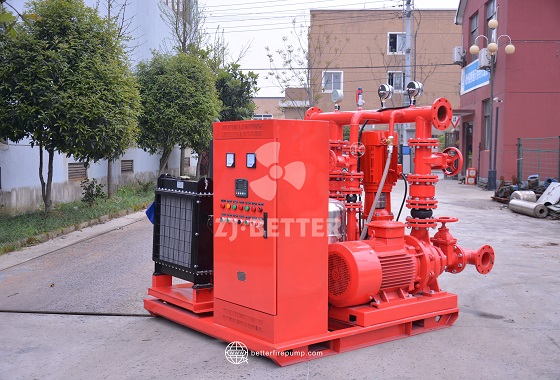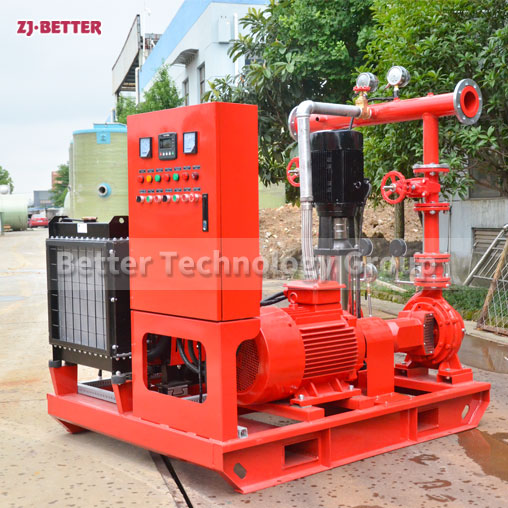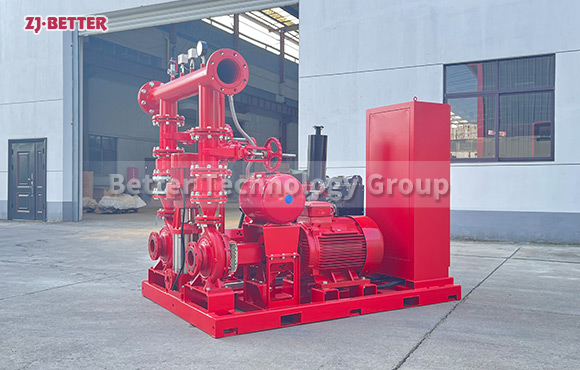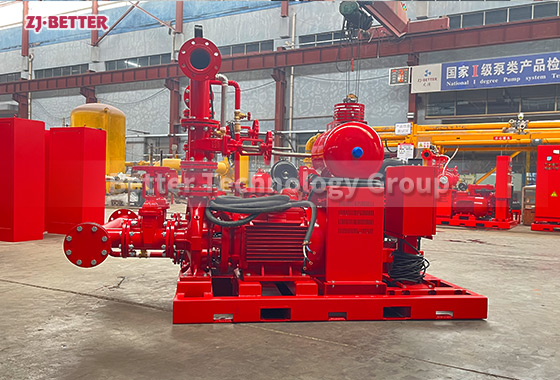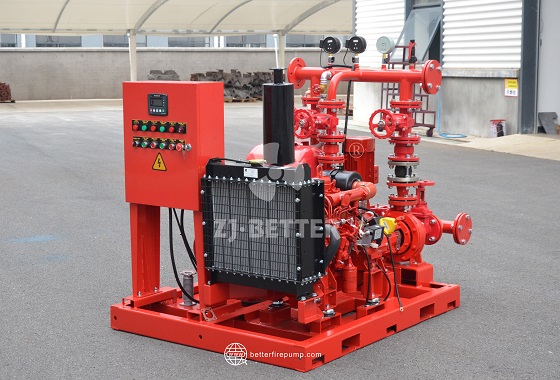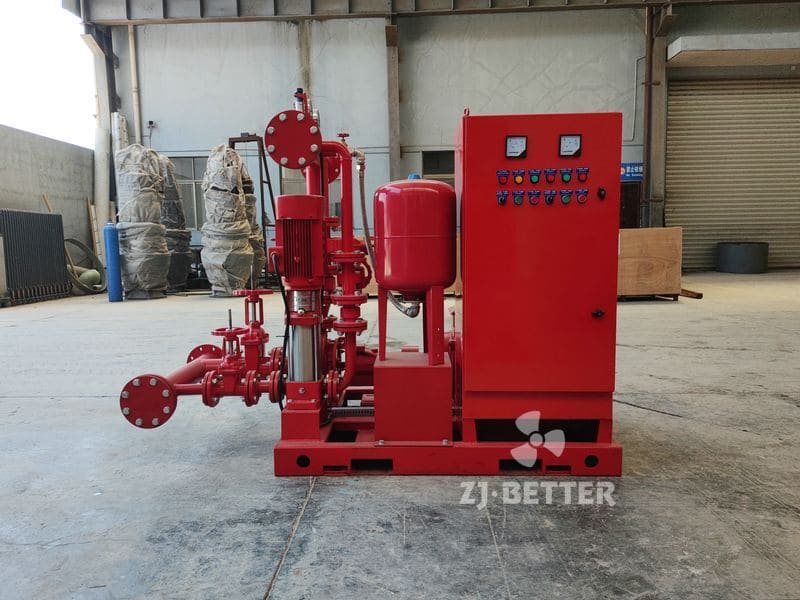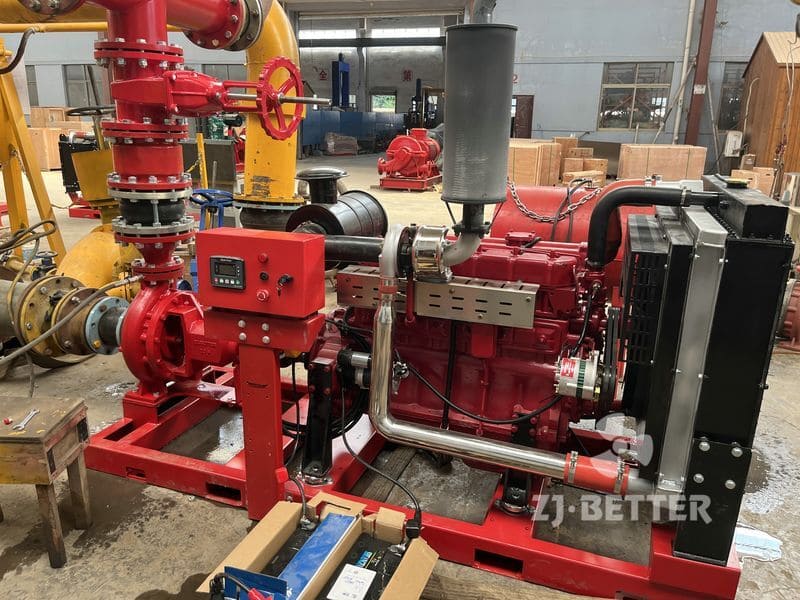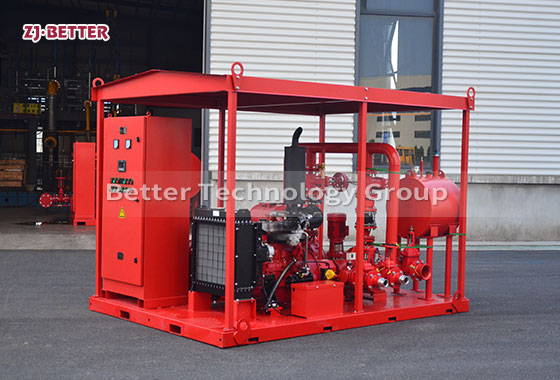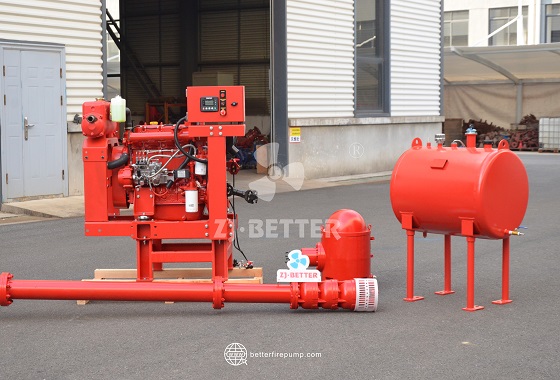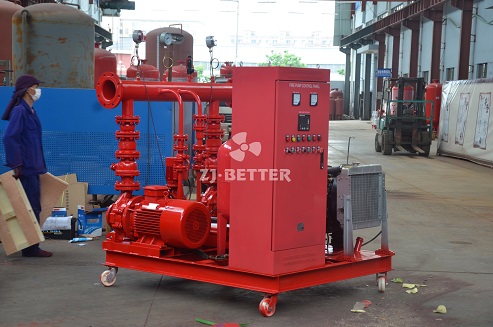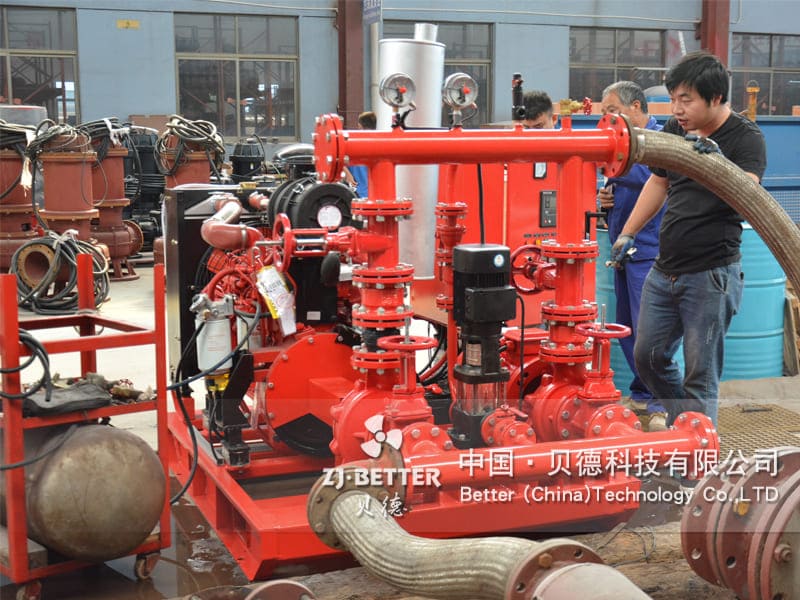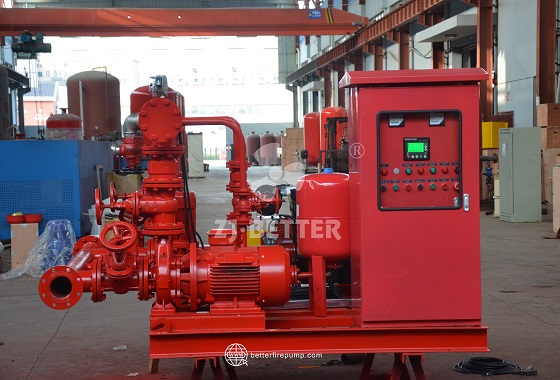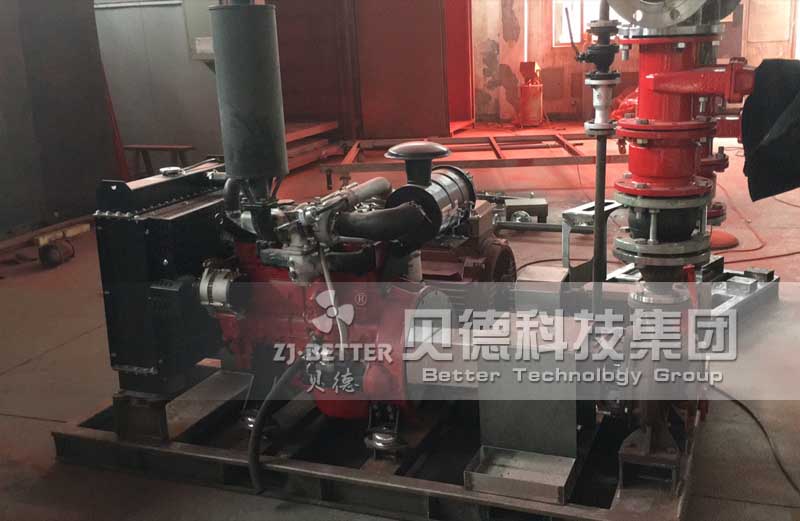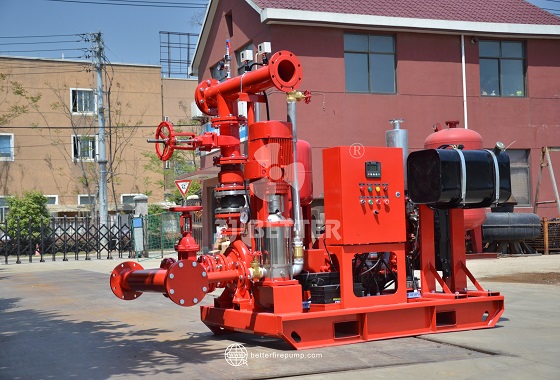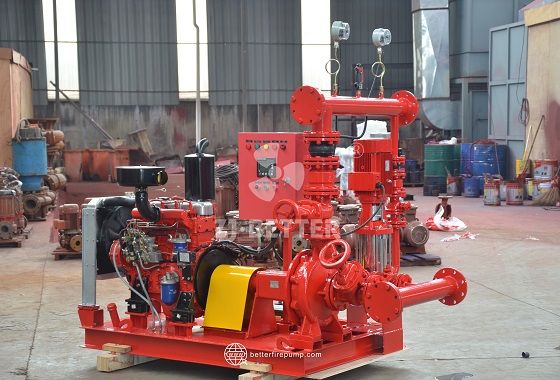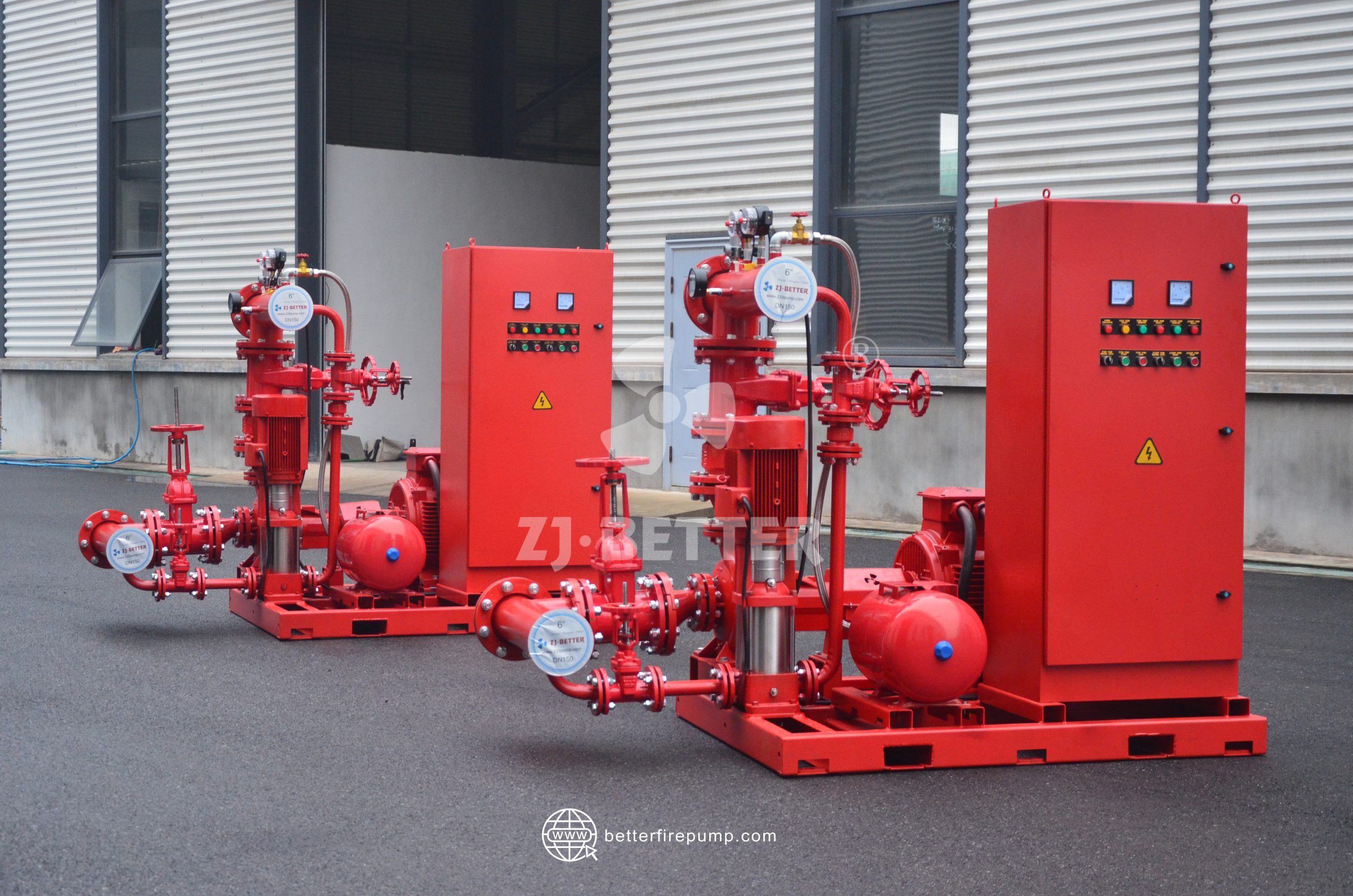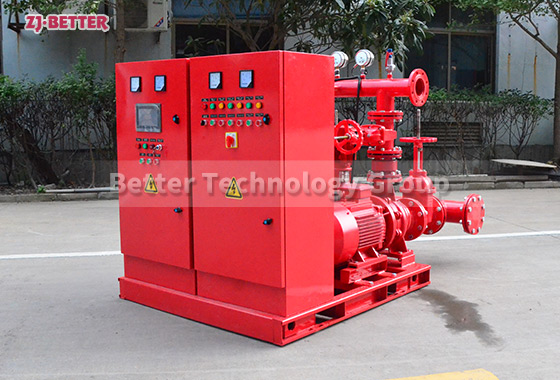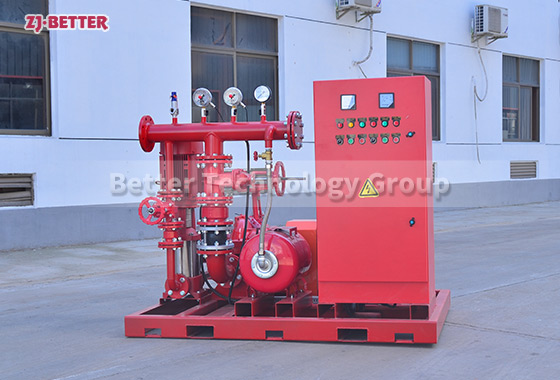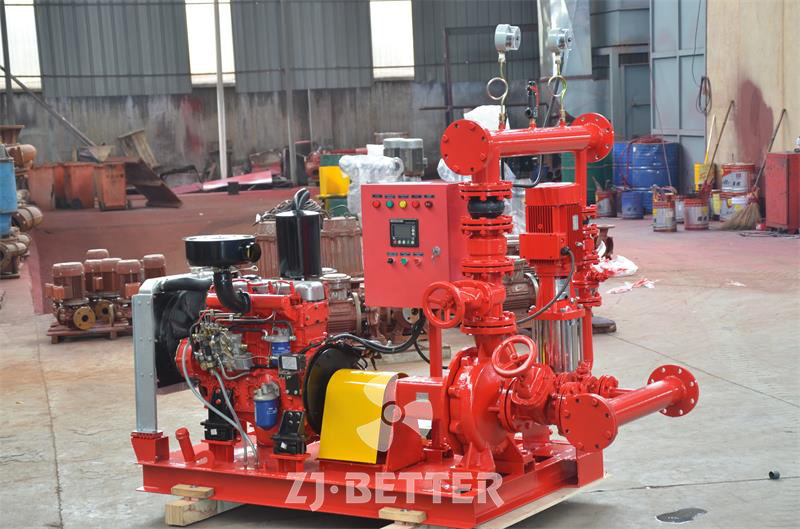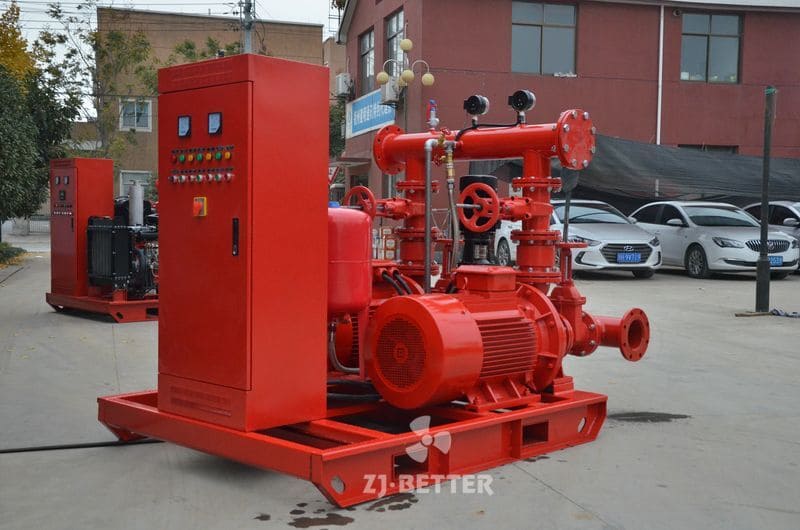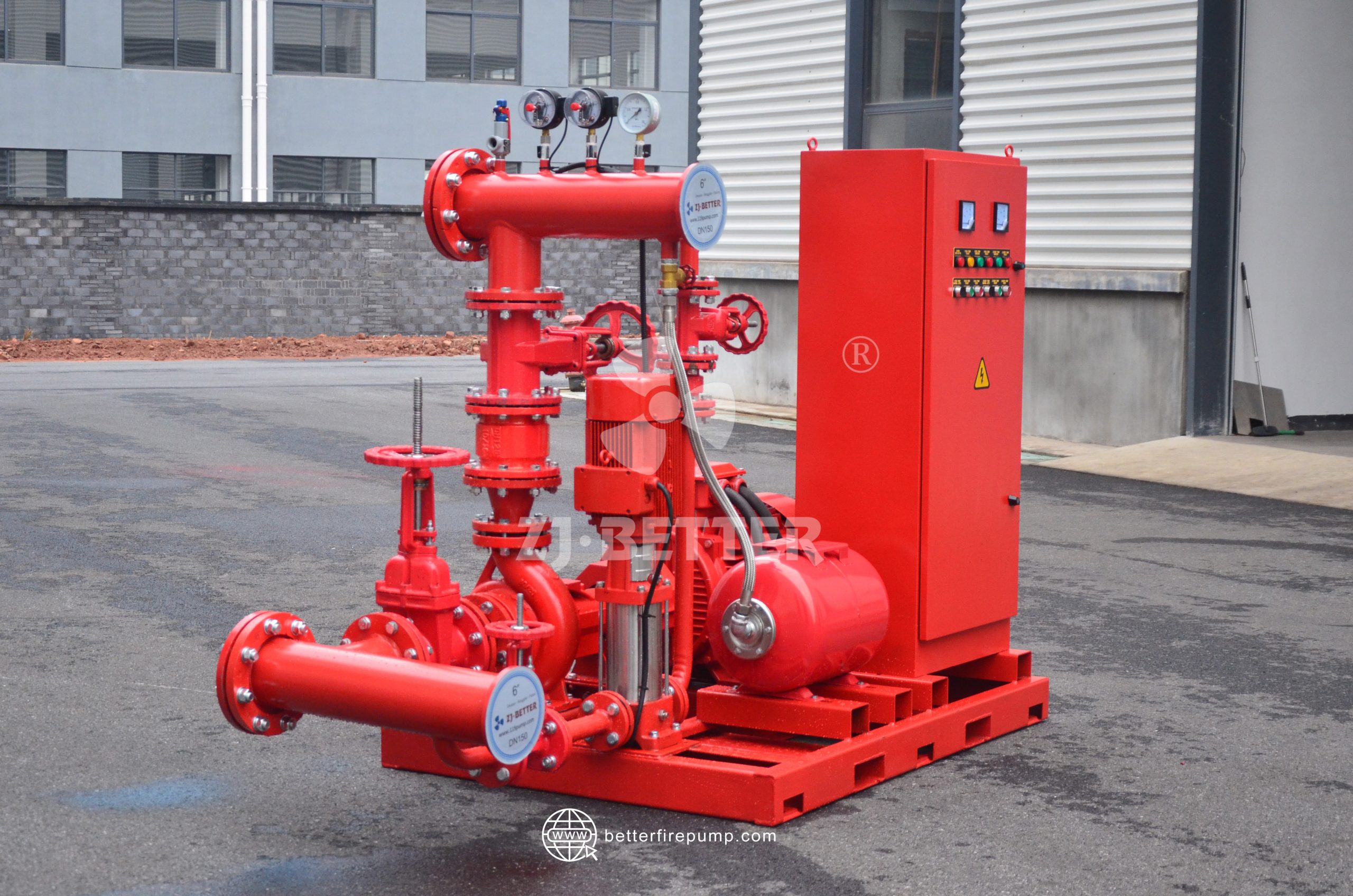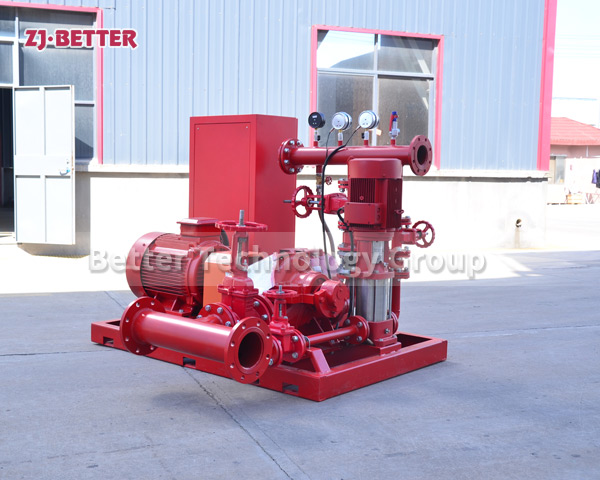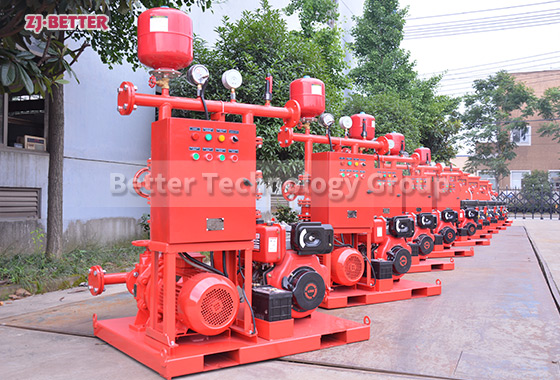


Compact Fire Jockey Pump System for Commercial Building Fire Protection Systems is an essential auxiliary component designed to maintain stable pressure within fire protection pipeline networks and ensure that fire safety systems remain ready for immediate operation at any time. In modern commercial buildings such as shopping malls, office towers, hotels, hospitals, residential complexes, exhibition centers, airports, and other densely populated structures, maintaining a stable and reliable fire water supply is critical for protecting human life and property. Fire protection systems in these buildings often include extensive networks of pipelines connected to sprinkler systems, fire hydrants, and other firefighting equipment. However, over time small pressure fluctuations may occur within the pipeline network due to minor leaks, temperature variations, valve seepage, routine inspections, or system testing activities. Without an effective pressure maintenance solution, these small pressure drops could trigger the main fire pump to start repeatedly, leading to unnecessary wear, higher energy consumption, and reduced service life of the main firefighting equipment. The compact fire jockey pump system is specifically designed to address this issue by maintaining constant pressure within the fire pipeline network, ensuring that the main fire pump only activates when a genuine fire emergency occurs. This compact and highly efficient system typically consists of a pressure maintenance pump, an electric motor, a pressure tank, a control panel, pressure sensors, valves, and a rigid base frame that integrates all components into a single reliable unit. The compact structural design allows the system to be installed conveniently within fire pump rooms where space may be limited, making it particularly suitable for commercial buildings where equipment layout must be carefully optimized. Despite its compact size, the system delivers excellent performance and reliability, providing continuous pressure stabilization for the entire fire protection network. The working principle of the fire jockey pump system is based on precise pressure monitoring and automatic operation. Pressure sensors installed in the fire pipeline network constantly measure the system pressure and transmit data to the intelligent control panel. When the pressure drops slightly below the preset threshold due to minor water loss or system fluctuations, the jockey pump automatically starts and pumps water into the pipeline network to restore the pressure to the required level. Once the pressure reaches the preset value, the pump stops automatically, ensuring that the pipeline remains properly pressurized while minimizing energy consumption. This automatic pressure maintenance process occurs smoothly and quietly, allowing the system to operate efficiently in the background without disrupting building operations. One of the primary advantages of a compact fire jockey pump system is its ability to significantly reduce the operational stress on the main fire pumps. Main fire pumps are designed to deliver very large water flow and high pressure during actual firefighting situations, and frequent start and stop cycles caused by minor pressure fluctuations can lead to premature wear of mechanical components and increased maintenance costs. By maintaining stable pipeline pressure at all times, the jockey pump prevents unnecessary activation of the main fire pumps, thereby extending their service life and improving the overall reliability of the fire protection system. This protective function is particularly valuable in commercial buildings where fire protection systems must remain operational for many years with minimal interruption. The hydraulic performance of the jockey pump is carefully engineered to achieve precise pressure control while maintaining energy efficiency. The pump uses an optimized impeller and volute design to ensure smooth water flow and stable pressure output. High precision manufacturing techniques ensure that the pump operates with minimal vibration and noise, which is especially important in commercial buildings where equipment rooms may be located close to occupied spaces. The efficient hydraulic design also allows the pump to deliver accurate pressure adjustments using relatively small water flow rates, which helps reduce energy consumption and operational costs. The electric motor used in the compact fire jockey pump system is selected for its high efficiency, reliability, and long service life. The motor provides sufficient power to maintain the required pressure within the fire pipeline network while consuming minimal electricity during operation. Advanced insulation and cooling technologies ensure stable motor performance even during continuous operation over long periods. This reliable motor design ensures that the jockey pump can perform consistently in demanding building environments where uninterrupted operation is essential for maintaining fire safety readiness. Another important feature of the compact fire jockey pump system is its intelligent control panel, which provides automatic monitoring and management of system operations. The control panel includes pressure indicators, operation status lights, alarm indicators, and manual control options that allow operators to monitor system conditions easily. The pressure settings can be adjusted according to the specific requirements of the fire protection system, allowing the equipment to adapt to different building sizes and pipeline configurations. In addition to automatic operation, the system can also be operated manually for maintenance or testing purposes. Safety protection features integrated into the control panel help prevent damage to the pump and electrical components by automatically shutting down the system in case of abnormal conditions such as motor overload, phase loss, or excessive pressure. These protective mechanisms ensure safe and reliable operation of the equipment under all circumstances. The pressure tank integrated into the system also plays an important role in maintaining stable pressure within the pipeline network. The tank acts as a buffer that absorbs small pressure fluctuations and reduces the frequency of pump start and stop cycles. This buffering effect improves the efficiency of the pressure maintenance process while reducing mechanical stress on the pump and motor components. The pressure tank is constructed from high strength materials capable of withstanding high internal pressure, and it is equipped with safety valves and pressure gauges to ensure safe operation. Durability and corrosion resistance are also key design considerations for the compact fire jockey pump system. Fire pump rooms and equipment areas may be exposed to humidity, temperature variations, and occasional water contact, so the pump components are manufactured using materials that provide excellent resistance to corrosion and wear. Protective coatings applied to the pump casing, piping, and structural frame help extend the service life of the equipment and maintain reliable performance even in challenging environmental conditions. The structural base frame supporting the entire system is constructed from heavy duty steel to provide stability during operation and to simplify installation. The integrated design ensures that all components remain securely aligned, reducing vibration and improving overall system reliability. Installation and maintenance convenience is another important advantage of the compact fire jockey pump system. Because the system is pre assembled and mounted on a single base frame, it can be transported, installed, and commissioned quickly, reducing installation time and labor requirements. The layout of components such as the pump, motor, pressure tank, and control panel is arranged to provide easy access for inspection and maintenance. Routine servicing tasks such as checking electrical connections, inspecting valves, or replacing components can be performed quickly without disassembling the entire unit. This user friendly design reduces maintenance costs and ensures that the fire protection system remains operational with minimal downtime. In commercial building fire protection systems, maintaining stable pipeline pressure is critical for ensuring that sprinkler systems and fire hydrants can deliver water immediately when activated. When a fire emergency occurs, the main fire pump must start quickly and deliver large volumes of water to suppress the fire effectively. If the pipeline network is not properly pressurized beforehand, the response time of the firefighting system may be delayed. The compact fire jockey pump system ensures that the pipeline network always remains pressurized and ready for immediate use, thereby improving the response speed and effectiveness of the entire fire protection system. This reliability is essential for protecting occupants and minimizing property damage during fire emergencies. The compact fire jockey pump system can also be integrated with larger fire pump stations that include electric fire pumps, diesel engine fire pumps, and backup water supply systems. In these installations, the jockey pump serves as the first line of pressure maintenance, while the main fire pumps remain on standby for emergency firefighting operations. This coordinated system design ensures that each component performs its specific function efficiently, creating a comprehensive and highly reliable fire protection infrastructure for modern buildings. As commercial buildings continue to grow in size and complexity, the demand for reliable fire protection systems continues to increase. The compact fire jockey pump system provides a practical and efficient solution for maintaining stable pressure in fire pipeline networks, ensuring that firefighting equipment remains ready for immediate operation at any time. By combining precise pressure control, energy efficient operation, durable construction, intelligent control technology, and convenient installation design, this system offers outstanding reliability and performance for commercial building fire protection systems. Through continuous pressure maintenance and protection of main fire pumps from unnecessary operation, the compact fire jockey pump system plays a vital role in enhancing the overall efficiency, durability, and safety of modern fire protection infrastructure, ensuring that buildings and their occupants remain protected against fire hazards at all times.
Home » Fire Pump Set » Compact Fire Jockey Pump System for Commercial Building Fire Protection Systems
Compact Fire Jockey Pump System for Commercial Building Fire Protection Systems
Compact fire jockey pump system designed for commercial building fire protection systems. Maintains stable pipeline pressure, prevents frequent main pump startup, and ensures reliable fire water supply. Features automatic pressure control, energy-efficient operation, durable structure, and stable performance for sprinkler and hydrant fire protection networks.
Contact US
Get Price
Share:
Content
Inquiry
More Fire Pump Set