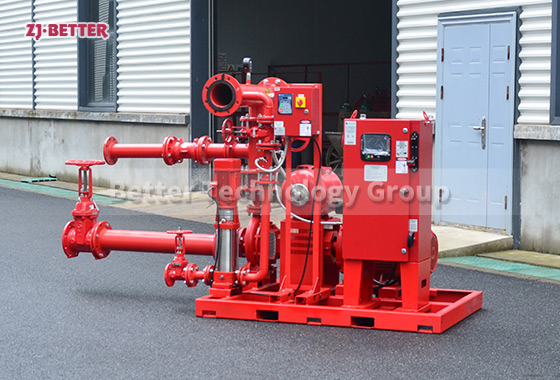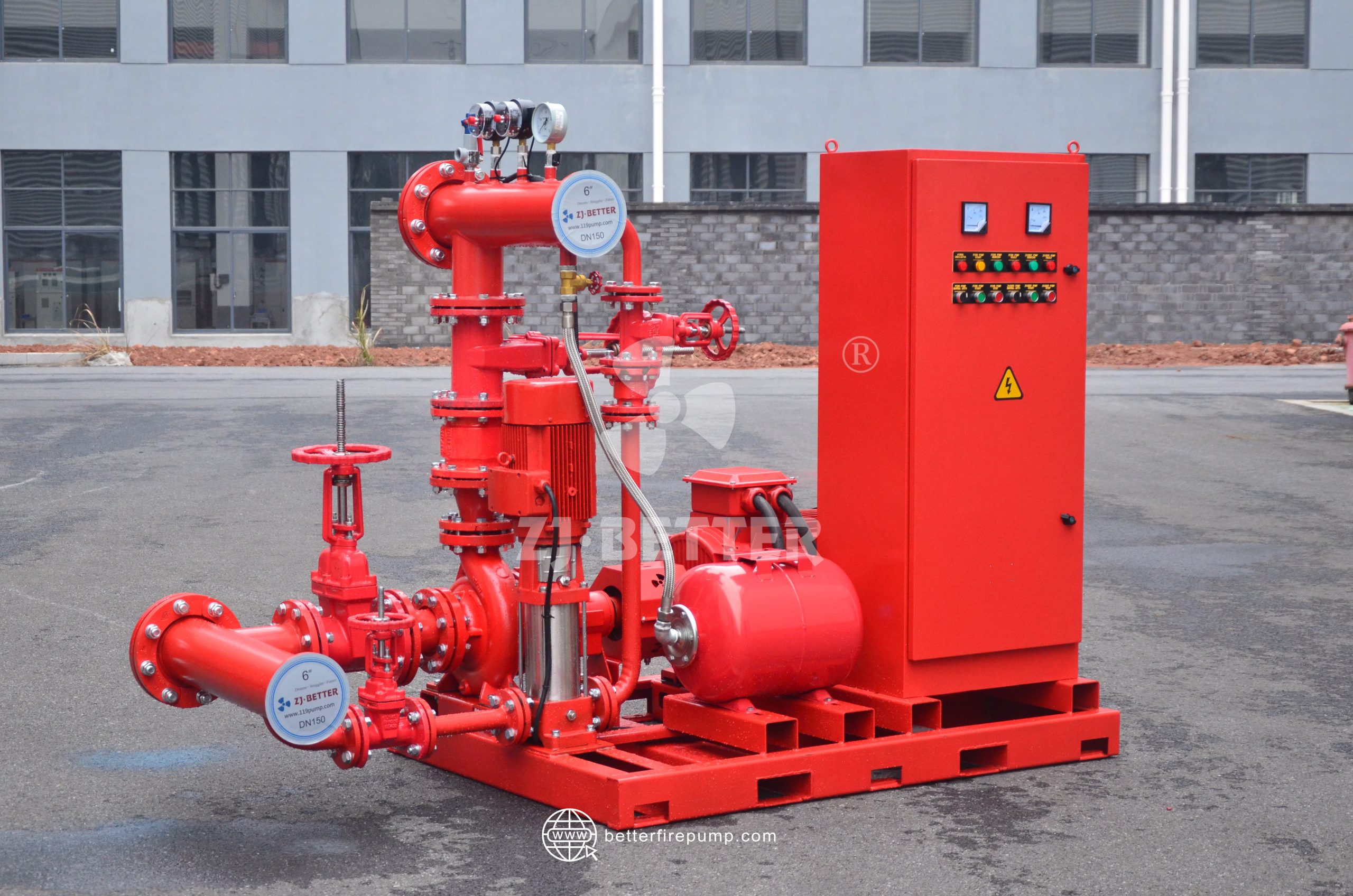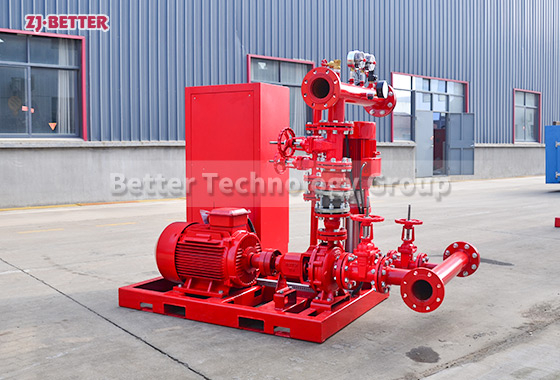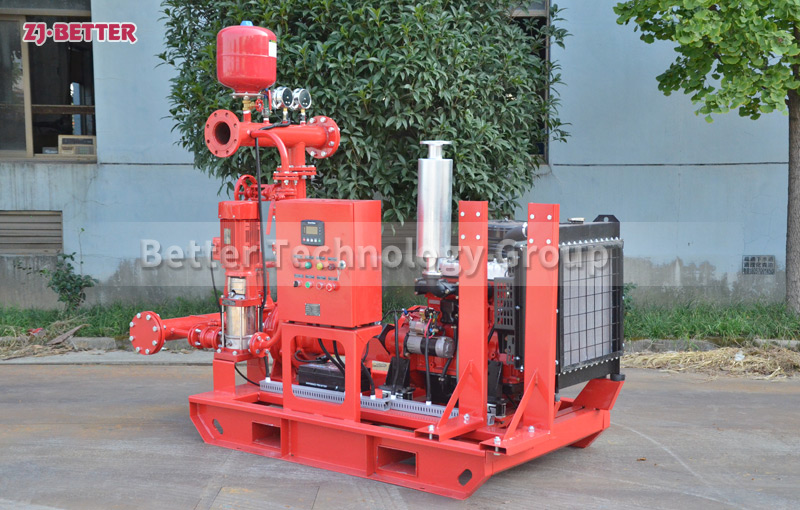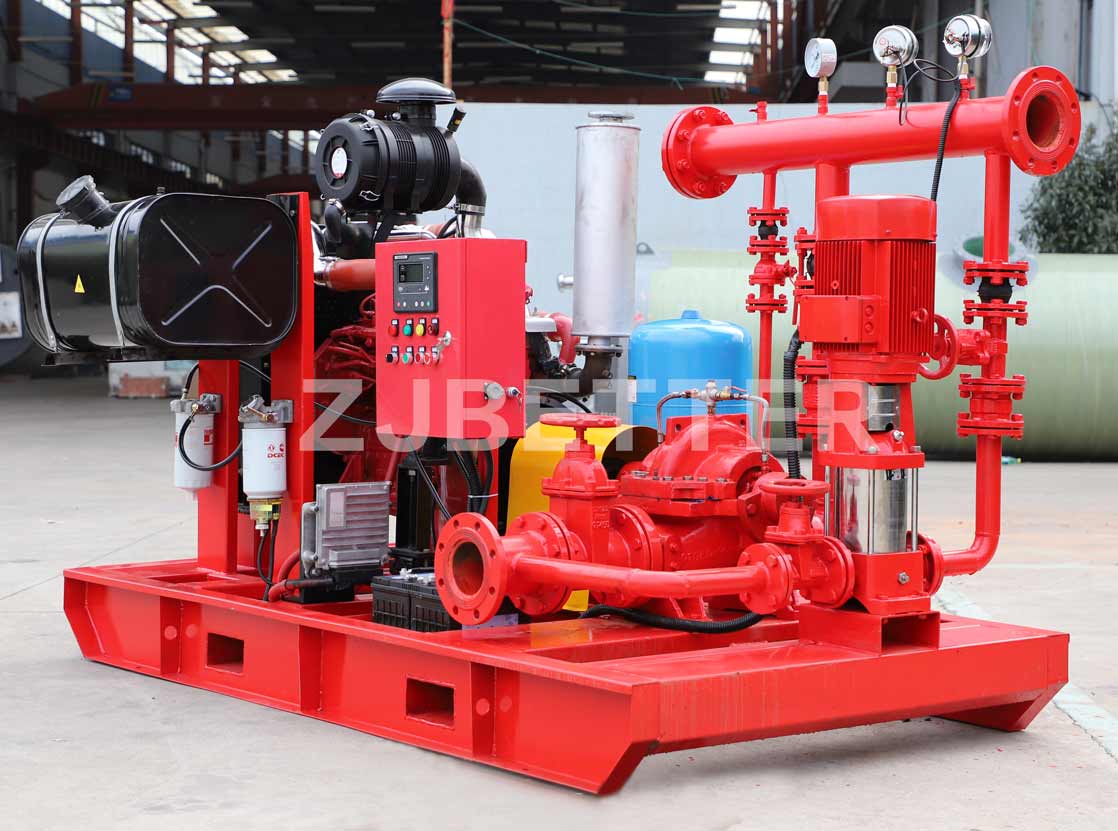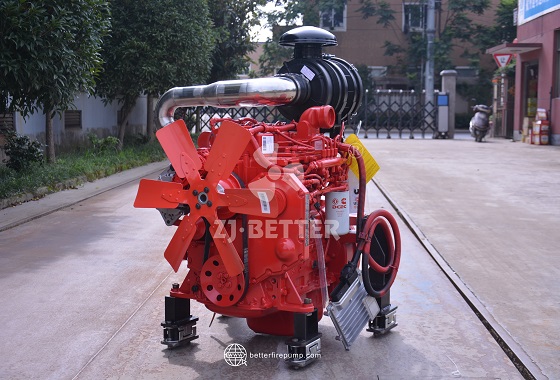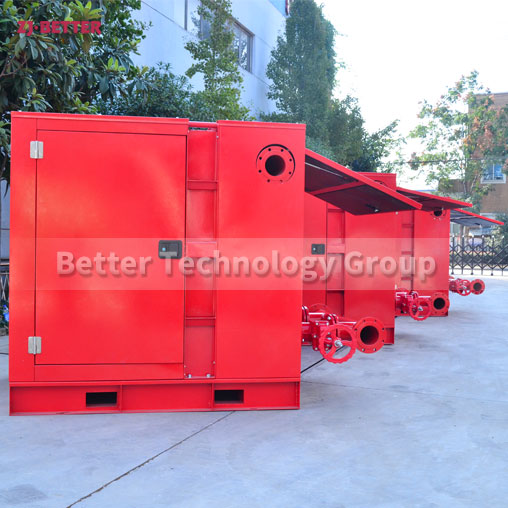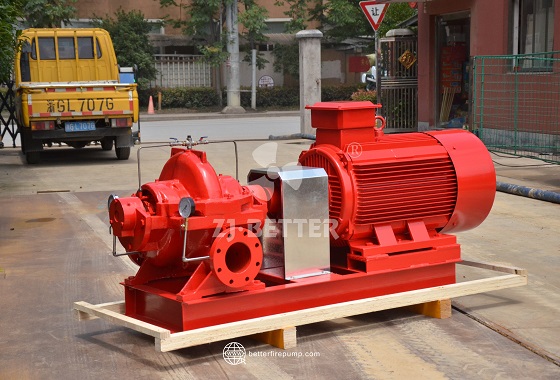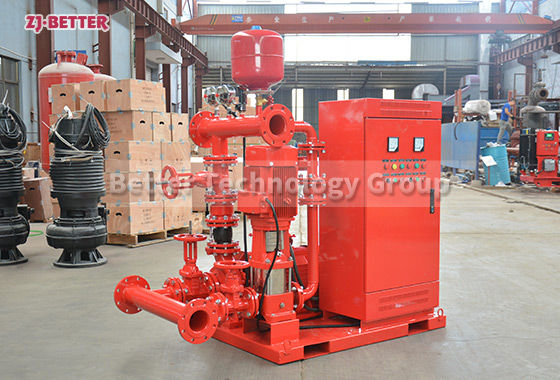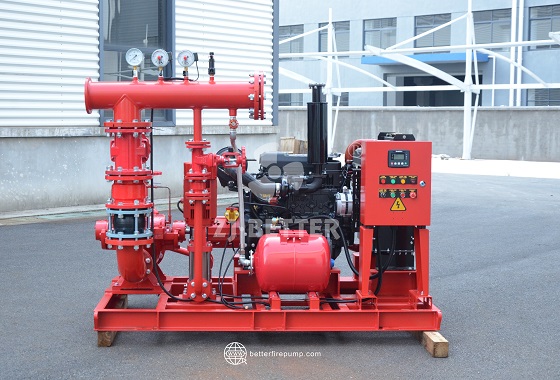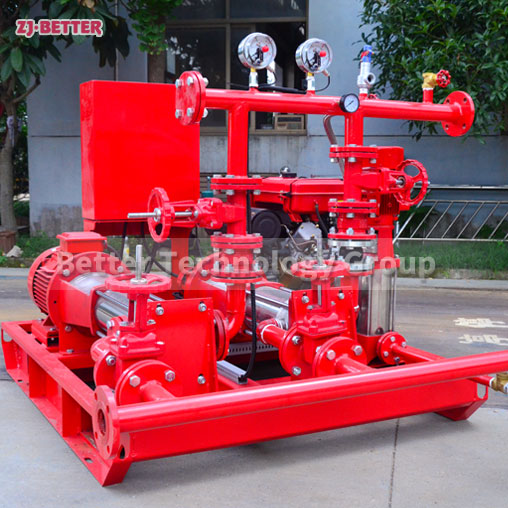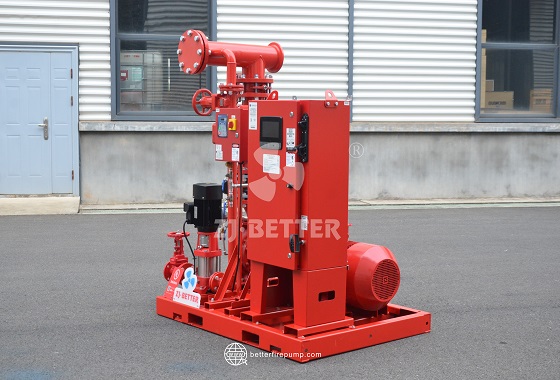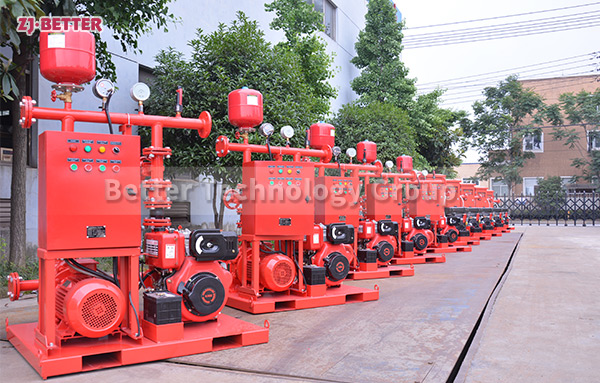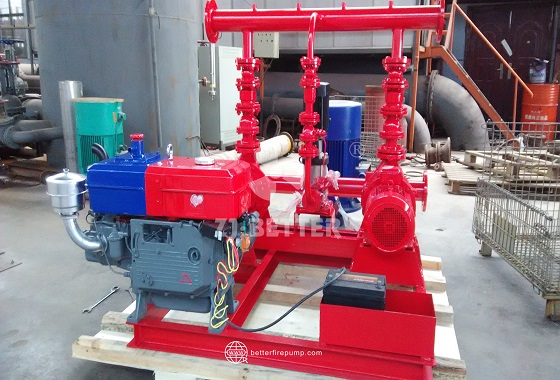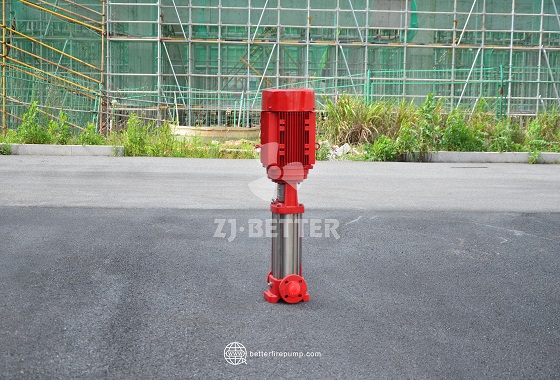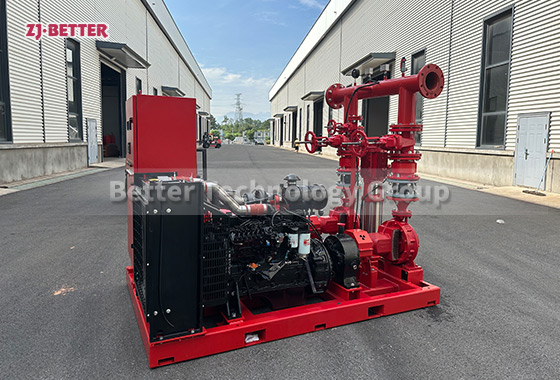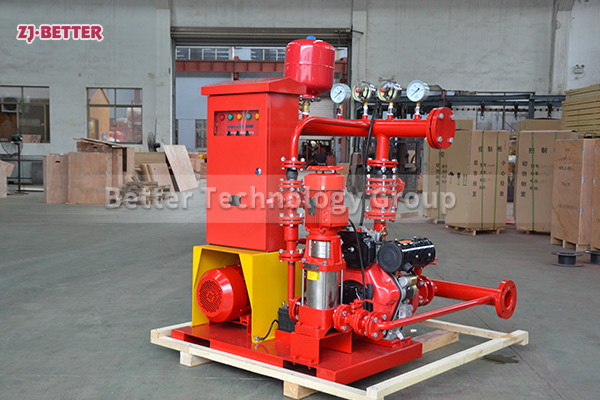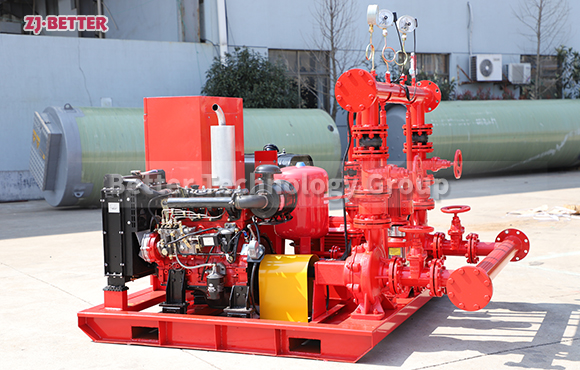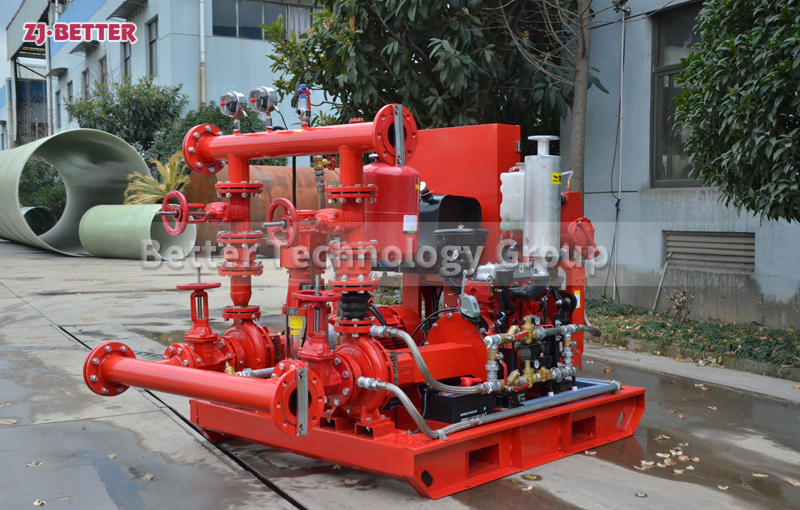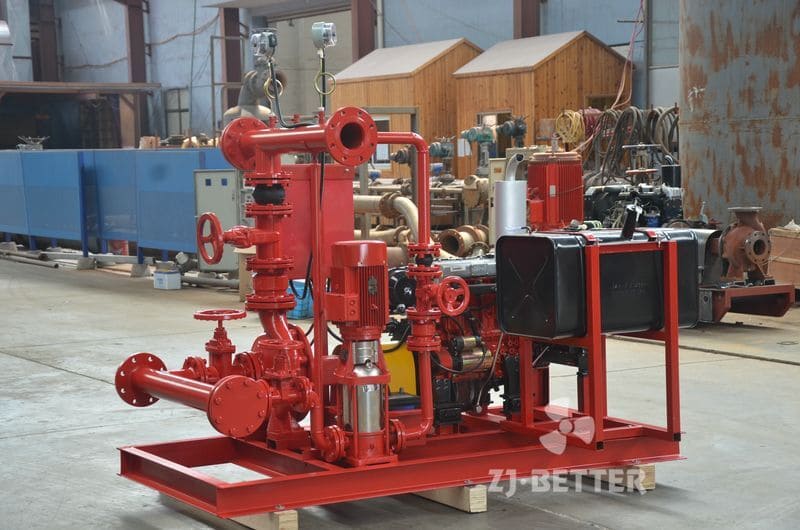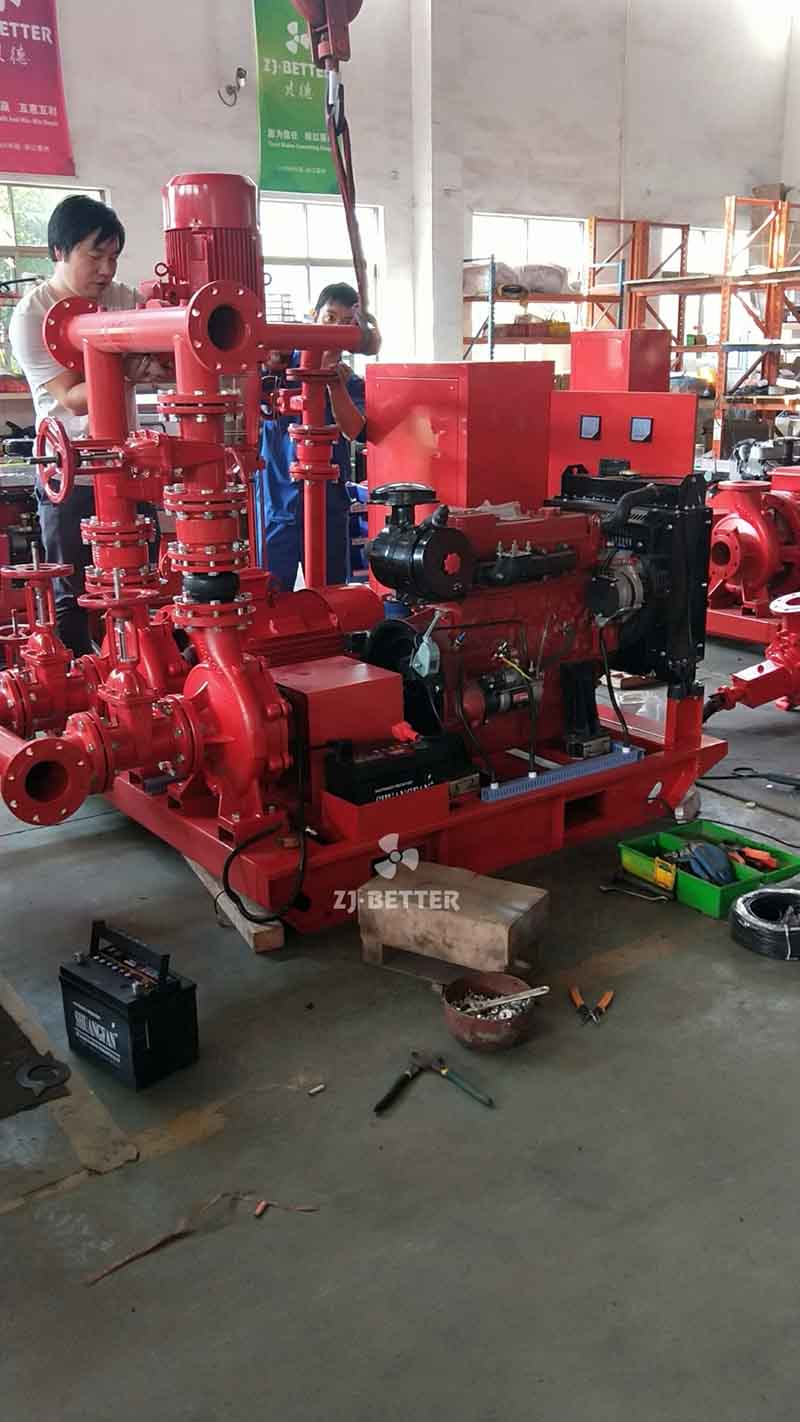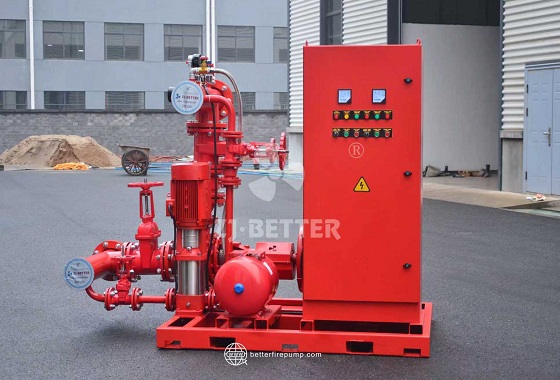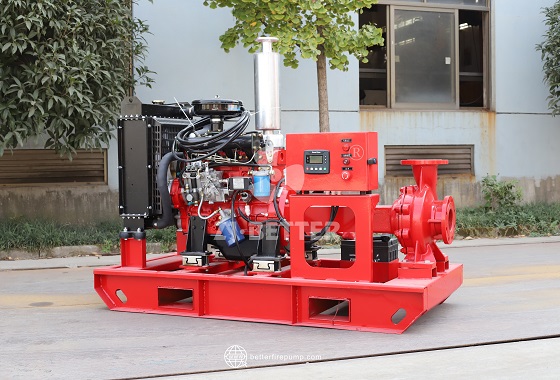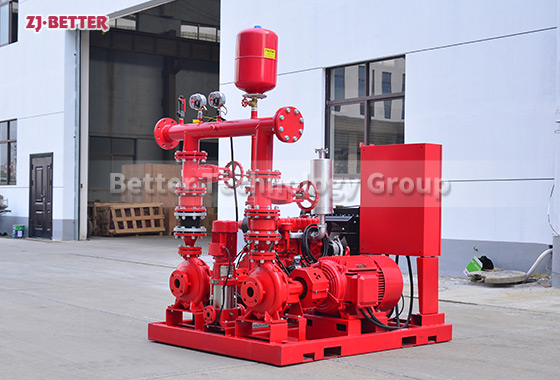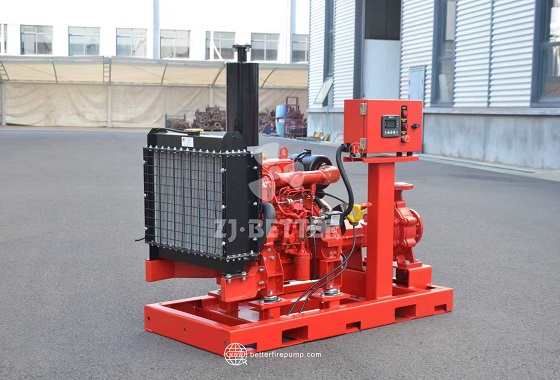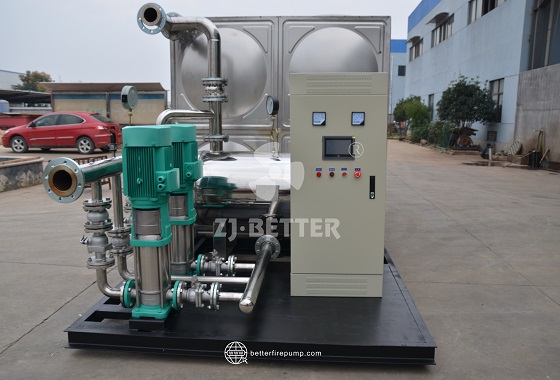
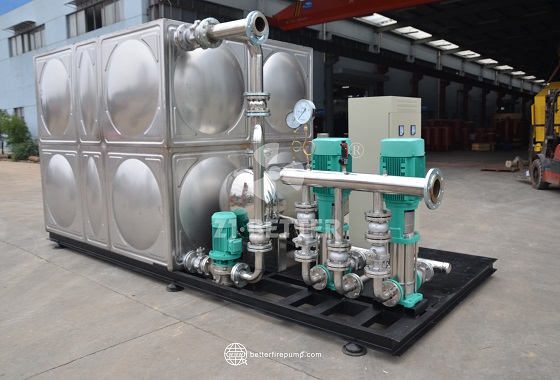
A vertical fire booster pump set is an important component of modern fire water supply systems, especially in buildings and facilities where reliable water pressure, compact equipment layout, and rapid automatic response are required. Designed around a vertical multistage centrifugal pump, this type of fire booster pump set combines the advantages of multistage pressure boosting, vertical installation, motor-driven operation, pressure monitoring, and automatic control in one integrated equipment solution. The product shown is configured with a vertical pump body, electric motor, control cabinet, pressure-related components, suction and discharge piping, valves, gauges, and a common skid base, creating a compact and organized fire water pressure boosting unit suitable for professional fire protection applications. Compared with a conventional horizontal pump arrangement, the vertical configuration can reduce the floor space required for installation while maintaining the hydraulic performance needed for demanding fire water supply systems. A vertical multistage pump uses multiple impeller stages arranged in series, allowing pressure to build progressively through the pump and making the design particularly suitable for applications that require relatively high head from a compact pump body. The available vertical multistage pump range covers flow rates from 6 to 600 m³/h, heads from 20 to 270 m, and motor powers from 1.5 to 500 kW, providing a broad selection for different water supply and pressure boosting requirements. For fire protection applications, dedicated vertical multistage fire pump models can provide flow rates up to 100 L/s and heads up to 2.6 MPa depending on the selected series and configuration, allowing the pump to be matched to the hydraulic requirements of different fire protection systems. One of the most important advantages of this vertical fire booster pump set is stable pressure output. Fire protection systems are designed around specific flow and pressure requirements, and insufficient pressure can affect the performance of hydrants, hose reels, sprinkler systems, and other firefighting water outlets. The multistage hydraulic structure provides a practical solution when higher pressure is required without using an excessively large single-stage pump. Each impeller stage contributes to the overall head, allowing the pump to achieve high-pressure water delivery while retaining a relatively compact vertical structure. This makes the equipment especially suitable for high-rise buildings, commercial complexes, industrial facilities, warehouses, hotels, public buildings, and other projects where the fire water system must overcome significant vertical elevation or piping resistance. In a high-rise building, for example, the fire pump needs to overcome static elevation as well as friction losses in pipes, valves, fittings, and firefighting equipment. A properly selected vertical multistage fire booster pump can generate the required pressure and deliver water efficiently to higher floors and remote firefighting points. Another major advantage is the compact vertical design. Equipment room space is often limited, particularly in commercial buildings, industrial plants, underground pump rooms, and retrofit projects. The vertical pump structure occupies less floor area than many horizontal arrangements, making it easier to organize pumps, control cabinets, valves, pipelines, and pressure components within a restricted equipment room. The vertical layout also provides a relatively clean equipment footprint, with the pump and motor arranged along a vertical axis rather than requiring a long horizontal base. For projects where available floor space is valuable, this design can simplify equipment arrangement and help improve the overall utilization of the pump room. The pump’s direct connection between the motor and pump shaft is another feature that supports efficient power transmission and reliable operation. A vertical multistage centrifugal pump with a direct-drive configuration can reduce the number of transmission components compared with systems that require additional mechanical transmission arrangements. The product information for vertical multistage pumps also highlights smooth operation, low noise, compact structure, easy installation, and convenient maintenance as key characteristics. In a fire protection environment, reliability is more important than simply achieving high pumping capacity. A fire pump may remain on standby for extended periods, but when a fire protection demand occurs, the system must be capable of responding quickly and delivering the required water pressure. For this reason, the booster pump set is designed not only around hydraulic performance but also around control, monitoring, protection, and system integration. The electrical control cabinet shown with the pump set provides a centralized interface for equipment operation and monitoring. Depending on the system configuration, the control system can support automatic starting and stopping logic, operating status indication, electrical protection, pressure-related control, and other functions required by the project. A properly configured control cabinet can help reduce manual intervention and make the operating condition of the fire pump easier to monitor. This is particularly valuable for commercial and industrial buildings where fire protection equipment needs to remain ready for service without requiring continuous manual operation. Automatic operation is another important advantage of a modern fire booster pump set. Fire water systems can experience pressure fluctuations caused by small leakage, temperature changes, testing activities, or normal system conditions. A pressure-maintaining arrangement can help keep the system within the required pressure range and reduce unnecessary starts of the main fire pump. In many fire pump systems, a jockey pump is used to maintain system pressure under small-flow conditions, while the main electric or diesel fire pump provides the larger flow required during a genuine firefighting demand. Standard fire pump package configurations can include an electric motor-driven main pump, a diesel engine-driven standby pump, a jockey pump, pressure vessel, controller, valves, gauges, sensors, flexible connections, and common piping mounted on a base frame. This combination creates a coordinated fire water supply system rather than treating the pump as an isolated machine. For the vertical fire booster pump set shown, the integrated piping and control arrangement also provides a more organized installation solution. The pump, motor, pipework, gauges, valves, and control cabinet are arranged as a coordinated package, helping reduce the amount of field assembly required compared with purchasing every component separately. A skid-mounted configuration can also make transportation, positioning, alignment, and installation more convenient, depending on project requirements. Another important product advantage is hydraulic flexibility. Different buildings have different requirements for flow, pressure, pipe diameter, elevation, and operating conditions, so one fixed pump specification cannot satisfy every project. Vertical multistage fire pumps are available in different configurations and performance ranges, allowing engineers to select a model based on the required duty point rather than simply choosing a pump by motor power. The vertical multistage fire pump range listed for fire protection applications includes models with different flow, head, power, speed, and working-pressure ranges. For example, the listed vertical multistage fire pump series cover flow from approximately 1 to 100 L/s and head from 0.2 to 2.6 MPa, while different models are available with different power and speed combinations. This flexibility is useful for projects ranging from building fire hydrant systems and automatic sprinkler systems to industrial fire water networks and other pressure-sensitive firefighting applications. Material selection can also be adapted according to the application and water conditions. Vertical multistage pump constructions may use cast iron, stainless steel, or other suitable wetted materials depending on the model and application requirements. The broader pump range includes stainless steel vertical multistage designs as well as conventional configurations, giving system designers more options when water quality, corrosion resistance, service conditions, or project specifications require a particular material. The selection of the correct material should always be based on the actual medium, temperature, pressure, installation environment, and applicable project standards. In addition to performance, maintenance is an important consideration for fire pump equipment. A well-designed pump set should allow operators and maintenance personnel to inspect gauges, valves, electrical components, motor condition, pipe connections, and other key components efficiently. The vertical multistage configuration provides a structured arrangement of pump stages and external components, while the integrated control cabinet keeps the electrical controls centralized. Regular inspection remains essential because fire pumps are safety-critical equipment and cannot be treated like ordinary water supply pumps. Routine checks may include verifying system pressure, checking valves and connections, inspecting the electrical control system, confirming pump readiness, checking for abnormal noise or vibration, and carrying out periodic testing according to the applicable fire protection requirements. The product’s compact design can make these inspection and maintenance tasks easier to organize when the pump room has limited space. Operational reliability is further supported by the use of appropriate motor protection and control functions. A vertical multistage jockey pump configuration, for example, can be equipped with an intelligent protector designed to help prevent dry running, phase loss, and overload, while the associated motor can use a fully enclosed air-blast design with IP55 protection and Class F insulation in the referenced jockey pump configuration. Exact electrical protection functions and motor specifications should be selected according to the final pump model, local electrical requirements, and project specification. Another advantage of this type of fire booster pump set is its suitability for both new construction and system upgrades. In a new building project, the pump can be selected during the hydraulic design stage and integrated into the overall fire water supply system. In an existing facility, a compact vertical arrangement may be useful where the available pump room cannot accommodate a large horizontal pump assembly. The equipment can be configured according to required flow and head, inlet and outlet connection requirements, electrical supply, control requirements, and installation conditions. This makes the vertical fire booster pump set a practical option for a wide range of engineering projects. For high-rise buildings, the primary benefit is the ability to provide the pressure required to move firefighting water through considerable vertical elevation. For warehouses and logistics facilities, the pump can support fire hydrant and sprinkler water supply requirements across large floor areas. For industrial plants, the equipment can form part of a dedicated fire water network serving production buildings, storage areas, workshops, and other critical zones. For hotels, office buildings, hospitals, shopping centers, and public facilities, the compact footprint and automatic control characteristics can be especially valuable where the fire pump room must accommodate multiple pieces of equipment within a limited area. The pump can also be integrated into a larger fire pump package where project requirements call for duty pumps, standby pumps, jockey pumps, pressure vessels, control panels, and associated valves and piping. Fire pump package systems commonly use a duty electric pump, a standby diesel pump, and a jockey pump, with automatic control and pressure-maintaining functions coordinated through the control panel. From an engineering perspective, choosing a vertical fire booster pump should always begin with the actual system duty point rather than selecting a product based only on nominal pump size. Required flow, required pressure, static head, friction loss, suction conditions, pipe diameter, water source, electrical supply, ambient conditions, installation elevation, and applicable fire protection codes should all be considered. The pump should operate effectively at the required duty point while maintaining sufficient margin for the system’s actual hydraulic conditions. The pump curve, motor power, efficiency, maximum working pressure, connection size, material, control method, and accessories should therefore be reviewed before final selection. For international projects, the equipment configuration should also be matched to the applicable local regulations and project standards. Different countries and industries may require different certifications, testing procedures, controller functions, electrical standards, or installation practices, so the final fire pump package should be engineered according to the requirements of the specific project. The vertical fire booster pump set shown in the product image demonstrates the practical concept of combining a vertical multistage pump, electric motor, control cabinet, pressure-related components, valves, gauges, and pipework on a common base. Rather than supplying only a bare pump, this type of configuration focuses on providing an integrated pressure boosting solution that can be incorporated into a complete fire water system. Its main advantages can be summarized as stable pressure output, high-head capability, compact vertical construction, efficient motor-to-pump transmission, automatic control, centralized monitoring, flexible configuration, convenient maintenance, and suitability for different building and industrial applications. The combination of multistage hydraulic design and automatic control makes the equipment particularly suitable for applications where fire water pressure must be maintained reliably and delivered rapidly when required. For project owners, contractors, fire protection system integrators, and engineering companies, a properly selected vertical fire booster pump set can simplify equipment planning while providing the hydraulic performance and operational control expected from a modern fire water supply system. Whether the requirement is a high-rise building fire protection system, commercial facility, industrial plant, warehouse, public building, or another application requiring dependable pressure boosting, the vertical fire booster pump set offers a compact and technically flexible solution. With appropriate model selection, professional installation, scheduled inspection, and compliance with the relevant fire protection requirements, the system can provide dependable fire water pressure and support the continuous readiness of the overall fire protection network. For each project, the final pump model, flow rate, head, motor power, materials, control functions, pressure components, and accessories should be selected according to the actual hydraulic calculation and applicable standards, ensuring that the complete fire water supply system achieves the required performance rather than relying on a one-size-fits-all configuration.