Automatically Controlled Diesel Fire Water Supply Units Reduce System Operating Risks
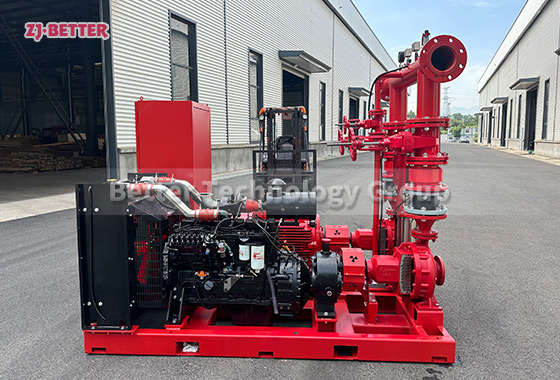
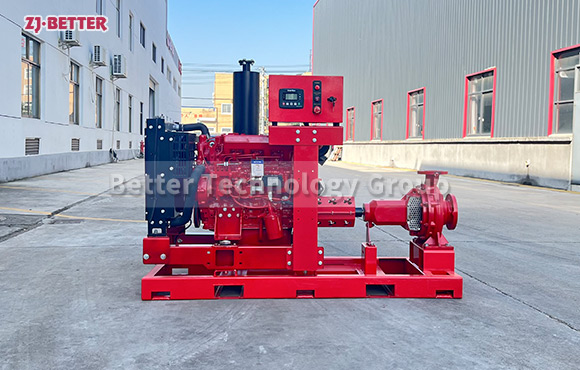
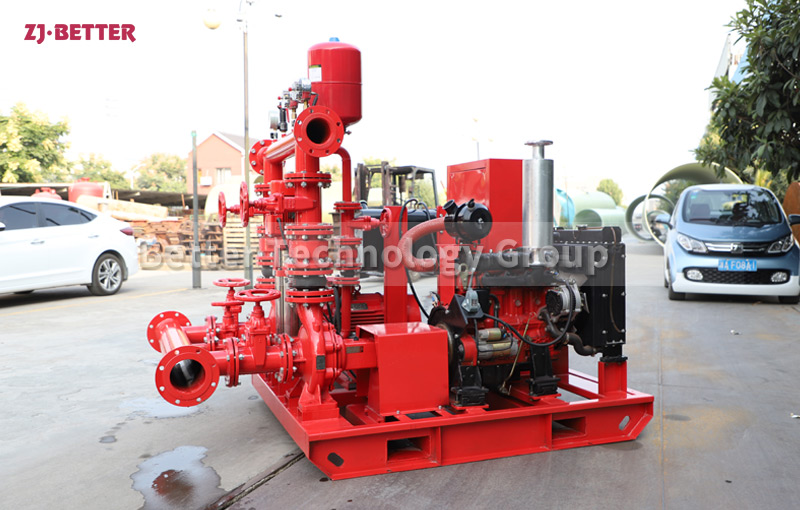
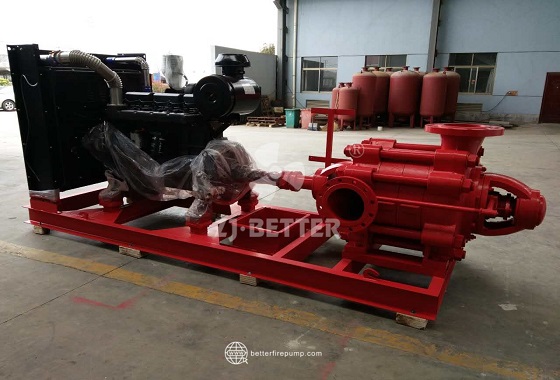
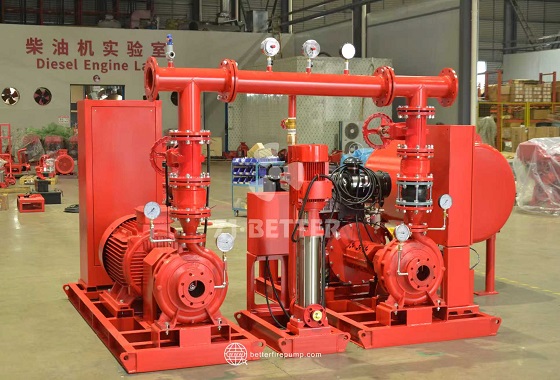
Automatic control diesel fire water supply units integrate a diesel engine, a high-efficiency fire pump, and an intelligent control system. They have advantages such as automatic start-up, rapid response, independent power supply, stable water supply, intelligent protection, and continuous operation. They can effectively reduce the operational risks of fire protection systems and are widely used in industrial parks, high-rise buildings, commercial complexes, warehousing and logistics, ports, power facilities, and municipal fire protection projects, providing safe and reliable emergency water supply solutions for fixed fire water supply systems.
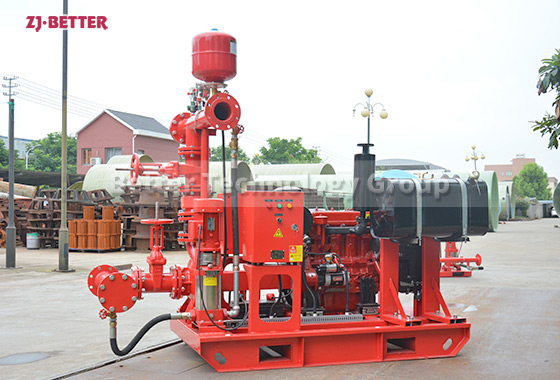
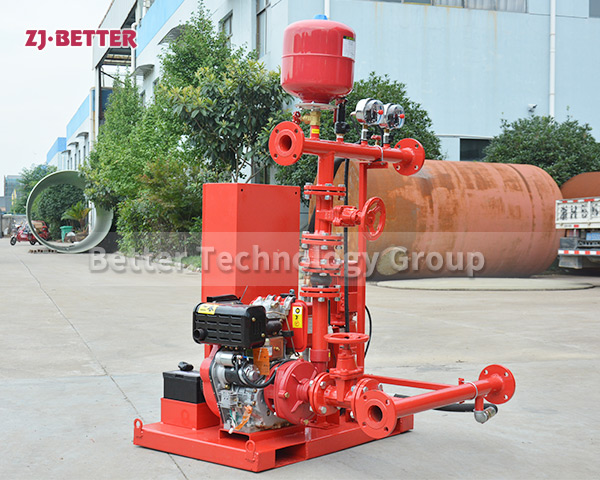
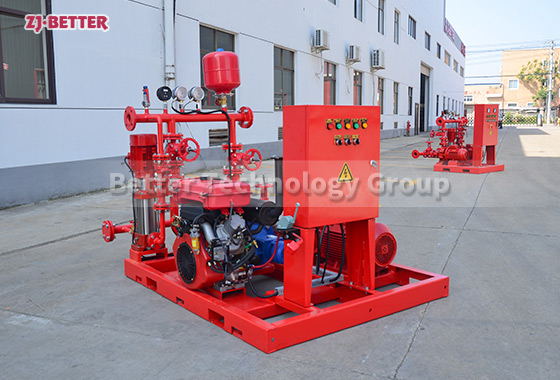
In modern fire protection engineering, fire water supply systems not only require sufficient flow and head, but also need to maintain stability, reliability, and rapid response under various complex operating conditions. Especially in industrial parks, petrochemical plants, power facilities, ports, high-rise buildings, commercial complexes, airports, warehousing and logistics centers, and large public buildings, fire water supply equipment must be able to start operating immediately in the event of a fire, continuously providing a stable source of water for extinguishing the fire. Automatic control diesel fire water supply units are high-performance fire water supply equipment developed specifically to meet this need. They integrate a diesel engine, fire centrifugal pump, intelligent control system, cooling system, fuel system, and protection devices. Even in the event of a mains power outage or power failure, they can still start independently and operate continuously, providing a safe and reliable emergency water supply guarantee for the entire fire protection system, effectively reducing the operational risks of the fire protection system and improving the overall fire safety level of the building.
The biggest feature of automatic control diesel fire water supply units is their independent power drive capability, allowing them to complete fire water supply tasks without relying on an external power grid. When a fire causes a mains power failure or the main power supply to be unavailable, the diesel engine can automatically start according to a preset program and quickly drive the fire pump to its rated operating state, ensuring uninterrupted water supply to the fire protection system in critical moments. Compared to traditional power supply methods, the diesel-driven system has stronger independence and emergency backup capabilities, meeting the application requirements of backup fire protection power systems in international fire protection engineering standards such as NFPA, EN, and ISO, providing more reliable fire water supply for important facilities.
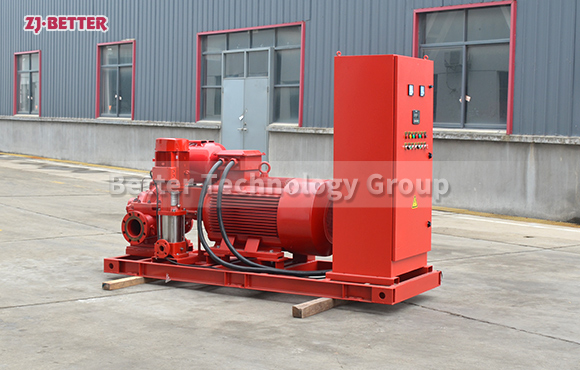
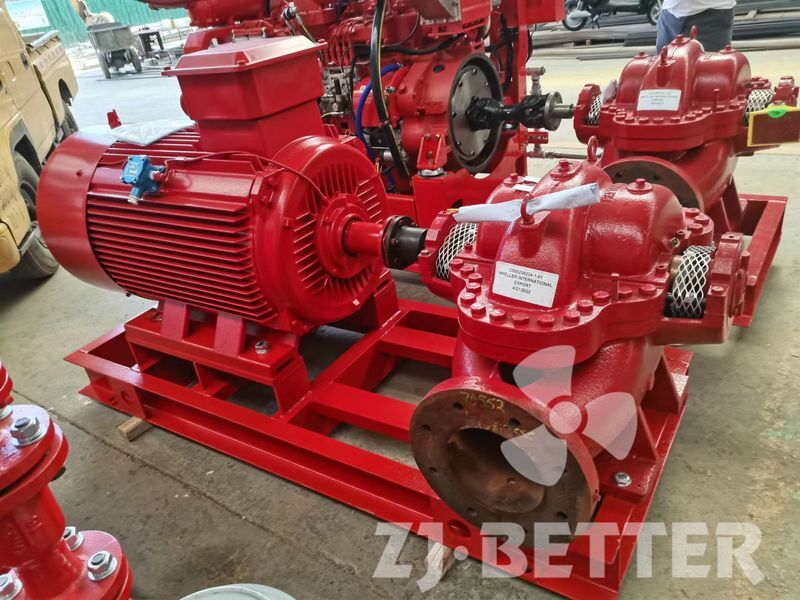
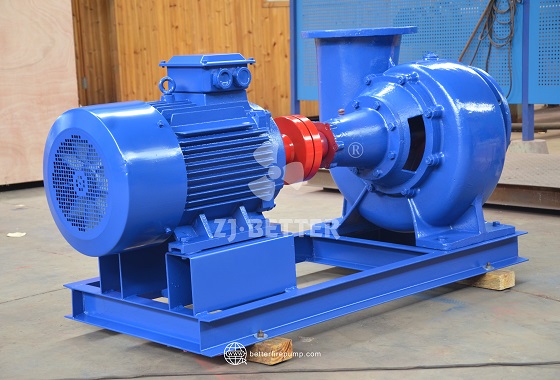
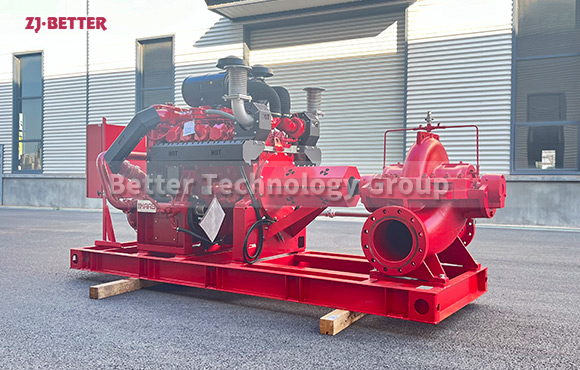
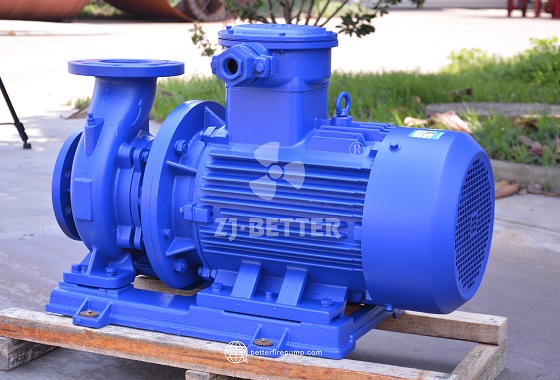
The fire pump section adopts a high-efficiency centrifugal pump structure design. The impeller has undergone advanced hydraulic optimization, enabling stable high flow and high head output, maintaining excellent hydraulic efficiency even during long-term continuous operation. The pump body is made of high-strength corrosion-resistant materials, possessing good wear resistance and corrosion resistance, and can adapt to various water supply environments such as clean water, fire water storage tanks, and fire water tanks. Precision-machined impellers and flow channels effectively reduce hydraulic losses, improve overall water delivery efficiency, and reduce vibration and noise, enabling the equipment to maintain stable operation under various complex conditions.
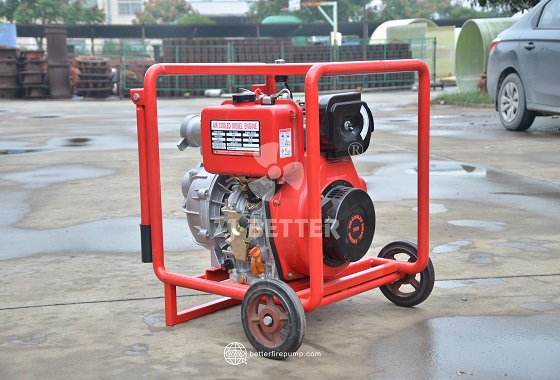
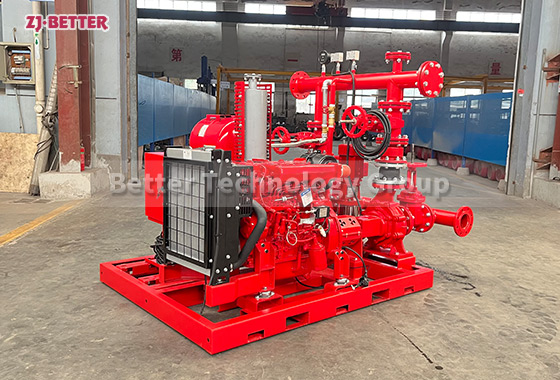
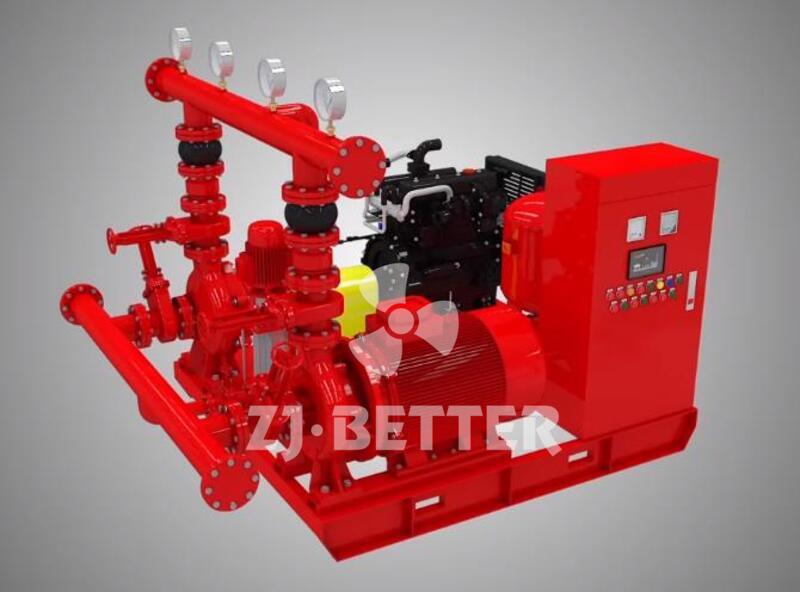
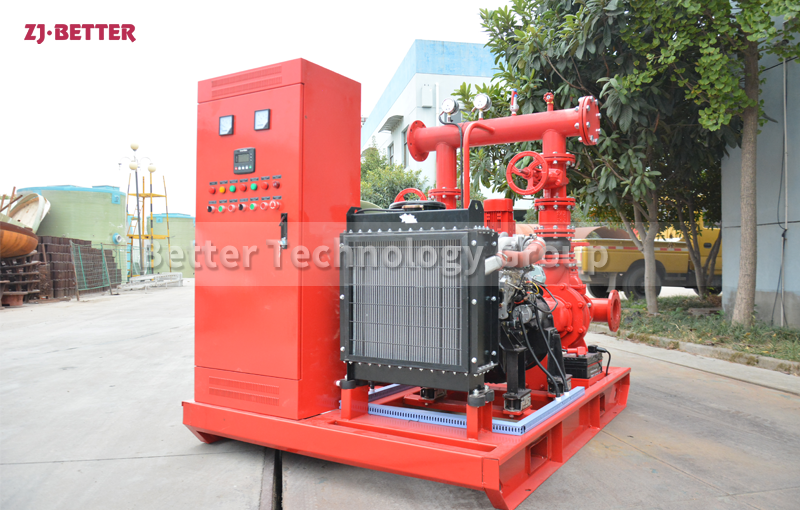
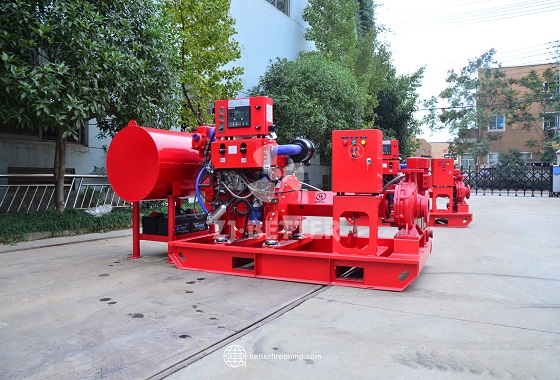
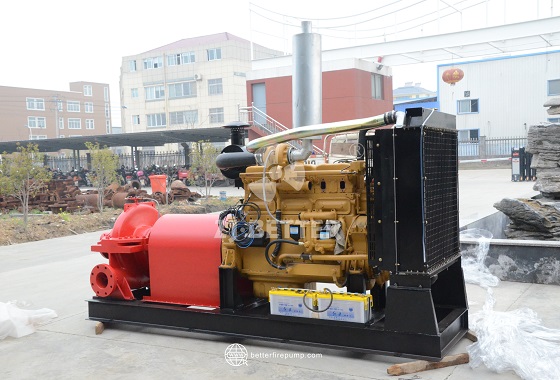
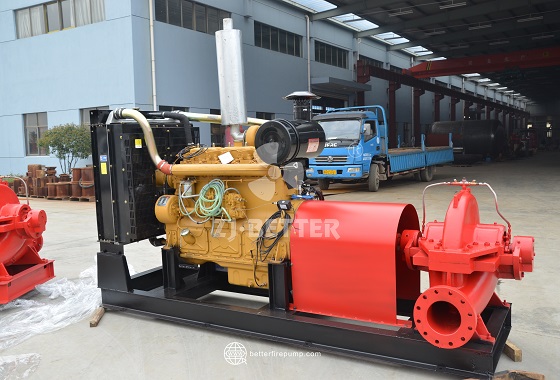
The diesel engine, as the core power source of the entire system, features stable power output, high fuel efficiency, and strong continuous operating capability. After rigorous matching and overall debugging, the engine forms an optimal power output combination with the fire pump, quickly reaching the design speed and continuously providing stable power. The high-efficiency cooling system, equipped with a large-capacity radiator and forced air cooling device, effectively controls the engine operating temperature even during continuous operation in high-temperature environments, preventing power loss due to overheating and ensuring long-term reliable operation of the equipment. Simultaneously, the fuel system is optimized for configuration with large-capacity fuel tanks to meet the needs of different projects, extending the continuous operating time of the equipment and satisfying the long-term water supply requirements of large-scale fire protection projects.
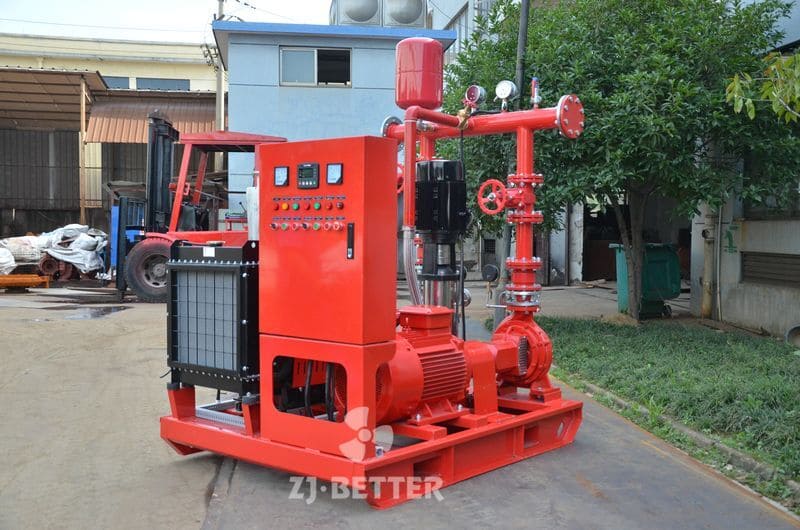
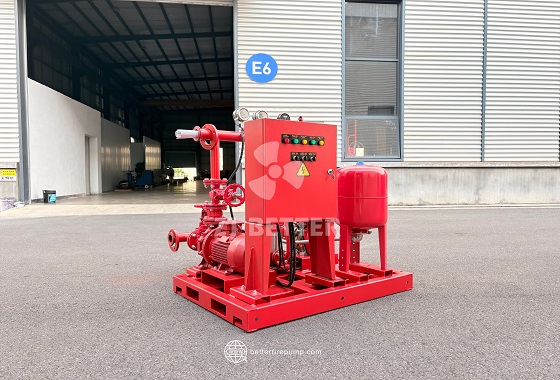
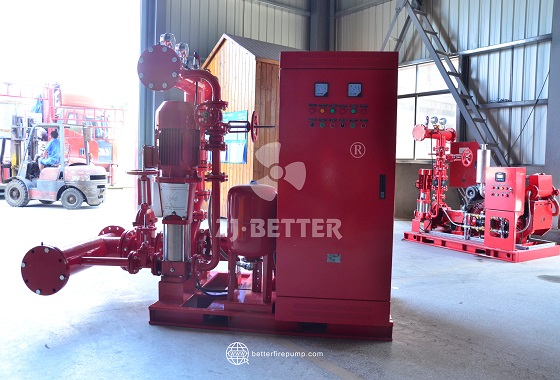
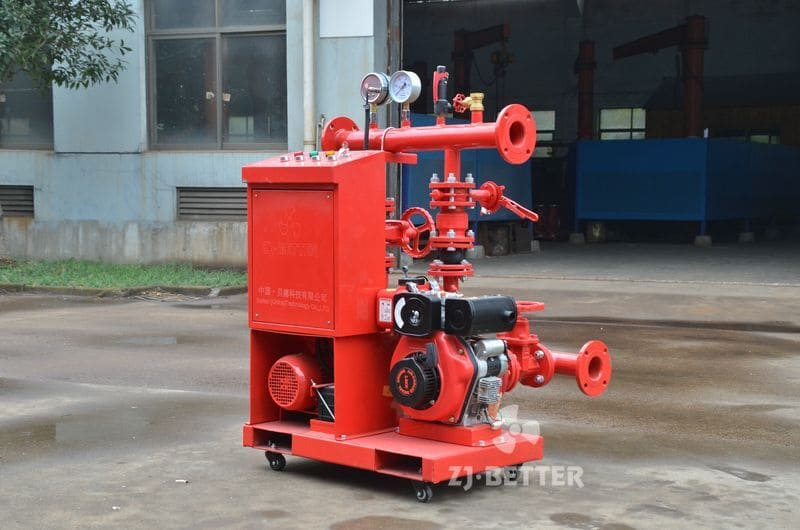
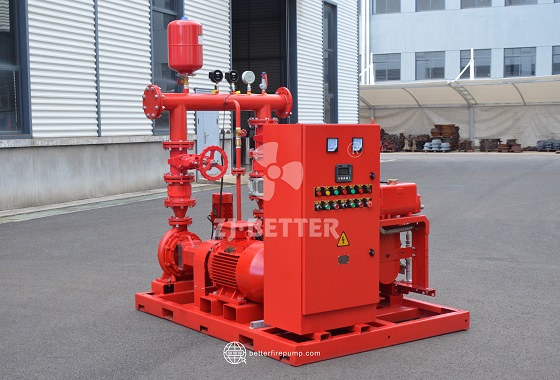
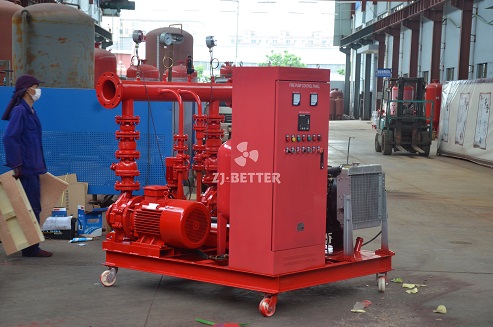
The intelligent control system comprehensively enhances the automation level of the unit. The control cabinet can monitor engine speed, oil pressure, water temperature, battery voltage, operating time, and fire pump operating status in real time, and has multiple functions including automatic start, automatic shutdown, manual control, remote control, fault alarm, and operation recording. When the system receives a fire alarm start signal, the control system automatically completes the start-up procedure and continuously monitors the equipment’s operating status. If abnormalities such as low oil pressure, high water temperature, overspeed, or start-up failure are detected, the system immediately issues an alarm and activates the protection program, effectively reducing equipment operational risks and improving the safety of the fire water supply system.
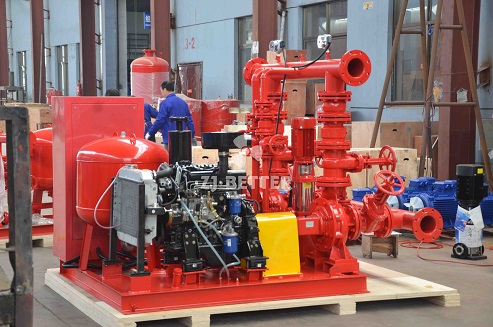
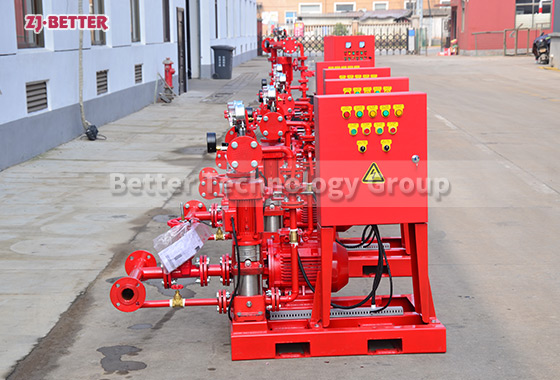
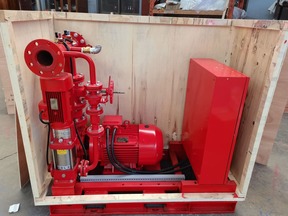
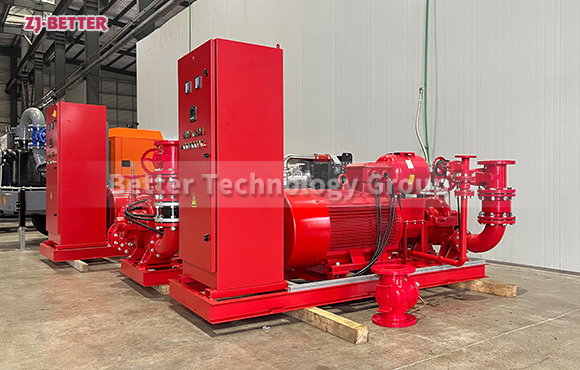
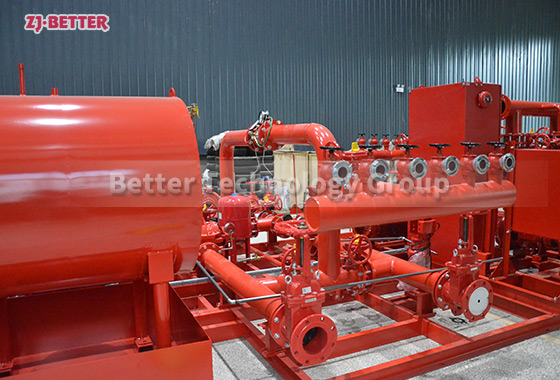
The entire diesel fire water supply unit adopts a modular integrated design. The engine, fire pump, control cabinet, cooling system, and base are centrally installed on a high-strength steel structure platform. The overall structure is compact, occupies a small area, is easy to transport, and has high on-site installation efficiency. The equipment undergoes overall assembly, performance debugging, and continuous operation testing before leaving the factory. Upon arrival at the project site, only pipe connections, electrical wiring, and foundation fixing are required for immediate use, significantly shortening the construction cycle and reducing installation costs. It is particularly suitable for new fire protection projects and upgrades of existing fire protection systems.
The equipment also has excellent environmental adaptability. It can be configured with low-temperature start-up devices, high-temperature cooling systems, rainproof and noise-reducing shells, and automatic charging systems according to different regional climate conditions, maintaining stable operation in cold regions, high-temperature regions, coastal high-humidity environments, and desert regions. It supports multiple international voltage standards and control protocols, enabling integration with fire alarm systems, building automation systems, and remote monitoring platforms, providing more comprehensive data support and equipment management capabilities for modern smart fire protection construction.
To ensure long-term stable operation, each diesel fire-fighting water supply unit undergoes flow rate testing, head testing, automatic start-up testing, continuous load operation testing, electrical safety testing, and comprehensive overall performance testing before leaving the factory, ensuring the equipment meets the requirements for long-term continuous operation. Routine maintenance is convenient; only periodic checks of the engine lubrication system, fuel system, cooling system, battery status, and fire pump seals are needed to maintain good equipment performance, effectively reducing later maintenance costs and extending the overall service life of the unit.
With its comprehensive advantages such as independent power, automatic control, rapid start-up, efficient water supply, stable operation, intelligent protection, convenient installation, and simple maintenance, the automatic control diesel fire water supply unit can effectively reduce the operational risks of fire protection systems, improve the continuity and reliability of fire water supply, and provide continuous, safe, and efficient fire water supply solutions for industrial buildings, commercial complexes, high-rise buildings, airports, ports, data centers, municipal facilities, and various large-scale fire protection projects. It is an important component of modern fixed fire water supply systems.