Diesel-Driven Fire Pump Sets for Improved Fire Water Network Stability
The diesel-driven fire pump unit adopts independent diesel power, high-efficiency fire main pump, intelligent control cabinet and complete cooling system. It has the advantages of stable water supply, automatic response, multiple protections, continuous operation and convenient maintenance. It is suitable for industrial plants, warehousing logistics, high-rise buildings, petrochemical industry, electric power facilities and large-scale fire protection projects to provide reliable emergency water supply guarantee for fire protection pipe networks.
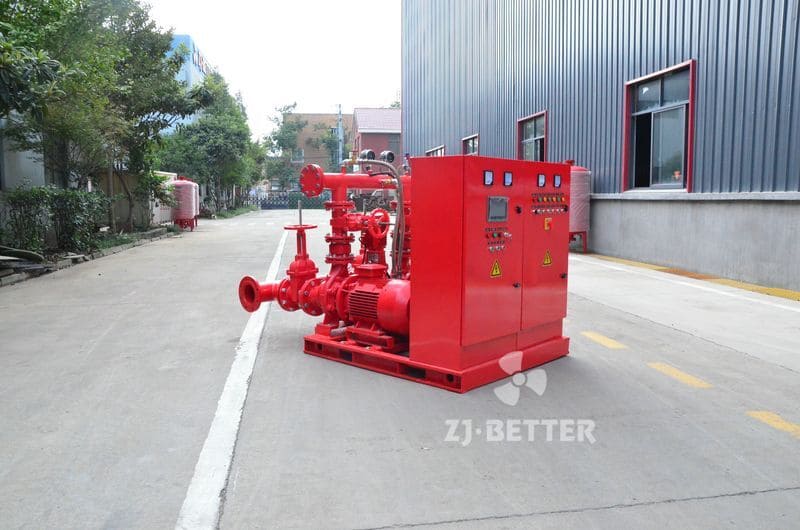
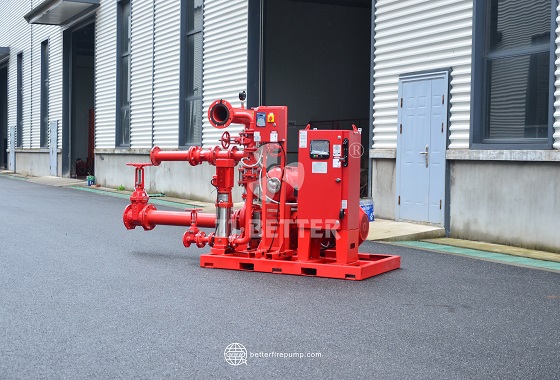
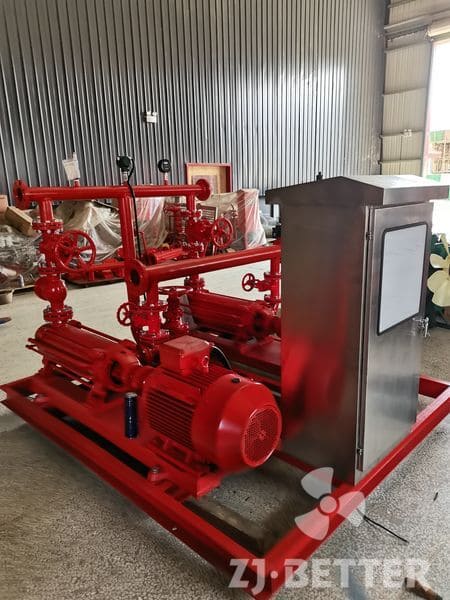
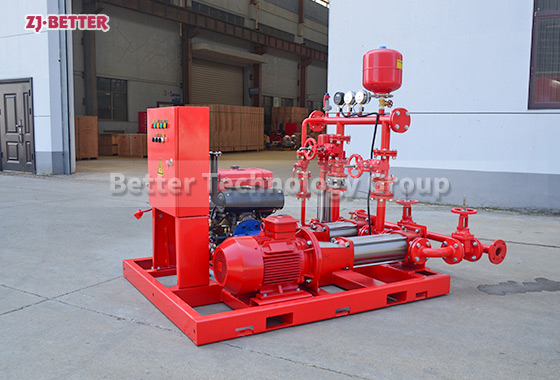
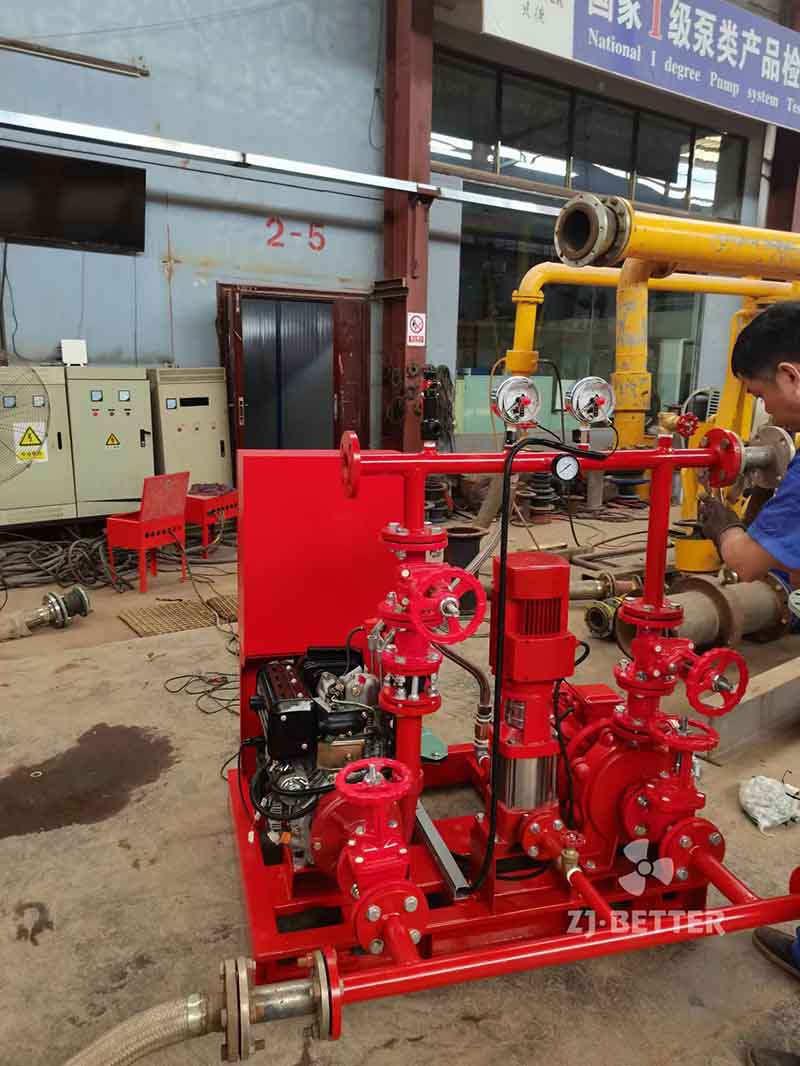
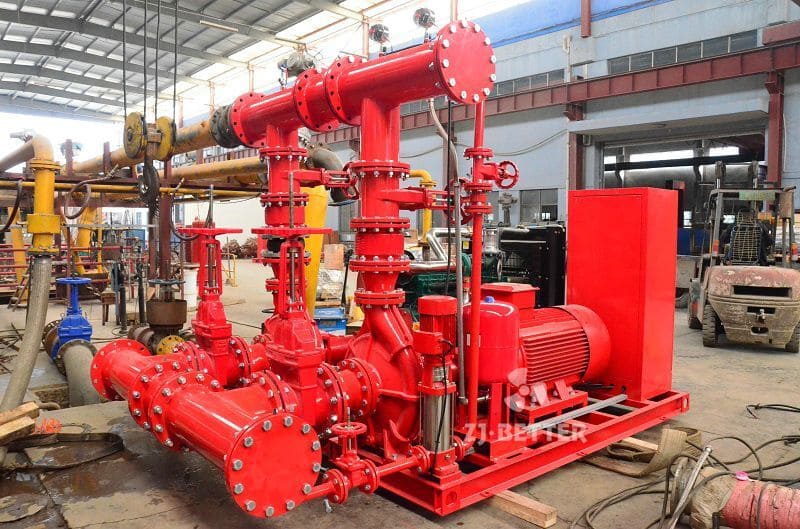
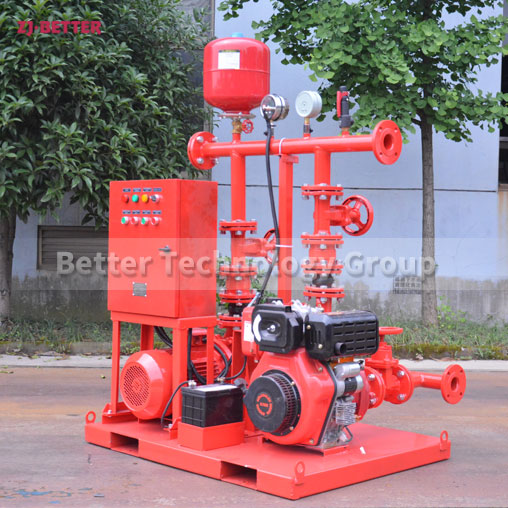
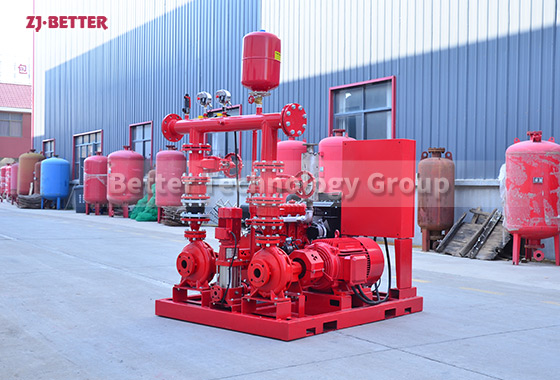
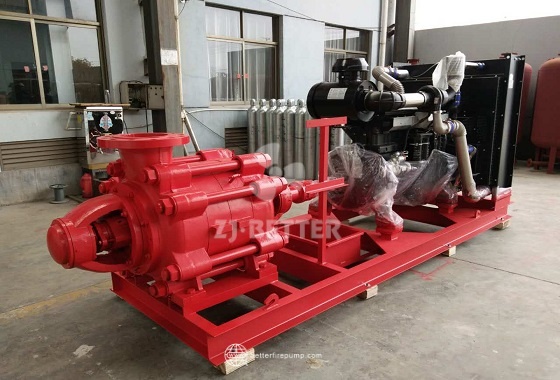
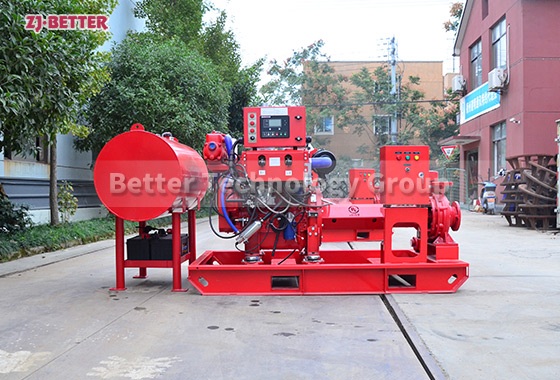
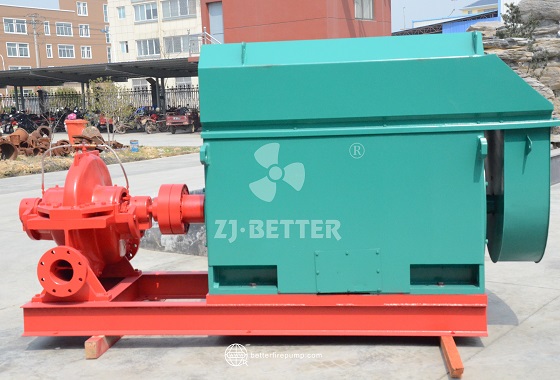
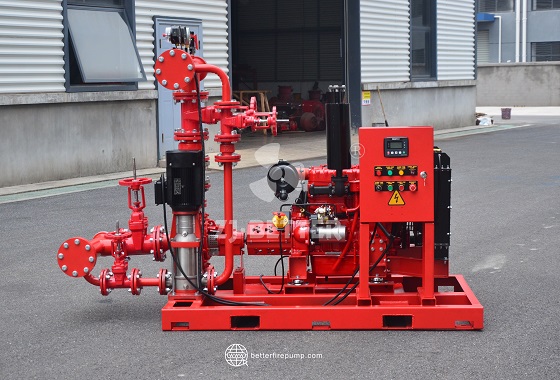
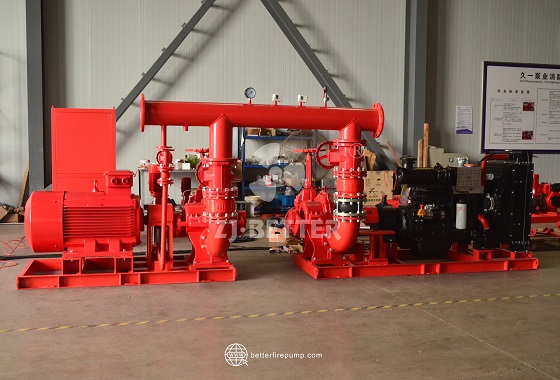
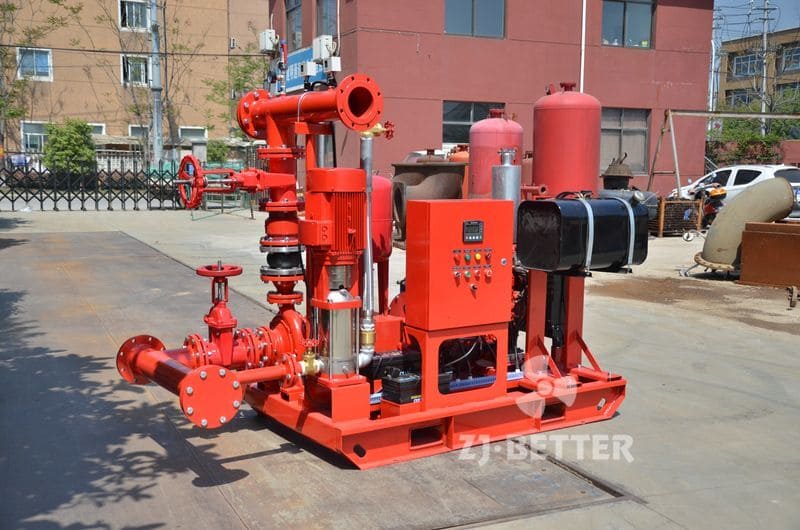
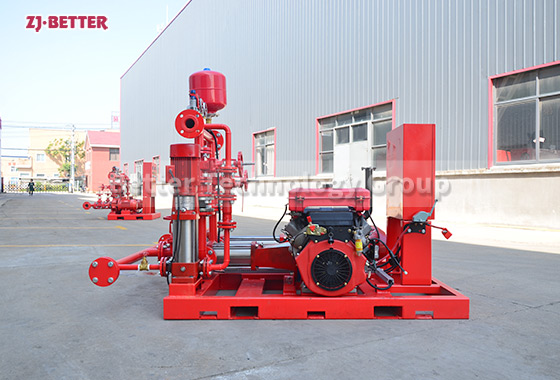
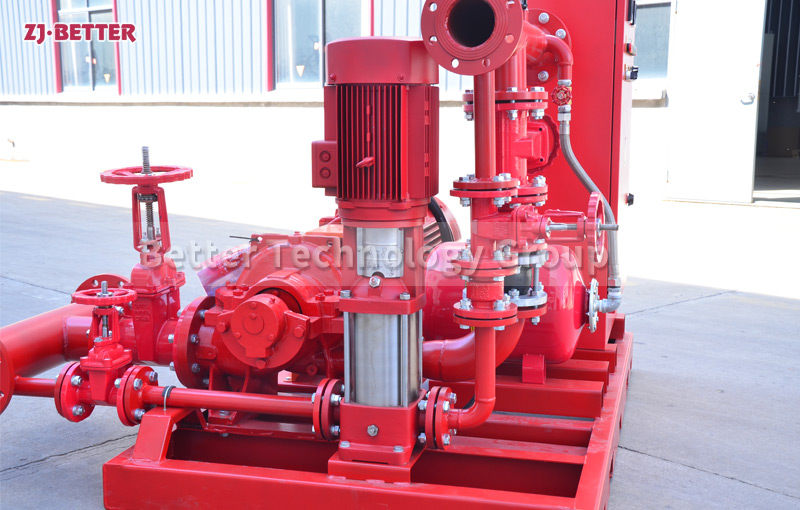
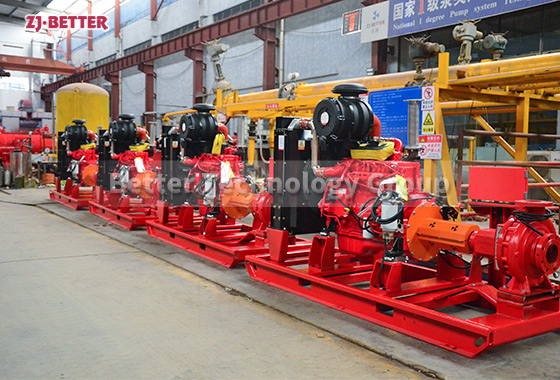
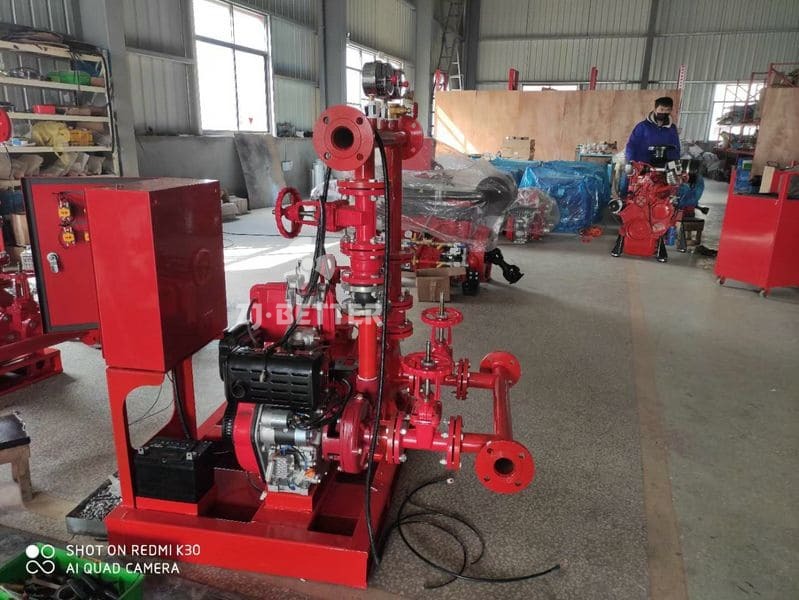
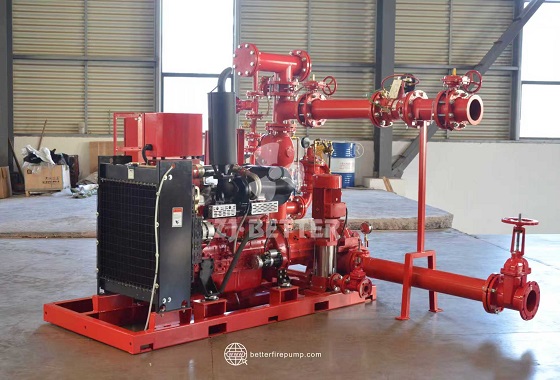
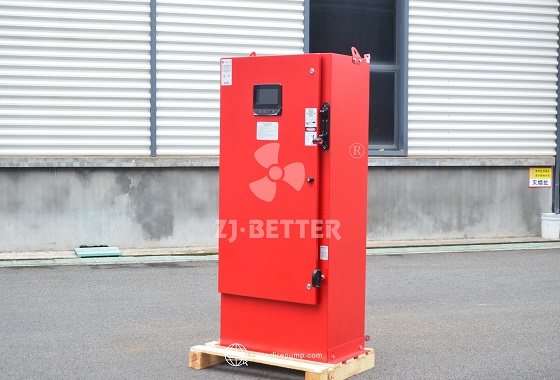
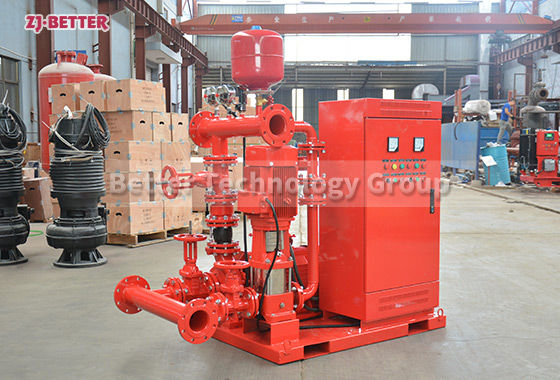
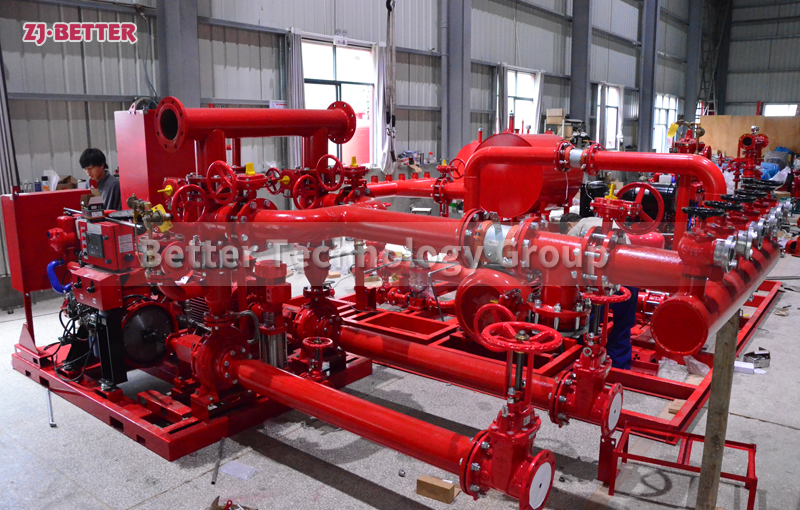
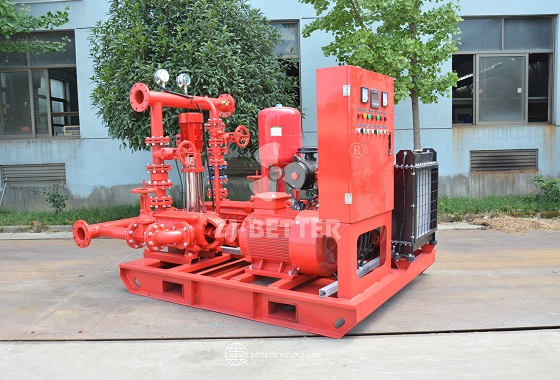
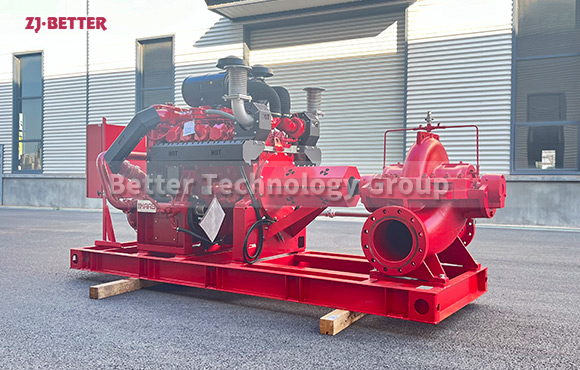
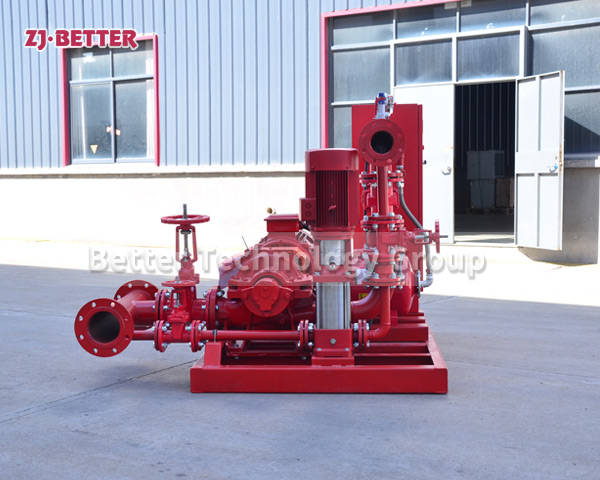
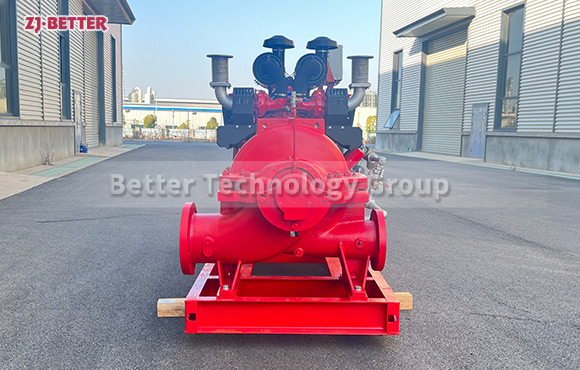
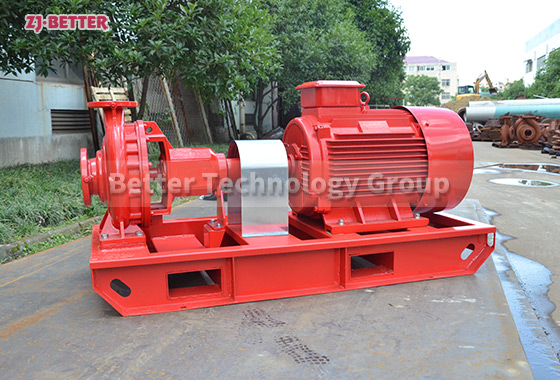
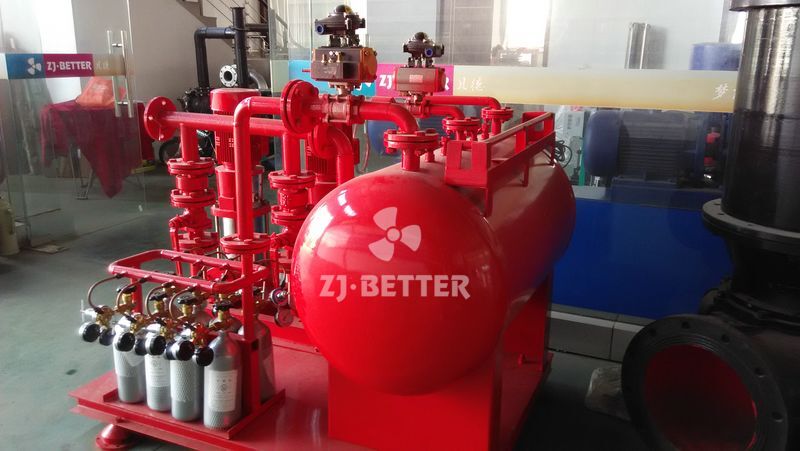
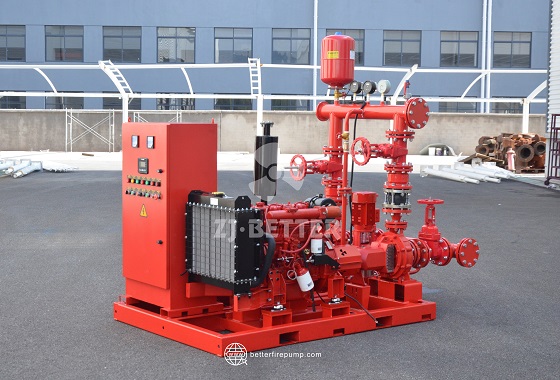
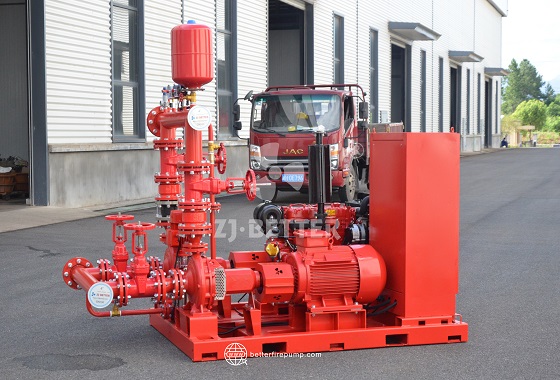
Diesel-driven fire pump sets are important core equipment in modern fixed fire water supply systems. They are especially suitable for industrial plants, warehousing logistics, high-rise buildings, commercial complexes, petrochemical industries, power facilities, airports, ports and other places that require high fire water supply continuity. Combined with the equipment structure shown in the picture, this product uses a diesel engine as an independent power source, and forms a complete fire pump set with the main fire pump, control cabinet, cooling system, pressure detection component, pipeline accessories and public base. It achieves rapid response, stable water supply and reliable operation through reasonable system integration. Compared with ordinary water supply equipment that relies on mains power, the biggest advantage of a diesel-driven fire pump unit is that it is powered independently. Even if there is a power outage, line failure, etc. at a building or industrial site, the fire pump can still rely on the diesel engine to provide continuous power, thereby reducing the risk of fire water supply interruption due to power failure. In actual fire protection engineering, the fire protection pipe network needs to quickly establish and maintain sufficient water flow and pressure after a fire occurs. Therefore, the fire pump unit not only needs to have good instant start-up capabilities, but also needs to maintain stable flow, head and mechanical performance during long-term operation. The diesel-driven fire pump unit is designed around these core requirements. Through reasonable matching of the engine and fire pump, the power output can be effectively converted into stable fire water supply capacity, providing a reliable water source for terminal fire hydrants, automatic sprinkler systems and other fire water equipment. 1. Independent diesel power improves the reliability of fire water supply. The diesel engine is an important power core of the entire equipment. It does not need to rely on the on-site power grid to directly drive the main fire pump. It still has the ability to operate independently in the event of a fire, power outage or abnormal power supply system. For large industrial enterprises, storage centers, data centers and important public facilities, fire protection systems often need to have high emergency support capabilities, and independent power structures can effectively reduce the impact of external power conditions on fire water supply. The diesel engine has large low-speed torque and good continuous working ability. It can output stable power according to the operation requirements of the fire pump and adapt to the large instantaneous load when the fire pump is started, so that the entire equipment can maintain good operating status. By rationally selecting the engine power and fire pump performance parameters, the power system and the water pump system can form a more coordinated matching relationship, meet the design flow and head requirements while taking into account operational stability, and provide continuous power support for the fire protection pipe network. 2. The main fire pump provides stable flow and pressure. As the core hydraulic equipment of the entire unit, the performance of the fire pump directly affects the final water supply effect of the fire protection system. The product adopts a high-efficiency centrifugal pump structure. By optimizing the design of the impeller, hydraulic flow channel and pump body, the water flow can enter the pump body more smoothly and obtain effective energy conversion. According to the fire water needs of different engineering projects, the flow rate, head, speed and supporting power can be reasonably configured so that the equipment can adapt to fire protection pipe networks of different sizes. The stable head helps overcome the losses along the pipeline, local resistance and the pressure demand generated by the height of the building, so that fire water can be transported to water points that are far away or at higher locations. For large fire protection systems, fire pumps do not simply pursue greater flow, but need to achieve a reasonable balance between flow, pressure and efficiency under design conditions. Therefore, this type of complete set of equipment can be configured according to project parameters to improve the matching degree of the entire fire water supply system. 3. Reasonable matching of diesel engine and fire pump improves operating efficiency. The matching relationship between diesel engine and fire pump is one of the important factors in judging the performance of diesel fire pump set. If the engine power is too small, it may not be able to meet the fire pump operation requirements, while if the power configuration is too large, it may increase equipment investment and long-term operating costs. Therefore, the power parameters need to be reasonably selected based on the fire pump’s rated flow, rated head, speed and working conditions. The equipment adopts an integral base installation method to maintain a stable installation relationship between the diesel engine and fire pump, which is beneficial to reducing vibration and mechanical impact during operation. After proper calibration, the power output can be transmitted to the pump shaft more effectively, allowing the fire pump to maintain stable operation under design conditions and helping to reduce unnecessary energy loss. For fire protection systems that require long-term operation, reasonable power matching is not only related to water supply performance, but also to engine fuel consumption, mechanical wear and equipment service life. Therefore, the actual fire protection needs of this product need to be comprehensively considered during the system configuration stage. 4. The automatic control system realizes rapid fire response. The fire pump unit in the picture is equipped with an independent control cabinet, which can realize automatic, manual and related emergency control functions according to project needs. When the fire protection system is normally in standby mode, the control system can continuously monitor relevant operating parameters. When the pressure of the fire protection pipe network drops significantly and reaches the preset starting conditions, the diesel engine and fire pump can be started according to the set program to quickly restore the water supply system to working condition. Automatic control reduces manual operations, which is especially important in emergencies such as fires, because firefighters may not be able to arrive at the pump room for operation at the first time. The control cabinet can also display the operating status of the equipment and prompt abnormal conditions through the alarm function, allowing managers to understand the working status of the diesel engine, water pump and electrical control parts in a timely manner. Through the combination of automatic control and mechanical equipment, the fire pump unit can form a more complete emergency water supply system. 5. Multiple protection design improves equipment operation safety. The fire pump unit not only needs to be able to start, but also must be able to operate safely under complex working conditions. Therefore, diesel engines and control systems are usually equipped with multiple protection and alarm functions, including low oil pressure, high water temperature, overspeed, starting failure, abnormal battery voltage, and other operating status monitoring functions. When an abnormality occurs in the equipment, the control system can promptly send out an alarm signal, allowing maintenance personnel to quickly locate the problem and take corresponding measures. For fire-fighting equipment, reliability in the long-term standby state is equally important, because the equipment may be in standby state for a long time and needs to be put into work immediately when a fire actually breaks out. Therefore, complete status monitoring can help managers find potential problems in time and avoid the failure to start or abnormal operation of equipment after being idle for a long time. 6. The efficient heat dissipation system ensures the continuous operation of the diesel engine. The diesel engine will generate a large amount of heat during operation, so good heat dissipation capacity is an important condition for ensuring the continuous operation of the power equipment. The independent radiator structure can be clearly seen in the picture. The heat generated during engine operation is promptly discharged through the fan and radiator to keep the engine within a reasonable operating temperature range. For fire pump units, the equipment may need to continue working for a long time during a fire, so the cooling system cannot only meet the short-time start-up requirements, but also needs to have continuous operation capabilities. A reasonable heat dissipation structure can reduce the risk of engine performance degradation due to high temperatures and help maintain stable power output, thereby further ensuring the water supply performance of the fire pump. 7. The overall base design facilitates engineering installation and maintenance. The diesel engine, fire pump and related components are integrated using a common base, making the entire unit form a compact overall equipment. Compared with installing multiple independent devices on site, the complete structure can reduce installation links and facilitate transportation, hoisting, positioning and on-site connection. It can also reduce problems caused by installation errors between devices. The base adopts a structural design with high mechanical strength to provide stable support for the diesel engine and fire pump, and can withstand certain vibrations and dynamic loads during operation. The layout of the main components of the equipment is relatively clear, which facilitates daily inspection, maintenance and repair. Maintenance personnel can more easily check key parts such as engine oil, cooling system, battery, pump body and control system, thereby reducing the difficulty of later maintenance. 8. Adaptable to a variety of fire engineering application environments, the diesel-driven fire pump unit has strong engineering applicability and can be configured with different flow rates, lifts, engine power and control methods according to different project requirements. For industrial plants, it is necessary to focus on the fire water volume and continuous operation capability; for warehousing and logistics projects, it is necessary to pay attention to the water supply needs of large-area fire protection areas; for high-rise buildings, it is necessary to focus on building height and pipe network pressure; for petrochemical, electric power and other important industrial facilities, system design also needs to be carried out based on the on-site environment, fire water sources and equipment operating conditions. Through the reasonable combination of fire pumps, water pump drive systems, control cabinets and auxiliary components, complete sets of fire water supply equipment for different application scenarios can be formed, thereby improving the engineering adaptability of the product. 9. To facilitate long-term standby and periodic maintenance management, fire pump units are usually in long-term standby. Therefore, the equipment must not only consider operating performance, but also standby management. The diesel engine is equipped with a starting battery and related maintenance systems to maintain good starting conditions for the equipment. Daily managers can check the status of engine oil, coolant, fuel, batteries, belts, connectors, pump seals and control cabinets according to maintenance cycles, and conduct regular trial runs according to project management requirements. Through a standardized maintenance system, potential equipment problems can be discovered in time, so that the diesel fire pump unit can be maintained in good working condition when it is really needed to be put into use. The modular and complete set design is also conducive to later inspection and parts maintenance, reducing unnecessary downtime. 10. A complete set of configurations improves the performance of the overall fire protection system. The diesel-driven fire pump unit is not a single water pump product, but a complete equipment consisting of a diesel engine, fire main pump, control cabinet, cooling system, starting system, pressure detection component, pipeline accessories and public base. Reasonable parameter matching between various components is required to form a stable and reliable fire water supply capability. For purchasers, choosing a complete set of diesel fire pump equipment can reduce the coordination work between different supply equipment, and at the same time facilitate project design, installation, commissioning and later management. According to actual engineering needs, electric fire pumps, voltage stabilizing pumps, fire water tanks and related pipe network components can be further configured to form a complete equipment system with the diesel fire pump set and the entire fire water supply system. Overall, the diesel-driven fire pump unit can effectively improve the water supply stability of the fire pipe network in emergencies by virtue of its independent power, stable water supply, automatic control, efficient heat dissipation, multiple protections, compact structure and strong engineering adaptability. When external power is abnormal, the diesel engine can still provide reliable power for the main fire pump; when the pressure of the fire pipe network changes, the automatic control system can respond quickly according to the set conditions; when the equipment enters continuous operation, the efficient water pump, stable power output and perfect cooling system can jointly ensure continuous water supply. This product can provide a more complete diesel fire water supply solution for industrial enterprises, warehousing and logistics centers, commercial buildings, public facilities and large engineering projects that need to establish reliable fire protection water supply systems. Through reasonable configuration of flow, head, power and control parameters, the equipment can further meet the design requirements of different fire protection pipe networks and provide continuous and stable water source support for fire hydrants, sprinkler systems and other fire protection facilities in case of fire emergencies, thus improving the emergency response capability and operational reliability of the entire fire protection system.