Vertical Fire Turbine Pump Components – Integrated Design of Discharge Head, Drive Shaft and Bowl Assembly
The vertical fire-fighting turbine pump features a modular design—comprising a pump head, drive shaft, column pipes, and diffuser casings—that supports multi-stage impeller pressurization and various length configurations; it is suitable for industrial fire-fighting water supply systems drawing from sources such as deep wells or reservoirs.
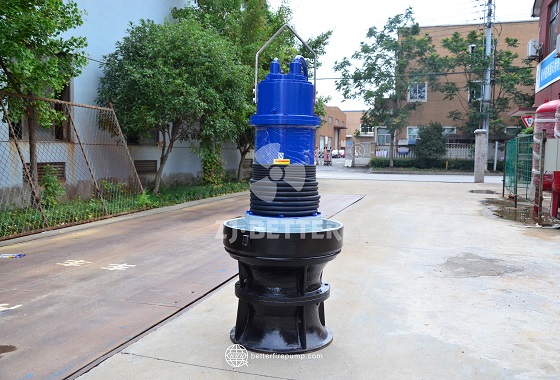
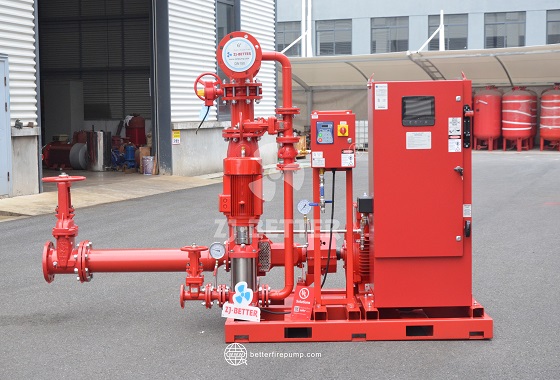
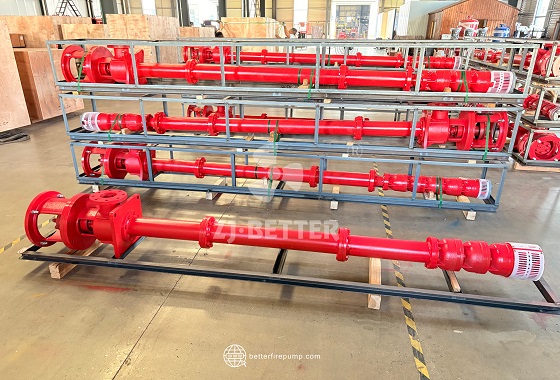
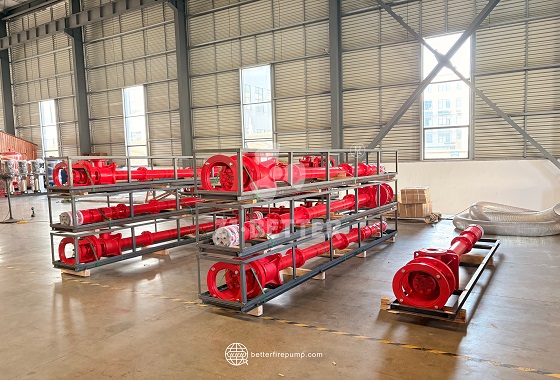
A vertical turbine fire pump is a fire-fighting water supply device designed for drawing water from sources such as deep wells, reservoirs, or other locations that meet specific design criteria. It consists primarily of a pump head, drive shaft, column pipes, diffuser casings, and impellers, all integrated into a cohesive vertical pumping system. Unlike conventional horizontal centrifugal pumps, the vertical turbine pump features a vertical configuration. Its drive shaft and column pipes can be customized in length based on the depth of the water source and site-specific installation conditions, allowing the pumping components to be positioned optimally within the water source—an ideal solution for fire-protection projects where ground space is limited or water must be drawn from significant depths. The pump head, typically located at the top of the unit, serves as the interface for the power source, water discharge, and structural support; it connects to a compatible drive unit and delivers the pumped medium into the fire-fighting water supply piping. The drive shaft transmits power from an electric motor or diesel engine to the submerged impellers; its length and structural design are matched to the installation depth, operating speed, and specific model of the pump unit, ensuring stable power transmission. The column pipes serve as the primary conduit for the pump assembly while providing the necessary space and support for the internal drive shaft. The diffuser casings house the impellers and associated hydraulic components; as the impellers rotate, they perform work on the water, imparting energy and increasing pressure stage by stage to meet the flow rate and head requirements of the fire-fighting system. Depending on the hydraulic demands of a given project, the unit can utilize a multi-stage impeller configuration—with the number and diameter of impellers, as well as other hydraulic components, carefully selected to optimize performance across various head conditions. The intake assembly at the bottom can be equipped with specific inlet structures and strainers to minimize the risk of large debris entering the pump, though the actual intake performance remains dependent on the specific water source conditions, the depth of the intake submergence, and the installation design. The modular, multi-segment construction of the vertical turbine pump offers significant configuration flexibility; the lengths of the column pipes and drive shafts, the number of impeller stages, and the materials used for the pump components can all be tailored to project requirements, facilitating adaptation to varying well depths, installation space constraints, and hydraulic parameters. The product shown in the image features a design that integrates a long column assembly with a top-mounted pump head. Pump units of varying lengths can be configured to suit specific project requirements, facilitating production, transportation, and on-site installation. For fire-fighting water supply applications, key performance parameters—such as rated flow, head, shaft power, efficiency, and operational stability—must be prioritized. Furthermore, factors including the minimum water source level, static head, pipeline losses, and water quality conditions must be considered to ensure that the selected equipment aligns with the fire-protection system design. Precise dimensional fit and assembly accuracy are essential among the pump head, drive shaft, bowl assembly (diffuser casing), and impellers. During installation, it is critical to ensure a level foundation, proper shaft alignment, and sound pipeline connections to prevent unnecessary vibration and additional mechanical loads. Routine maintenance should include inspections of drive components, bearings, seals, fasteners, and hydraulic parts, supplemented by periodic operational testing to promptly identify any irregularities. By coordinating the pump head, drive shaft, and bowl assembly, the vertical fire-fighting turbine pump combines power transmission with multi-stage hydraulic pressurization. Its highly adaptable structure, configurable column length, and suitability for drawing water from deep sources make it an ideal choice for fire-fighting water supply systems in industrial facilities, energy infrastructure, storage depots, and other engineering projects.