Submersible Sewage Pumps Are Suitable for Rainwater and Wastewater Drainage Projects
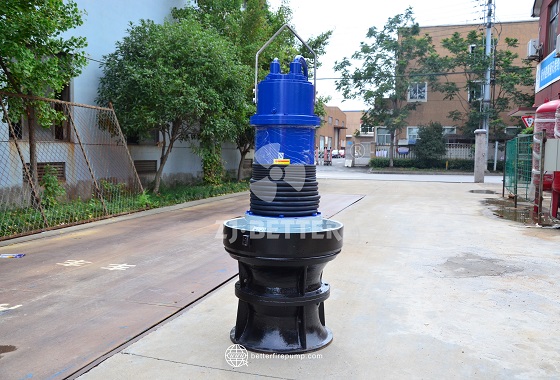
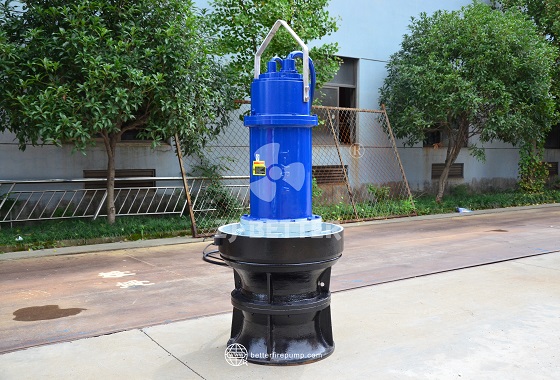
Submersible sewage pumps are suitable for integrated rainwater and sewage discharge projects. They adopt an integrated submersible structure of motor and pump body, and are characterized by compact structure, flexible installation, large flow channel sewage discharge and adaptability to the transportation of media containing particles and fibers. They can be used in basements, underground garages, municipal drainage, industrial sewage and building drainage systems.
Submersible sewage pumps are suitable for integrated rainwater and sewage discharge projects. They are drainage devices that integrate the motor and pump body into a single unit, allowing direct operation in liquids. They are primarily used to transport sewage, wastewater, rainwater, and liquids containing certain solid particles, fibers, and impurities. Designed for underground garages, basements, building sump pits, municipal drainage facilities, industrial plants, sewage treatment systems, construction sites, and areas prone to flooding, these products can be selected based on the required flow rate and head, providing appropriate conveying capacity for sewage lifting and floodwater discharge. The submersible structure eliminates the need for complex surface pump houses, allowing direct installation in sump pits or sewage pits, reducing space requirements and adapting to various drainage project installation conditions. One of the product’s key advantages is its excellent capacity to transport media containing impurities. The pump body can employ a flow channel structure suitable for sewage media transport, using a large-flow-channel impeller or a non-clogging design to allow solid particles and some fibrous impurities in the sewage to pass through the pump body with the liquid, reducing the possibility of impurities accumulating in the flow channel and causing blockages. In environments where rainwater and sewage are mixed, the composition of the medium may change with usage conditions. Therefore, a reasonable flow channel design can improve the equipment’s adaptability to complex drainage conditions. Submersible sewage pumps feature an integrated motor and pump design, resulting in a relatively compact structure and shorter power transmission path, reducing connection points between on-site equipment. The motor is typically used with a sealing structure and corresponding protection measures, enabling the equipment to operate under specified submersible conditions and meet drainage needs in long-term humid or submerged environments. For projects requiring continuous drainage or intermittent start-up, appropriate level control devices can be configured according to actual system requirements to automatically start or stop the system when the water level in the collection tank reaches a set condition, thereby reducing manual operation. The product also offers good installation flexibility in engineering applications, allowing for mobile or fixed installation depending on site conditions. For construction drainage or temporary water accumulation treatment projects requiring frequent relocation, configurations that facilitate hoisting and movement can be adopted; for long-term operating collection wells and sewage lifting systems, fixed installation methods can be used as needed, combined with guide rails, automatic coupling devices, and related pipelines for convenient subsequent inspection and maintenance. A reasonable installation method allows the equipment to better adapt to the spatial layout and operational management requirements of different projects. The performance parameters of submersible sewage pumps can be selected according to project needs. Different models correspond to different flow rates, heads, power, and outlet sizes to meet the application requirements of rapid rainwater discharge, sewage lifting, building drainage, and industrial wastewater transportation. During the selection process, the properties of the medium, solid particle size, fiber content, actual lifting height, pipeline resistance, and operating mode should be comprehensively considered to ensure that the pump set performance matches the system requirements. For sewage environments containing many impurities, selecting appropriate impeller and flow channel structures helps improve the continuity of the drainage process; for projects requiring larger drainage capacity, products with corresponding flow rates can be selected according to actual working conditions. With an integrated structure, the main components are relatively concentrated, facilitating daily operation inspection and maintenance management. Regularly checking the operating status of cables, sealing components, impellers, bearings, and level control devices can promptly identify factors affecting the normal operation of the equipment. For stationary sewage lifting projects, reasonably setting up maintenance and hoisting conditions also facilitates the removal of the equipment from the collection area during subsequent maintenance. Overall, submersible sewage pumps feature submersible installation, compact structure, good adaptability to sewage flow channels, flexible installation methods, and wide application range, making them suitable for integrated rainwater and sewage discharge projects. By rationally matching the equipment’s flow rate, head, power, and installation method, and selecting appropriate product configurations based on actual media conditions, stable drainage equipment support can be provided for projects such as underground space drainage, municipal sewage lifting, industrial wastewater transportation, building drainage, and temporary waterlogging treatment.