Diaphragm Fire Pressure Tank with Water-Air Separation for Enhanced Pressure Stabilization
The diaphragm-type fire-fighting pressure tank adopts a water-air separation structure and uses compressed air energy storage to achieve pressure buffering and stabilization of the fire-fighting pipeline network, reducing the frequent start-up and shutdown of water pumps. It is suitable for fire-fighting pressure stabilization and automatic water supply systems.
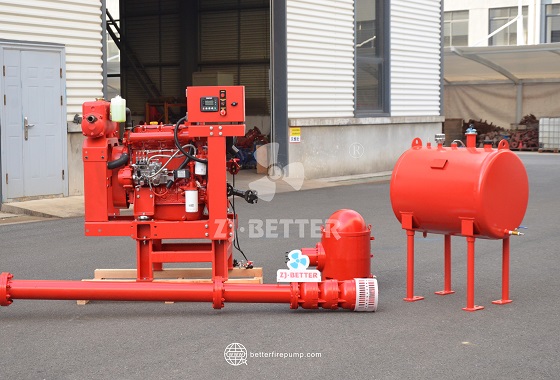
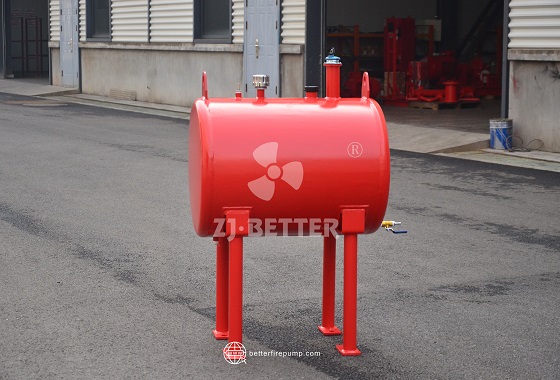
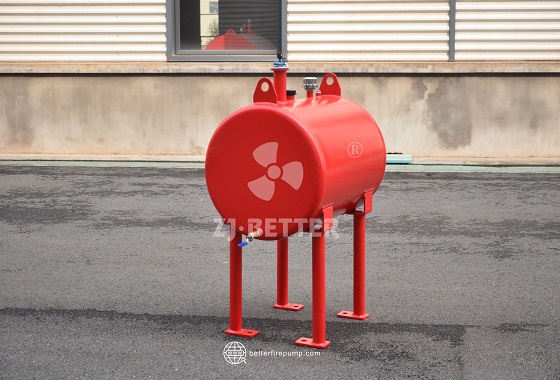
In modern fire-fighting water supply systems, while fire-fighting pressure tanks do not undertake the continuous delivery of large amounts of fire-fighting water like main fire pumps, they are crucial supporting equipment for maintaining stable pipeline pressure, improving equipment start-up and shutdown status, and enhancing system responsiveness. The image shows a horizontal fire-fighting pressure tank, constructed with a steel tank body, a leg-mounted installation structure, and top-mounted air inlet/outlet and pressure connection components. Its exterior is treated with anti-corrosion coating, featuring structural stability, convenient installation, and strong pressure storage capacity. Its core working principle utilizes a diaphragm to separate the water chamber from the air chamber. When the fire-fighting system fills the tank with water, the water pressure deforms the diaphragm, compressing the air in the air chamber and storing pressure energy. When the pipeline pressure drops, the compressed air releases the stored energy, forcing the water stored in the tank into the pipeline, thus compensating for system pressure. Compared to ordinary non-diaphragm pressure storage structures, the diaphragm design reduces direct contact between water and the tank interior, helping to reduce internal corrosion and improving long-term operational performance through stable water-air separation. As a crucial component of fire protection pressure stabilization systems, this product can be used in conjunction with pressure-stabilizing pumps, main fire pumps, pressure switches, control cabinets, pressure gauges, and piping systems. It continuously plays a role in pressure buffering and energy storage when the fire protection system is in a long-term standby state. When minor leaks occur in the fire protection pipeline network, temperature changes, or a small amount of water usage causes a pressure drop, the pressure tank can release the stored pressurized water to quickly compensate the pipeline network, reducing unnecessary pump starts and maintaining the system pressure within a relatively stable range. For fire protection systems such as fire hydrants and automatic sprinklers that require maintaining a certain pressure over a long period, stable pipeline pressure helps the terminal fire protection facilities maintain a good standby status, providing a more reliable pressure foundation for subsequent fire pump startup and continuous water supply when a fire occurs and actual water demand arises. According to the official website, the diaphragm pressure tank consists of a steel outer shell and a rubber diaphragm. The diaphragm completely separates the water chamber and air chamber, utilizing compressed air for energy storage and pressure release during expansion to achieve system pressure regulation. This type of product can be applied to various scenarios such as fire water supply pressure stabilization, variable frequency water supply pressure stabilization, and circulating water systems. From a product structure perspective, the steel tank body is the crucial component bearing the internal working pressure. Therefore, the tank material, welding process, structural strength, and surface protection directly affect the equipment’s safety and lifespan. The tank in the image adopts a transverse cylindrical structure, creating a relatively uniform stress distribution at both ends and the body. It is connected to the foundation via bottom supports, allowing for stable installation in fire pump rooms or equipment areas. A well-designed cylindrical structure helps disperse internal pressure, and combined with welding and pressure ratings that meet design requirements, it can satisfy the pressure storage requirements of various fire-fighting pressure stabilization projects. In actual projects, the design pressure, effective volume, interface dimensions, and pre-charge pressure of the pressure tank need to be rationally selected based on the working pressure of the fire pipeline network, the parameters of the pressure stabilizing pump, the system volume, and design requirements, rather than simply based on the tank size. Publicly available information indicates that the pressure rating and volume of pressure vessels can be selected based on the fire pump head and system requirements; therefore, procurement should be based on matching the complete fire water system parameters. The diaphragm is a key structural component that distinguishes this product from traditional pressure storage devices. Its function is not only to separate water and air but also to perform pressure transmission and energy storage and release functions. When water enters the tank, the diaphragm undergoes elastic deformation under water pressure, compressing the air in the air chamber and storing energy. When the pipeline pressure decreases, the compressed air pushes the diaphragm back to its original position, thus discharging the water stored in the water chamber back into the pipeline. Through this cycle, the pressure tank can buffer small flow demands and pressure fluctuations in the fire protection system. Because the water and the inner wall of the tank are isolated by the diaphragm, the corrosive effects of long-term water retention on the tank’s interior are reduced, while also helping to maintain stable pressure storage performance. Official information indicates that the diaphragm structure prevents the inner wall of the tank from being in direct contact with water for extended periods, reducing internal corrosion and external condensation, thereby extending the equipment’s service life. Pressure stability is a crucial objective for the pressure tank during the long-term operation of the fire protection system. Fire protection pipelines are not always completely static; changes in ambient temperature, minor leaks, slight valve adjustments, and pressure changes in terminal equipment can all cause a slow drop in pipeline pressure. Without proper pressure storage and stabilization devices, each pressure drop could trigger the start of the pressure-stabilizing pump, potentially increasing the frequency of main fire pump starts in severe cases. Pressure tanks can absorb and release pressure changes within a certain range, making the system more adaptable to small pressure fluctuations and reducing unnecessary frequent start-ups and shutdowns of pump units. Official documentation also emphasizes that pressure tanks can handle small water supply and pipeline leaks, reducing the number of pump starts and stops, which helps extend equipment lifespan. For main fire pumps, reducing unnecessary starts is of practical significance. Main fire pumps are typically designed for high-flow fire water supply during fires; their core task is to quickly start and provide a continuous flow of water when a real fire occurs and a large water demand arises, rather than to compensate for minor pressure losses in the daily pipeline network. With properly configured fire pressure tanks, when the system experiences only a small pressure drop, the pressure water stored in the tank can be used for compensation first, and the system can be stabilized after the pressure recovers. When a real fire occurs, fire hydrants are opened, or the sprinkler system uses a large amount of water, the pipeline pressure will drop significantly. At this time, the fire control system can start the corresponding fire pump units according to the set conditions, entering the formal fire water supply state. This tiered response method allows pressure tanks, pressure-stabilizing pumps, and main fire pumps to each undertake their respective tasks, improving the coordination of the entire fire water supply system. For high-rise buildings, large warehouses, industrial plants, and energy facilities, fire protection pipelines typically have considerable length and numerous terminal devices, placing higher demands on pressure stability. Pressure tanks can be installed in fire pump rooms or pressure-stabilized water supply systems, operating in conjunction with pressure-stabilizing pumps and control systems to reduce pressure fluctuations in the pipeline network through pressure storage and buffering. Especially in projects with long pipeline distances, large system capacities, or multiple fire zones, appropriate pressure storage equipment can help improve system pressure regulation. For high-rise buildings, a comprehensive design considering building height, zone pressure, and fire pump head is necessary to ensure that the pressure tank’s operating parameters match the overall system parameters. The product itself cannot determine the final pressure performance of the entire fire protection system; rather, it is through reasonable combination with other equipment that a complete pressure stabilization and fire water supply solution is formed. This pressure tank also has good system compatibility, allowing for use in conjunction with electric fire pumps, diesel fire pumps, pressure-stabilizing pumps, and automatic control equipment. In automatic fire water supply systems, pressure sensors or electrical contact pressure gauges detect changes in pipeline pressure, the control cabinet controls the operation of the pressure-stabilizing pump based on the pressure setpoint, and the pressure tank performs pressure storage and fluctuation buffering functions. When the system pressure drops to the set range, the control equipment can start the pressure-stabilizing pump to replenish the pressure; when the pressure reaches the set value, the pressure-stabilizing pump stops operating, and the pressure tank continues to maintain the system pressure. In the event of a large volume of fire-fighting water usage, the system pressure drops rapidly, and the main fire pump starts operating according to the fire control logic. According to publicly available information on fire-fighting pressure-stabilizing equipment, a complete system typically consists of a water pump, control equipment, and a pressure regulating energy storage device, maintaining pipeline pressure through pressure sensing and automatic control. In terms of materials and manufacturing, fire-fighting pressure tanks need to withstand internal pressure for extended periods; therefore, tank strength, welding quality, sealing performance, and external corrosion protection are all important indicators. The product in the picture uses a complete red protective coating, which not only meets the common visual identification requirements of fire-fighting equipment but also provides basic corrosion protection for the steel casing. In actual engineering projects, if the equipment is installed in a damp pump room, underground equipment room, or outdoor environment, appropriate corrosion protection measures need to be selected based on the site temperature, humidity, water quality, and installation conditions. The internal diaphragm needs to have good elasticity, fatigue resistance, and sealing ability to withstand long-term repeated filling and drainage processes. According to official website information, the diaphragm needs to maintain good elasticity even after long-term cyclic use. Therefore, the diaphragm material and manufacturing quality are important factors affecting the long-term stable operation of the pressure tank. The interfaces and pressure components on the top of the product also play a crucial role; they can be used for inflation, deflation, pressure detection, or connection to fire-fighting pipelines. During installation, the inlet and outlet water directions, connecting pipe diameters, valve configurations, and the positions of pressure gauges and safety accessories must be determined according to the design drawings to ensure the pressure tank can properly fill, store, and release pressure. For engineering projects, the pressure tank is not a simple independent container but should be designed as part of the overall fire-fighting water supply system. A tank capacity that is too small may not effectively buffer pressure fluctuations, while a capacity that is too large may increase space and cost. An unreasonable pre-charge pressure setting will also affect the effective water storage capacity and system stability. Therefore, during the project selection phase, calculations and confirmations should be made based on the actual fire pump parameters, pipeline volume, working pressure, and fire protection code requirements. In terms of maintenance, the structure of the fire-fighting pressure tank is relatively clear. Routine inspections mainly include the tank appearance, weld and anti-corrosion layer condition, interface sealing, pressure gauge display, valve condition, and diaphragm and pre-charge pressure. After long-term operation, regular inspections should be conducted according to the equipment’s operating environment and manufacturing requirements. Any abnormal pressure, leaks, corrosion, or damaged accessories should be addressed promptly. For diaphragm pressure tanks, attention should also be paid to whether the diaphragm is aging, damaged, or has lost elasticity, and it should be inspected and replaced according to maintenance requirements. Through standardized installation, proper inflation, regular testing, and timely maintenance, the pressure tank’s stable energy storage capacity can be maintained, preventing a decrease in system pressure regulation effectiveness due to insufficient maintenance. For large-scale fire protection projects, pressure tank maintenance should also be included in the overall fire protection system’s regular inspection plan, conducted simultaneously with fire pumps, control cabinets, pressure switches, valves, and pipelines. Overall, the core advantage of diaphragm-type fire-fighting pressure tanks is not simply “storing water,” but rather providing pressure buffering, initial water supply, and pressure stabilization support for the fire protection network through water-air separation and compressed air energy storage mechanisms. Its steel tank provides a reliable pressure-bearing foundation, while the elastic diaphragm handles water-air separation and pressure transmission. Reasonable interfaces and pressure components facilitate connection to fire-fighting pressure stabilization systems. Working in conjunction with pressure-stabilizing pumps, main fire pumps, and automatic control equipment, it reduces the impact of small-flow pressure changes on pump operation, maintaining a more stable standby state for the fire-fighting system. For industrial plants, warehousing and logistics centers, commercial buildings, high-rise buildings, energy facilities, and other projects requiring long-term maintenance of fire-fighting network pressure, this product can be configured in terms of capacity and pressure according to different system parameters, providing reliable pressure storage and regulation support for fire-fighting water supply systems. It is important to emphasize that the pressure rating, volume, pre-charge pressure, connection method, and installation location in actual projects should be determined based on the specific project design and applicable standards, and the selection, installation, and commissioning should be completed by qualified professionals. Through scientific parameter matching and standardized installation, the diaphragm-type fire-fighting pressure tank can fully leverage its advantages in water-air separation, energy storage and buffering, pressure stabilization, and reducing frequent pump start-ups and shutdowns, further improving the overall reliability and operational efficiency of the fire-fighting water supply system.