Multistage Booster Fire Pump Systems Optimize Fire Protection Solutions for Large Projects
Multistage Booster Fire Pump Systems provide high-pressure water supply, superior head performance, stable pressure output, diesel-powered reliability, intelligent control, and continuous-duty operation for high-rise buildings, industrial facilities, airports, warehouses, infrastructure projects, and large-scale fire protection engineering applications worldwide.
With the accelerating pace of modern urbanization and the continuous growth in the number of large-scale industrial projects, commercial complexes, high-rise buildings, transportation hubs, and infrastructure projects, fire safety has become a crucial and indispensable aspect of project planning, construction, and operation. Especially in locations such as super high-rise buildings, large-scale warehousing and logistics centers, petrochemical parks, data centers, airport terminals, rail transit hubs, and modern industrial manufacturing bases, the large building area, complex fire protection pipe networks, long water supply distances, and numerous fire-fighting equipment place higher standards and stricter requirements on fire-fighting water supply systems. Traditional fire-fighting water supply equipment often suffers from insufficient water pressure, reduced long-distance water supply capacity, and limited system response speed when facing large-scale, multi-area, and high-lift fire-fighting demands. Therefore, multi-stage booster fire pump systems, with their high-lift output, stable pressurization capacity, continuous water supply performance, and excellent system adaptability, are gradually becoming an important solution in the field of large-scale fire protection engineering, providing a more efficient and reliable guarantee for modern fire safety construction.
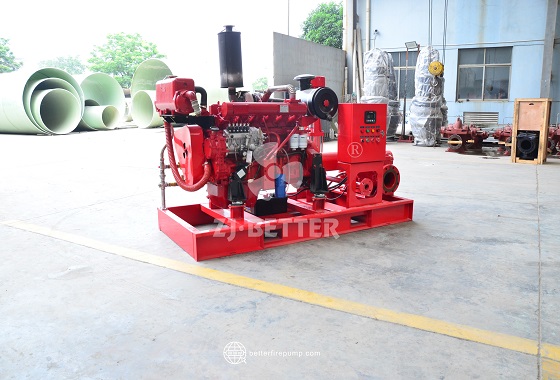
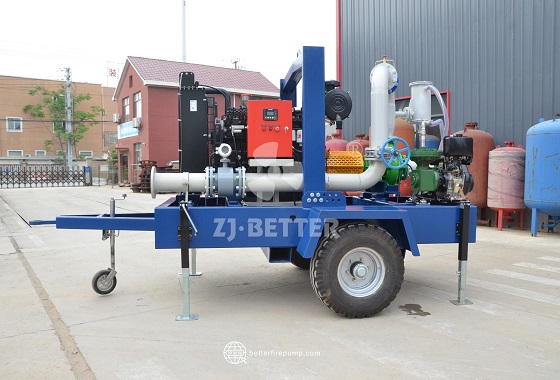
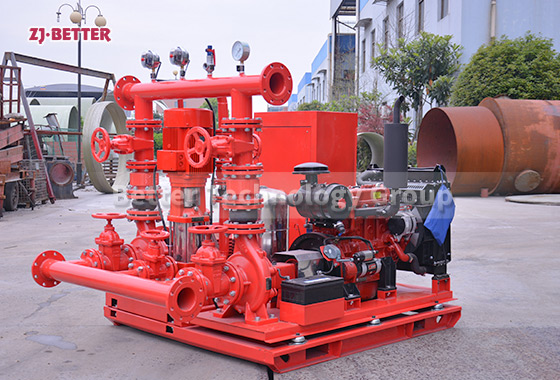
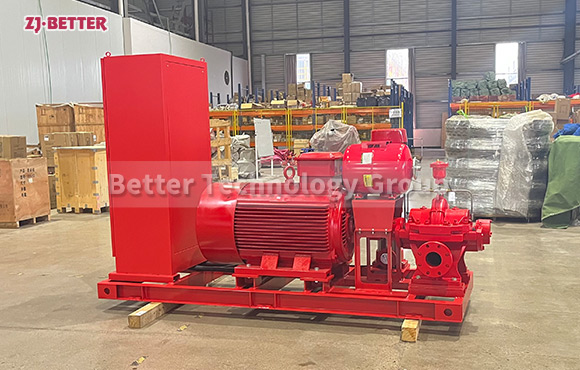
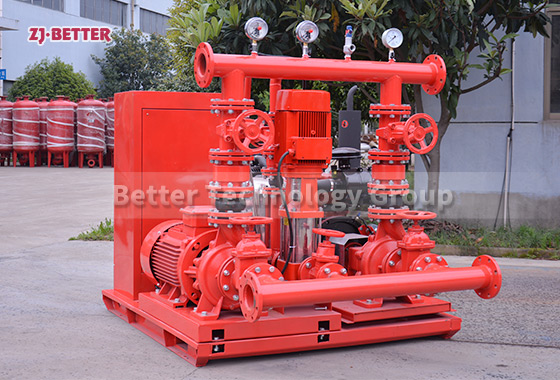
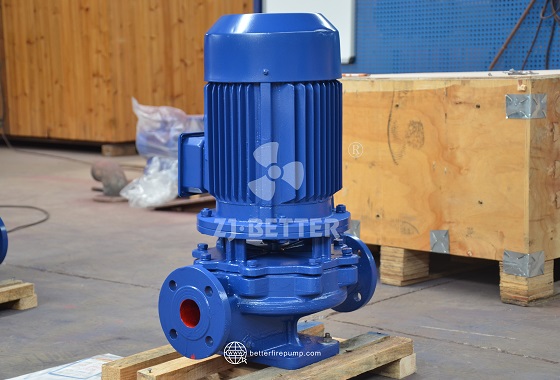
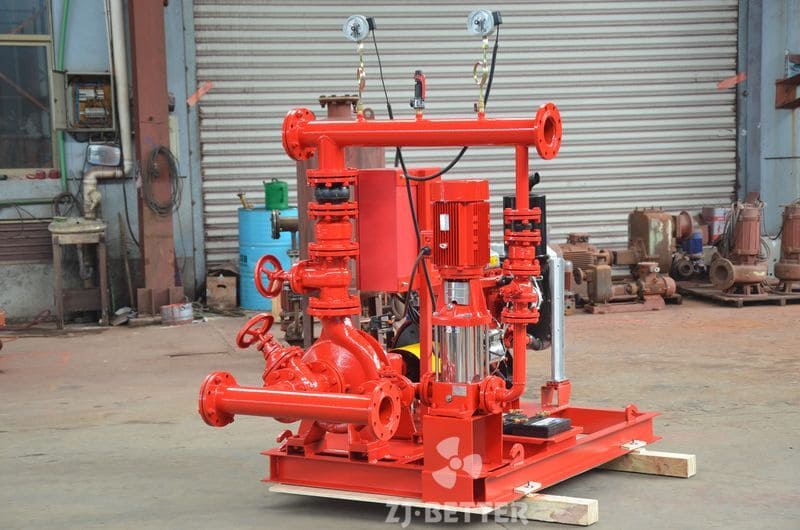
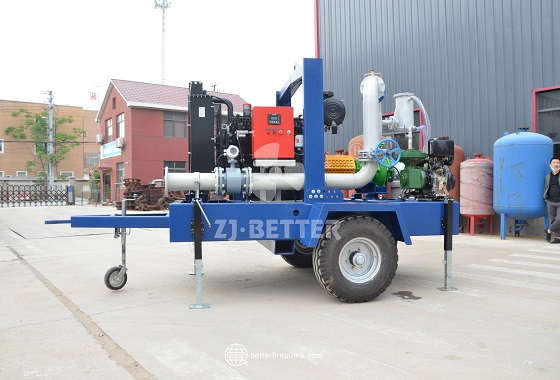
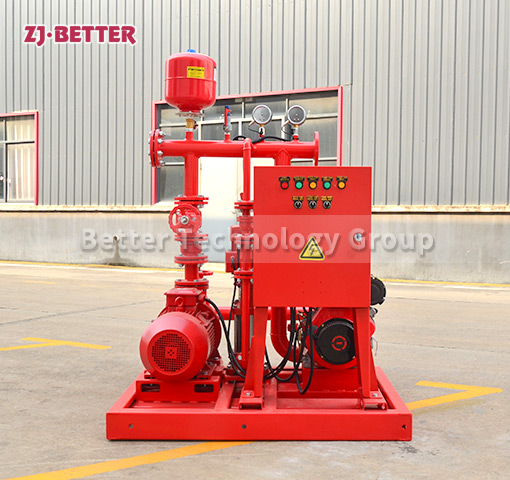
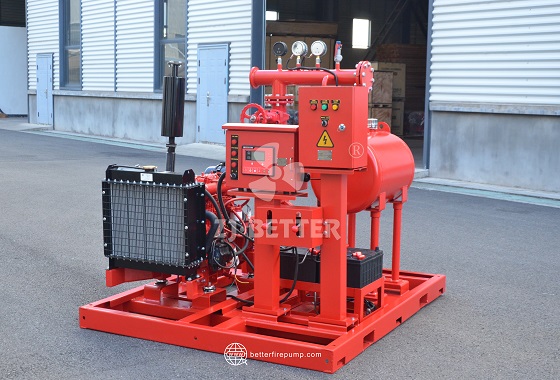
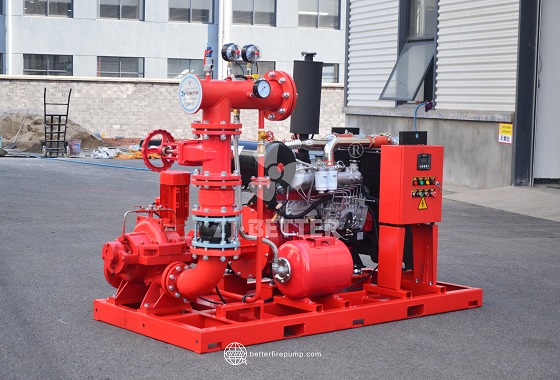
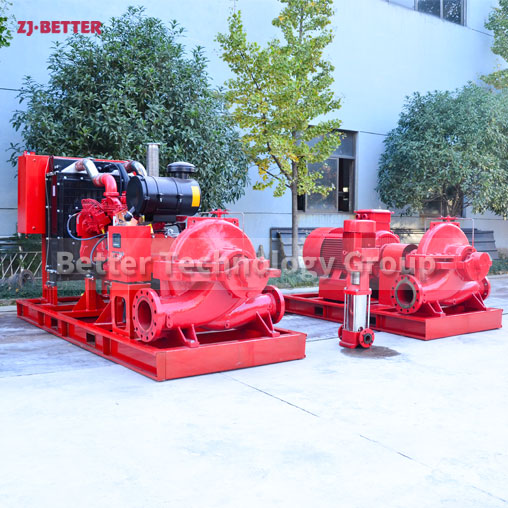
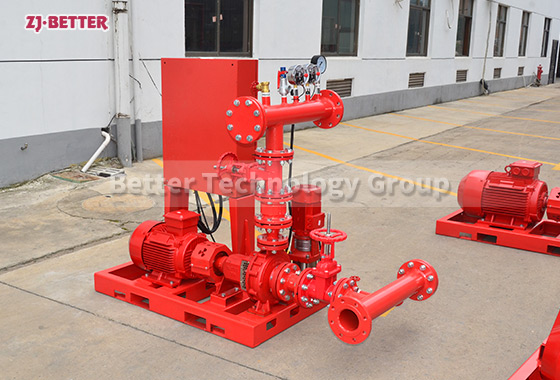
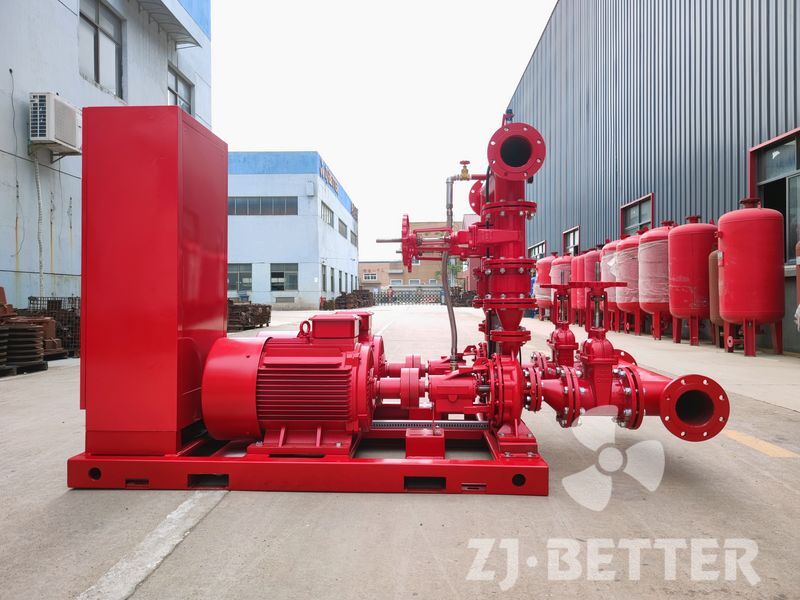
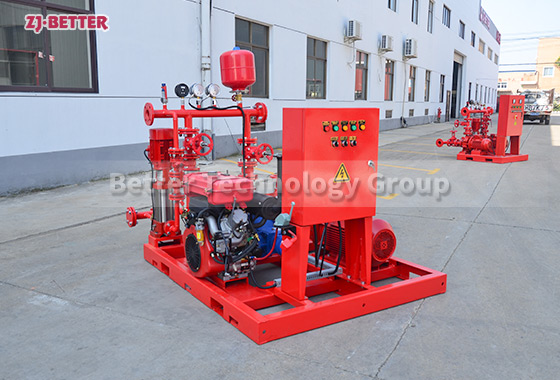
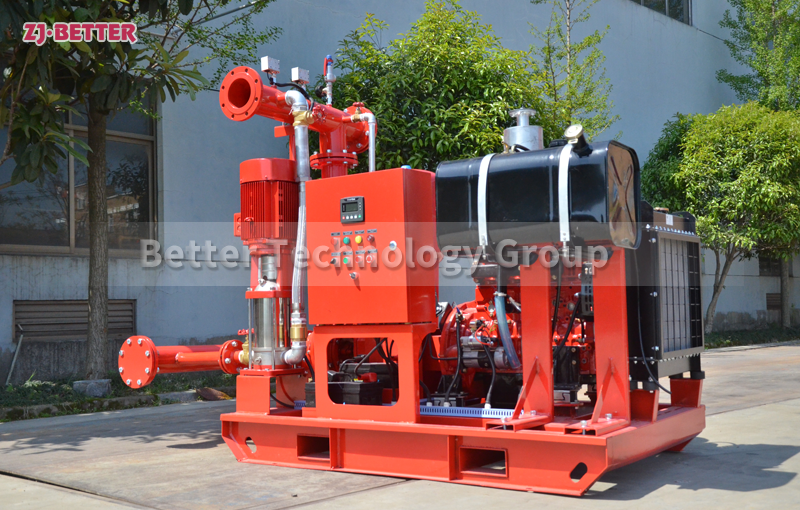
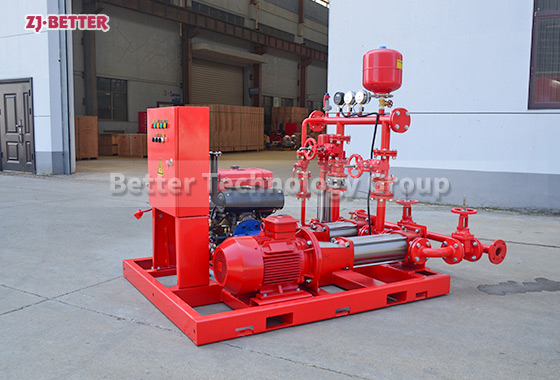
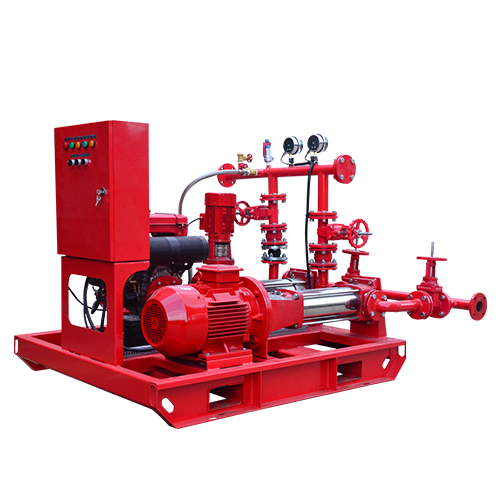
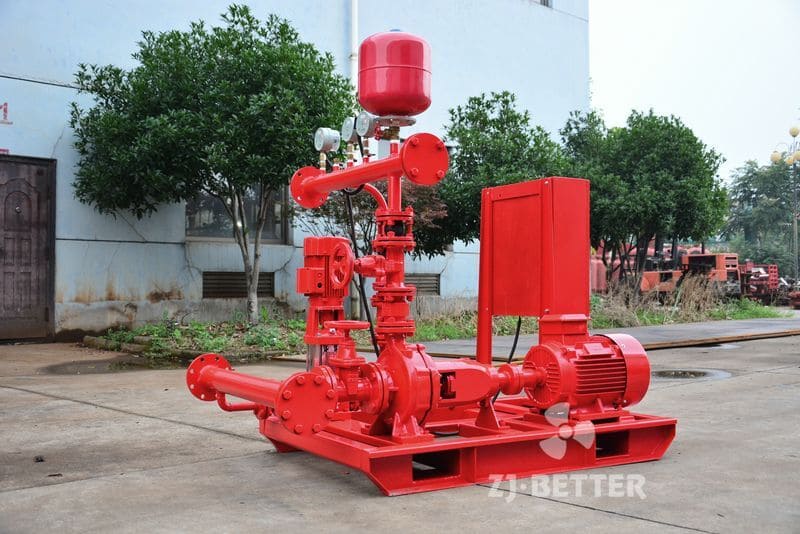
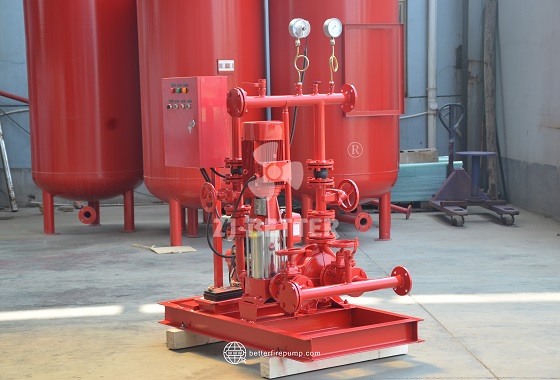
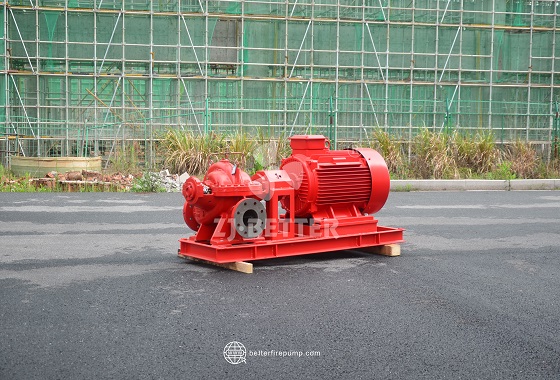
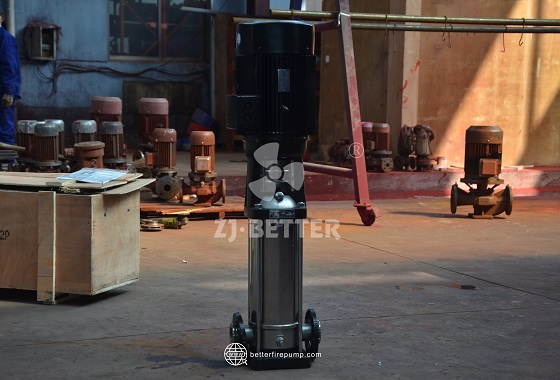
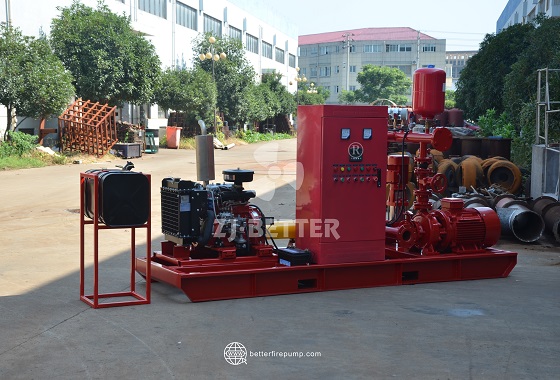
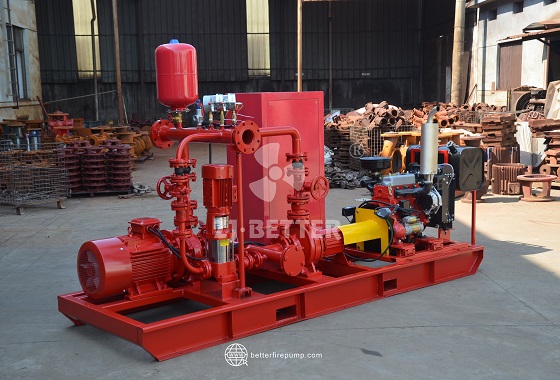
A multi-stage booster fire pump system is a high-performance fire water supply device that employs a multi-stage impeller cascade structure. By progressively increasing water pressure through multiple impellers, the liquid continuously gains energy within the pump body, achieving higher head and more stable pressure output. The system typically consists of a diesel or electric drive system, a multi-stage centrifugal fire pump, an intelligent control system, pressure monitoring devices, a cooling system, and a common base. The overall modular integrated design not only meets the high-pressure fire water supply needs of large-scale projects but also maintains stable operation in complex fire piping networks, providing continuous and reliable water supply support for automatic sprinkler systems, fire hydrant systems, water cannon extinguishing systems, and other fire protection facilities.
High head water supply capacity is one of the most significant technical advantages of multi-stage booster fire pump systems. With the continuous increase in modern building height and the expanding coverage of fire protection systems, fire equipment needs to transport large amounts of fire water to farther distances and higher locations. Ordinary single-stage fire pumps often experience efficiency drops or insufficient pressure under high-lift conditions. Multi-stage booster fire pumps, however, use multiple impellers to progressively increase pressure, enabling the system to achieve greater head output while maintaining high efficiency. For high-rise buildings, super high-rise buildings, and large industrial parks, this high head capacity ensures that fire-fighting water reaches the target area quickly, improving the response efficiency of the fire suppression system and enhancing overall fire protection capabilities.
Stable pressure output performance is a crucial foundation for the reliable operation of fire protection systems. Large-scale project fire protection networks typically feature long pipelines, numerous branches, and a large number of terminals. When multiple fire-fighting devices are activated simultaneously, the system is prone to pressure fluctuations and even insufficient water supply. Multi-stage booster fire pump systems, through optimized hydraulic models and impeller structure design, achieve continuous and stable pressure output, maintaining balanced water supply even under high load conditions. Stable water supply pressure ensures that the sprinkler system coverage meets design requirements, keeping fire hydrants and fire monitors in optimal working condition, thereby improving overall fire suppression efficiency.
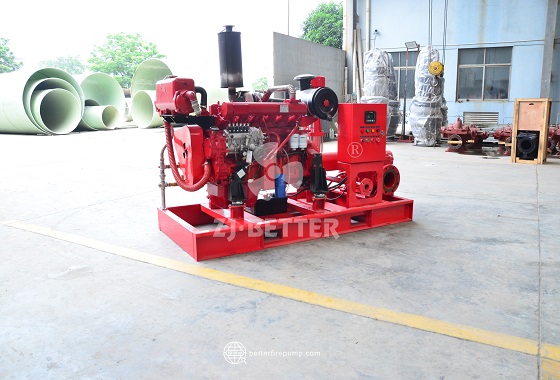
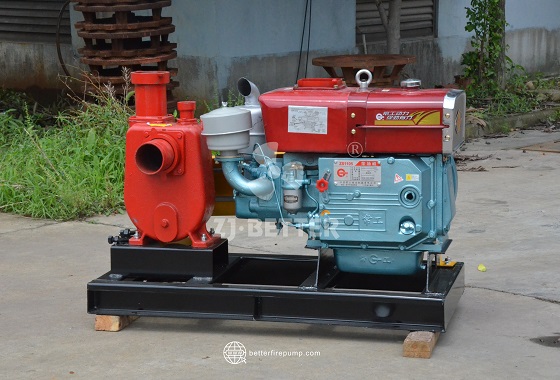
Diesel-powered drive systems provide more reliable safety guarantees for fire protection in large-scale projects. During a fire, the power supply system may be damaged or cut off for safety reasons, rendering traditional electric fire pumps inoperable. Multi-stage booster fire pump systems utilize industrial-grade diesel engines as their core power source, possessing independent operating capabilities and capable of rapid start-up and continuous operation without external power. The engines undergo rigorous testing and optimized design, boasting strong power output and excellent durability, ensuring stable operation even in high-temperature, low-temperature, high-humidity, and complex industrial environments, providing continuous power support for the fire protection system.
Rapid start-up capability is a crucial indicator of fire protection equipment performance. The initial stage of a fire is often the golden time for controlling its spread; therefore, fire water supply systems must be able to be operational in the shortest possible time. Multi-stage booster fire pump systems employ advanced automatic control technology and high-performance start-up modules, rapidly completing engine start-up, pump operation, and pressure build-up upon receiving a fire signal. The entire process is automated, significantly reducing response time, improving fire extinguishing efficiency, and minimizing fire losses.
The application of intelligent control systems further enhances equipment operating efficiency and management levels. Modern multi-stage booster fire pump systems are equipped with a digital control platform capable of real-time monitoring of key parameters such as engine operating status, pump pressure, flow rate, fuel level, oil pressure, and coolant temperature. The system features automatic alarm and fault protection functions, promptly issuing warnings and implementing protective measures when abnormalities are detected to prevent equipment damage and system failure. Some configurations also support remote monitoring and IoT connectivity, enabling managers to monitor equipment operating status in real time via the network, improving maintenance efficiency and safety management.
Continuous operation capability is a crucial performance characteristic particularly important for large-scale fire protection projects. In large fire accidents or complex rescue operations, fire water supply tasks often last for hours or even longer; therefore, equipment must possess long-term stable operation capabilities. Multi-stage booster fire pump systems utilize industrial-grade power platforms and high-efficiency cooling systems. Through optimized cooling circulation and lubrication system design, the engine and pump units maintain stable operation under high load conditions. A large-capacity fuel tank design further extends continuous operating time, providing reliable support for fire rescue operations.
High-efficiency and energy-saving design is an important development direction for modern fire protection equipment. While fire pumps are primarily used in emergency situations, operating costs must also be considered during routine testing and maintenance. Multi-stage booster fire pump systems utilize high-efficiency impellers and optimized flow channel structures to reduce hydraulic losses and improve energy utilization. Compared to traditional fire pumps, the system achieves higher head and greater pressure output while reducing fuel consumption and mechanical wear, thereby reducing long-term operating costs and extending equipment lifespan.
Structural reliability is crucial for fire-fighting equipment. Multi-stage booster fire pump systems employ high-strength cast pump bodies and heavy-duty bearing designs. Key components undergo rigorous quality testing and durability testing, enabling them to withstand long periods of standby and frequent start-ups. The impeller inside the pump body is made of wear-resistant and corrosion-resistant materials, effectively extending the equipment’s lifespan in complex water environments. The overall structure is optimized to improve operational stability and reduce vibration and noise levels, creating a better operating environment for the project.
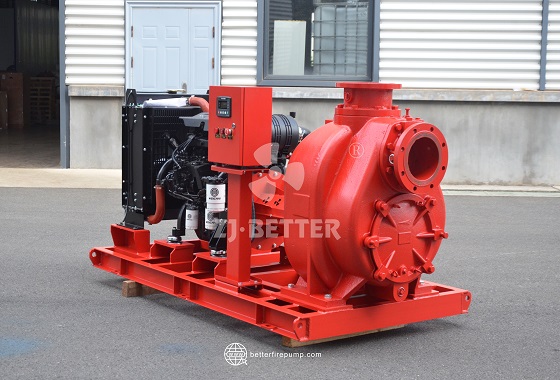
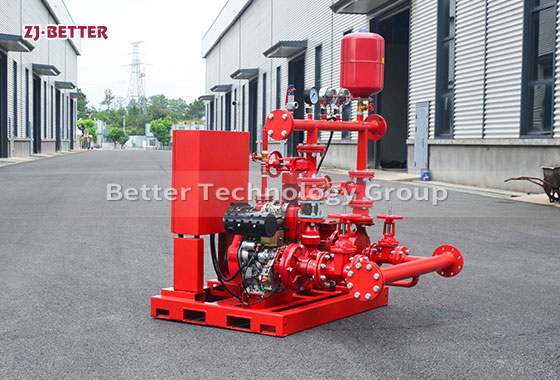
Modular design makes equipment installation and maintenance more convenient. The system adopts a skid-mounted layout, integrating the engine, fire pump, control system, and auxiliary equipment onto a unified base platform, achieving a highly integrated design. The equipment undergoes complete assembly and performance testing before leaving the factory, requiring only simple connections upon arrival at the site for immediate use, significantly shortening the installation cycle and reducing construction costs. Maintenance personnel can easily access key components for inspection and maintenance, improving equipment maintenance efficiency and reducing downtime.
In terms of application areas, multi-stage booster fire pump systems are widely used in various large-scale fire protection projects. In high-rise and super high-rise buildings, the equipment can meet the needs of high-rise fire water supply and long-distance water transmission; in petrochemical parks and energy projects, the system can provide stable and reliable high-pressure fire water supply; in large warehousing and logistics centers and industrial parks, it can meet the requirements for large-area fire pipeline network coverage; in airports, ports, rail transit hubs, and large public facility projects, multi-stage booster fire pumps also play a crucial role, providing important guarantees for personnel safety and asset protection.
With the continuous improvement of global fire protection standards and the ongoing advancement of smart fire protection construction, multi-stage booster fire pump systems are also developing towards digitalization, intelligence, and high efficiency. Future equipment will further integrate IoT technology, big data analytics, remote operation and maintenance platforms, and intelligent fault prediction systems to achieve real-time equipment status monitoring, operational trend analysis, and preventative maintenance management. Through digital upgrades, fire protection systems will be able to respond more accurately to fire risks, improve overall fire safety levels, and reduce operating costs.
Overall, multi-stage booster fire pump systems, with their high head output capacity, stable pressure performance, independent diesel power, rapid start-up response, intelligent control management, and continuous operational reliability, have become an important component of modern large-scale fire protection engineering. Whether in high-rise buildings, industrial parks, energy projects, or large infrastructure projects, this equipment can provide efficient and reliable fire water supply, laying a solid foundation for the construction of the project’s fire safety system. With the continuous growth of global fire protection engineering needs and technological advancements, multi-stage booster fire pump systems will play an even more important role in the future of fire protection, building a safer, more efficient, and more reliable fire protection network for modern society.