
Ultra High-Flow Trailer Mounted Pumps for Large-Scale Flood Drainage Operations
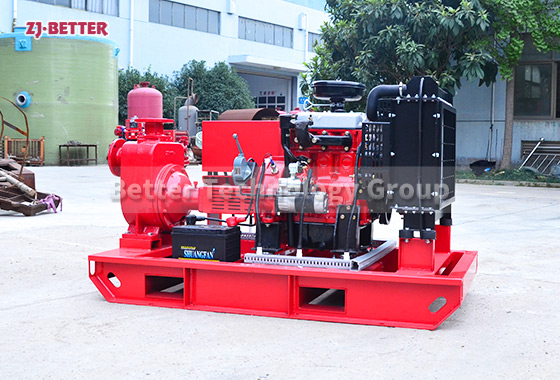
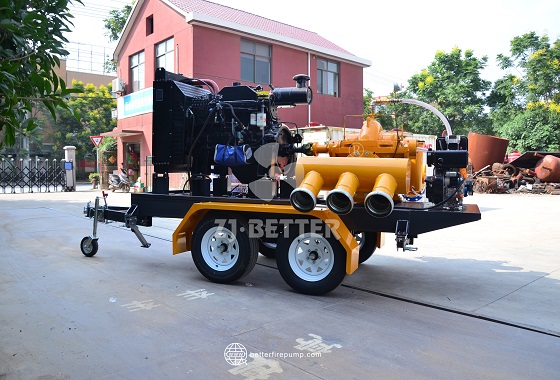
The large-scale flood control and drainage project’s ultra-high flow trailer pump adopts a heavy-duty trailer chassis, a high-performance diesel engine, and advanced self-priming pump technology. It has advantages such as ultra-high flow drainage, rapid deployment, long-distance water delivery, continuous and stable operation, and intelligent control. It is widely used in urban flood control and drainage, municipal emergency drainage, water conservancy projects, mine drainage, building dewatering, and disaster relief projects, providing efficient and reliable solutions for various large-scale drainage projects.
With the increasing frequency of extreme weather events globally, rapid urbanization, and the continuous expansion of infrastructure, flood control and drainage have become crucial components of modern urban management, water conservancy projects, and emergency response systems. Whenever natural disasters such as torrential rains, typhoons, and floods strike, large amounts of water rapidly accumulate, severely impacting urban transportation, industrial production, residents’ lives, and public safety. Simultaneously, large-scale water conservancy projects, municipal construction projects, mining projects, and river management projects also require efficient and reliable drainage equipment to ensure construction and operational safety. Against this backdrop, the ultra-high flow trailer-mounted pump, specifically designed for large-scale flood control and drainage projects, has gradually become an important piece of equipment in the modern flood control, drainage, and emergency drainage field due to its superior drainage capacity, flexible mobility, and stable and reliable operation. This equipment utilizes a heavy-duty trailer structure, a high-performance diesel power system, and high-flow self-priming pump technology, enabling rapid deployment in various complex environments. It establishes efficient drainage capacity in the shortest possible time, providing strong technical support for flood control, emergency response, and large-scale drainage projects.
Ultra-high flow rate is one of the product’s core performance advantages. Designed for applications such as urban flooding, river overflows, large-scale foundation pit water accumulation, and industrial park drainage, the equipment utilizes an optimized large-channel impeller and a high-efficiency hydraulic model, enabling it to transport large volumes of water per unit time and significantly improve drainage efficiency. Compared to traditional drainage equipment, the ultra-high flow trailer pump can lower water levels in a shorter time, reducing flood damage to infrastructure and property. Especially in situations of widespread flooding caused by torrential rain, the equipment can operate continuously and stably, quickly restoring road traffic and construction conditions, providing reliable support for urban emergency management departments and engineering units.
The equipment employs advanced self-priming technology, enabling it to quickly establish a water intake state without manual priming. Traditional large centrifugal pumps typically require priming before startup, while the ultra-high flow trailer pump automatically removes air from the suction pipeline through its self-priming system, creating a vacuum environment and completing the water intake process in a very short time. This rapid start-up capability is crucial for flood control and disaster relief efforts, as floods are often sudden and time-sensitive; the earlier the equipment is put into operation, the more effectively the disaster can be controlled. Whether in urban flooding or emergency river pumping, self-priming technology significantly improves the equipment’s emergency response speed.
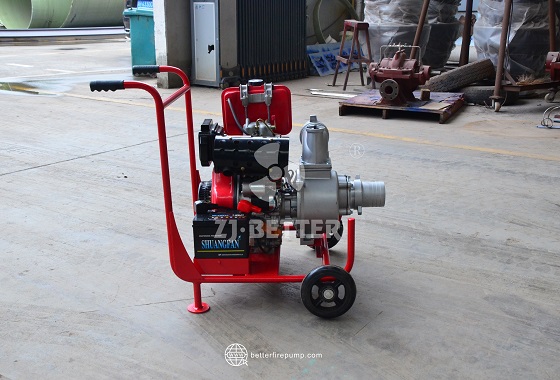
The trailer-mounted structure gives the equipment extremely high mobility and deployment efficiency. The equipment uses a heavy-duty dual-axle or multi-axle trailer chassis, allowing it to be quickly towed to the work site by ordinary engineering vehicles. This mobility is particularly important for flood control and disaster relief tasks requiring cross-regional deployment. The equipment can be quickly deployed without complex installation; it is ready for operation after being secured by a support system. Compared to fixed drainage stations and traditional large pumping stations, mobile trailer pumps can flexibly change deployment locations according to changes in the disaster situation, improving equipment utilization efficiency. Whether it’s urban drainage projects, water conservancy construction, or emergency disaster relief, it enables rapid arrival, rapid installation, and rapid drainage.
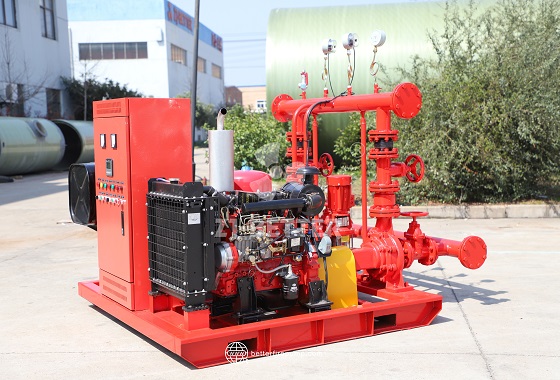
A powerful and reliable diesel power system ensures stable operation of the equipment in various complex environments. Many flood control and drainage tasks occur in areas with power outages, remote areas, or areas with damaged infrastructure, where ordinary electric equipment is insufficient to meet the actual needs. The ultra-high flow trailer pump is equipped with an industrial-grade diesel engine, featuring strong power output, excellent fuel economy, and high continuous operating capability. The engine is optimized for heavy-duty operation, maintaining stable performance even in high-temperature, high-humidity, and high-load environments. The independent power system eliminates dependence on external power sources, significantly improving on-site operational capabilities and emergency response levels.
To meet the long-term continuous operation requirements of large-scale flood control projects, the equipment has been comprehensively strengthened in terms of durability. The pump body is made of high-strength, wear-resistant materials, and key components undergo precision machining and strict quality control, enabling it to withstand long-term high-flow, high-head operating conditions. The bearing system features a heavy-duty design, effectively reducing operating friction and wear. The mechanical seal structure has been optimized and upgraded to maintain excellent sealing performance in complex water quality environments. The engine cooling system employs efficient heat dissipation technology to ensure stable operating temperature during continuous operation. Even after continuous operation for tens of hours or even days, the equipment maintains stable and reliable drainage capacity.
In terms of water delivery capacity, the ultra-high flow trailer pump not only possesses powerful pumping capabilities but also enables long-distance water delivery operations. The equipment can be equipped with large-diameter water pipelines, using powerful engines and optimized hydraulic design to transport water to designated areas. This feature makes it widely applicable in river dredging, reservoir water diversion, agricultural irrigation, and industrial water supply projects. For projects requiring cross-regional diversion and long-distance discharge, the equipment can effectively improve construction efficiency and reduce overall operating costs.
The intelligent control system further enhances the equipment’s operating efficiency and safety. The control panel integrates engine monitoring, water pump operation monitoring, fault diagnosis, automatic alarms, and data logging functions. Operators can monitor the equipment’s operating status in real time and make adjustments according to site requirements. When the system detects abnormal temperature, insufficient oil pressure, insufficient fuel, or other abnormal conditions, it will automatically issue an alarm signal and activate protection procedures to prevent equipment damage. Intelligent management not only improves equipment reliability but also reduces manual management costs and operational complexity.
The overall structure of the equipment fully considers the needs of complex outdoor environments. The frame is constructed of high-strength steel, possessing excellent seismic resistance and impact resistance. External metal components are treated with anti-corrosion coatings to withstand rain, salt spray, mud, and harsh weather conditions. The trailer system is equipped with high-load-bearing tires and reliable braking devices, ensuring safe transport of the equipment under various road conditions. Its robust and durable structural design allows the equipment to serve long-term in flood control, drainage, water conservancy projects, and emergency rescue operations.
Besides flood control and drainage projects, this equipment is widely used in municipal emergency drainage, mine drainage, construction site dewatering, water conservancy construction, agricultural irrigation, river management, and industrial liquid transportation. In urban infrastructure construction, it can be used for underground drainage and stormwater pipe network maintenance; in mining projects, it can be used for pumping out accumulated water from tunnels; in agriculture, it can undertake large-scale farmland irrigation and water resource allocation tasks; and in industry, it can be used for temporary water delivery and liquid transfer operations. Its wide range of applications makes it an important piece of equipment for engineering construction and emergency management departments.
As global requirements for flood control and disaster reduction capabilities and infrastructure safety levels continue to increase, large-scale ultra-high flow trailer pumps specifically designed for flood control and drainage projects are playing an increasingly important role. With its ultra-high flow rate drainage capacity, rapid self-priming start-up technology, flexible and mobile deployment advantages, powerful diesel power system, long-distance water conveyance performance, continuous and stable operation capability, and intelligent management functions, this equipment can effectively meet the stringent requirements of modern flood control and drainage projects and emergency rescue missions. Whether facing sudden floods, urban waterlogging, or the drainage needs of large-scale projects, it can provide efficient, reliable, and continuous solutions, providing solid support for protecting people’s lives and property, enhancing urban resilience, and promoting high-quality infrastructure development.