High-Flow Split Case Fire Pump Systems Optimize Modern Fire Protection Network Development
High Flow Split Case Fire Pump Systems optimize modern fire protection networks with large-capacity water delivery, stable pressure performance, high-efficiency operation, diesel-powered reliability, intelligent control, and continuous-duty capability. Ideal for industrial plants, petrochemical facilities, warehouses, airports, ports, commercial buildings, data centers, infrastructure projects, and large-scale fire protection applications requiring dependable emergency water supply solutions.
With the accelerating pace of modern urbanization and the continuous expansion of industrial infrastructure, fire safety has become an indispensable and crucial component in the construction of various buildings and engineering projects. From large industrial parks, petrochemical bases, and logistics warehousing centers to high-rise buildings, commercial complexes, airports, ports, rail transit hubs, and data centers, an increasing number of projects are placing higher demands on fire water supply systems. Fire protection systems not only need to rapidly provide sufficient water during a fire, but also require long-term stable operation, reliable pressure output, and the ability to supply water to a wide-area fire pipe network. Against this backdrop, high-flow split-case fire pump systems, with their superior high-flow delivery performance, high-efficiency operation, stable and reliable water supply capacity, and excellent maintenance convenience, have gradually become one of the core equipment in modern fire protection network construction, providing strong water supply guarantees for various large-scale fire protection projects.
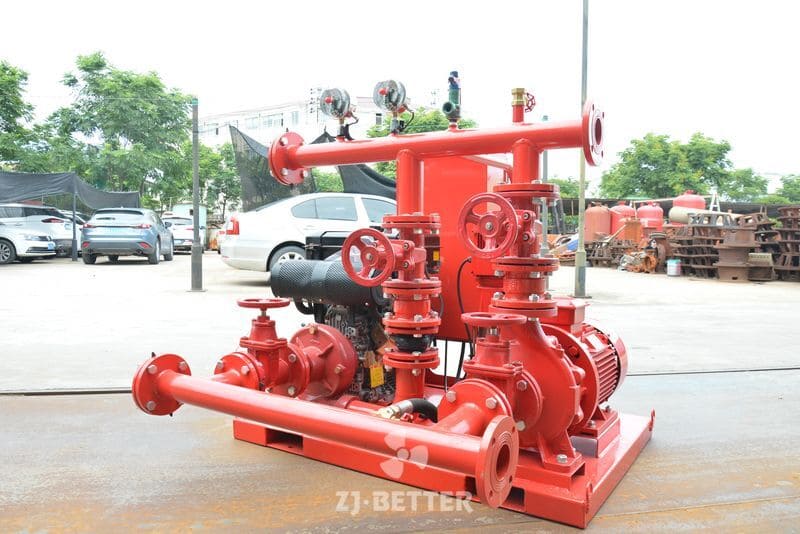
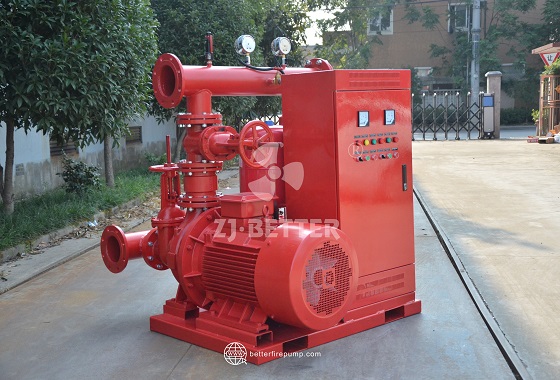
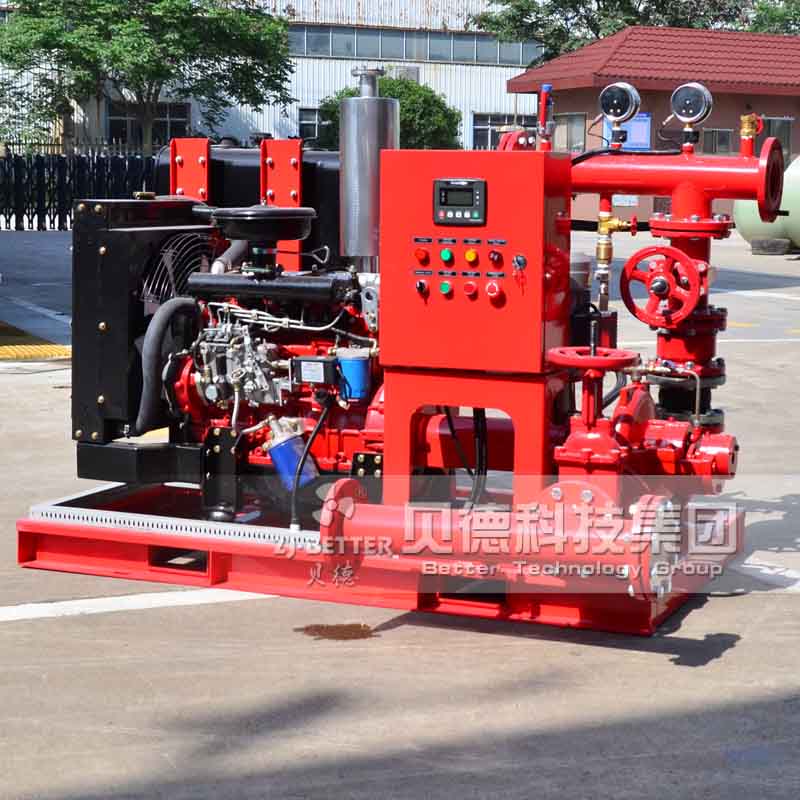
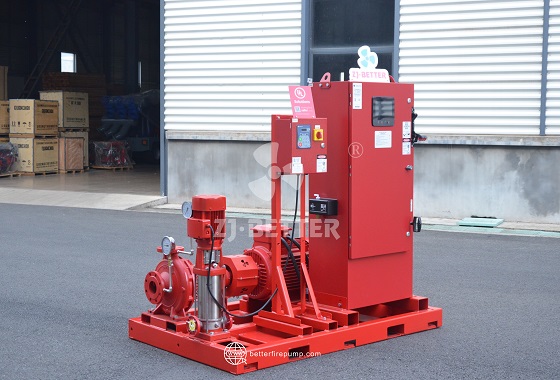
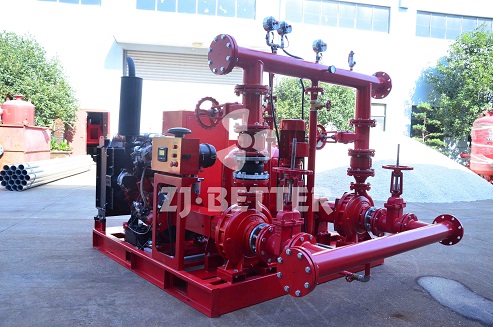
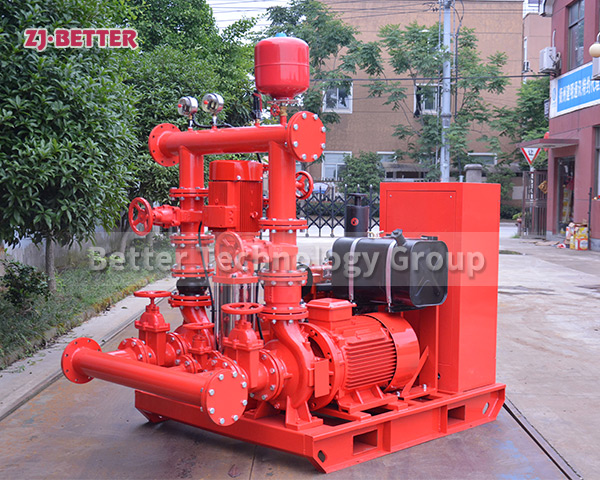
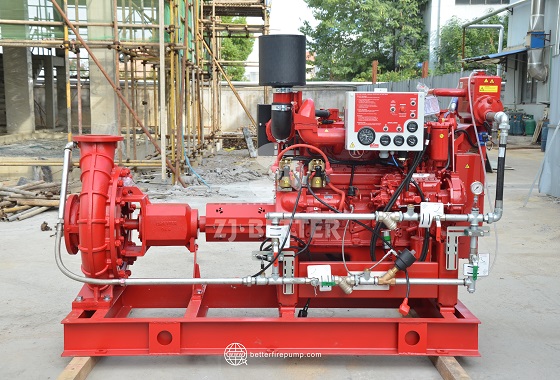
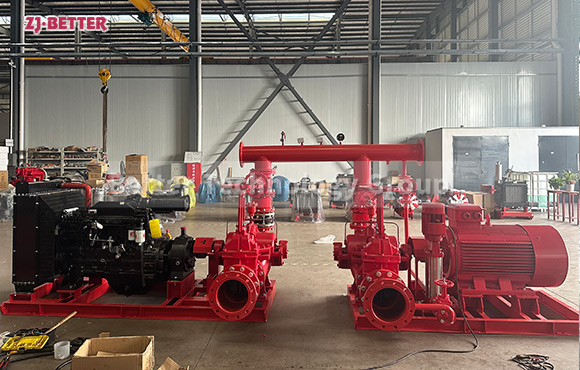
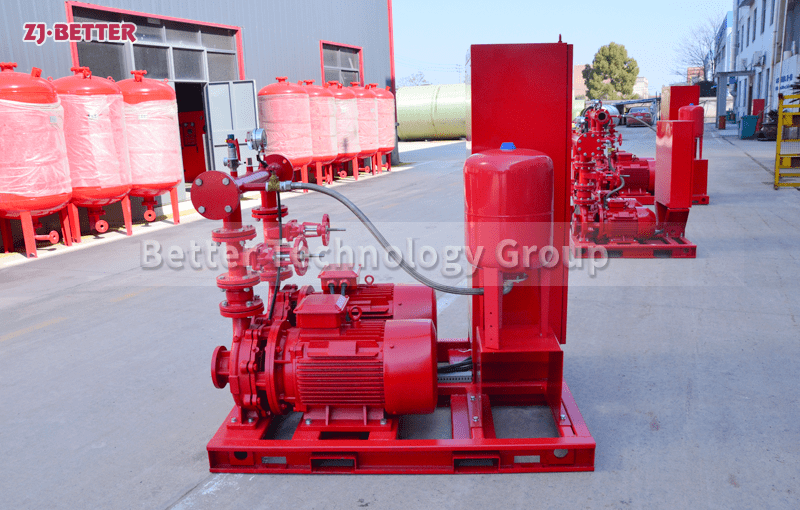
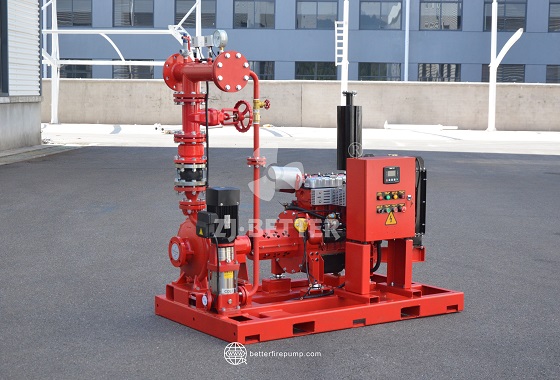
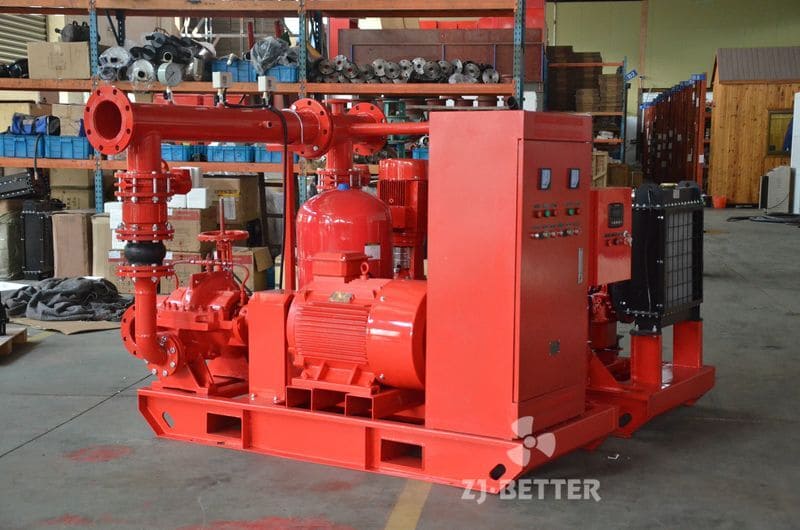
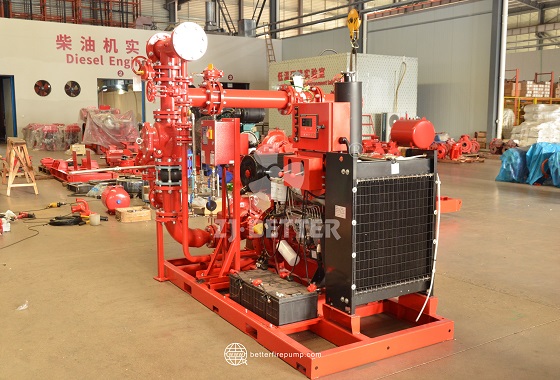
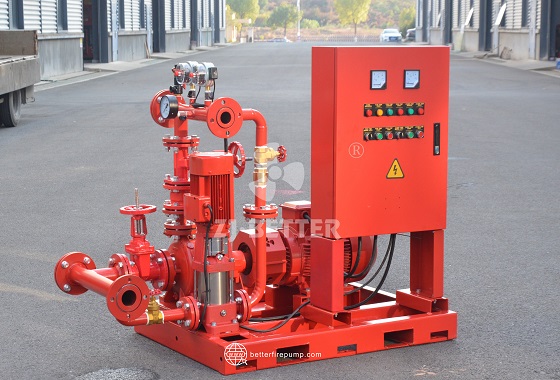
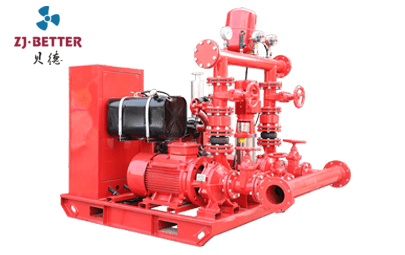
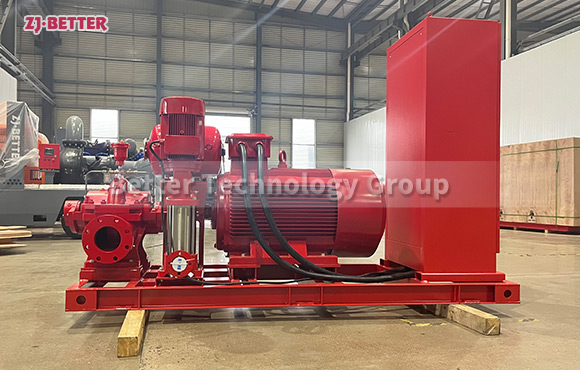
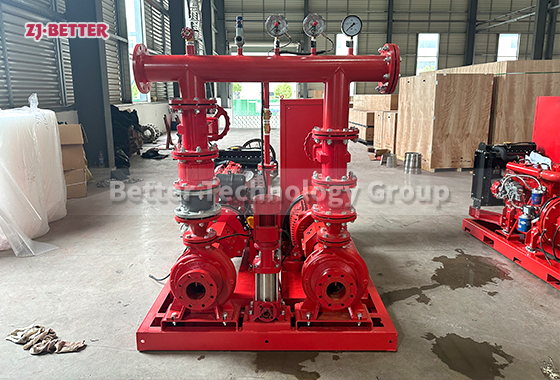
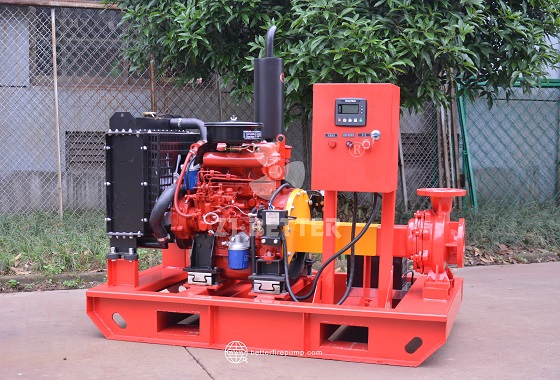
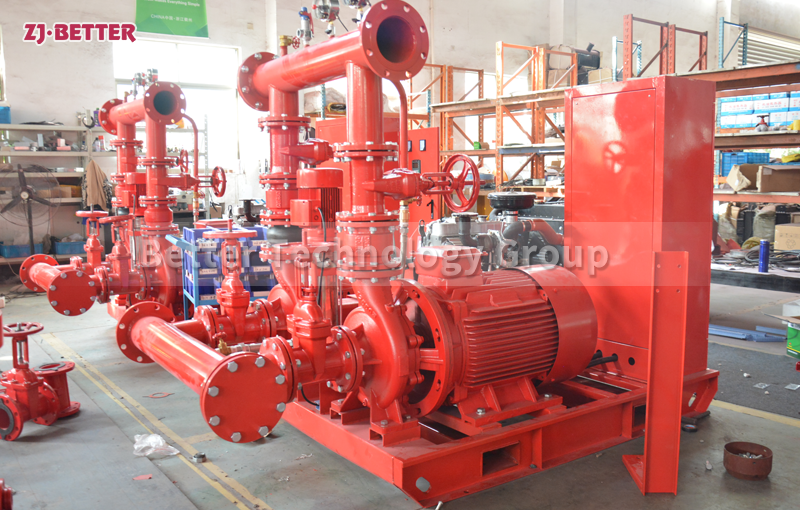
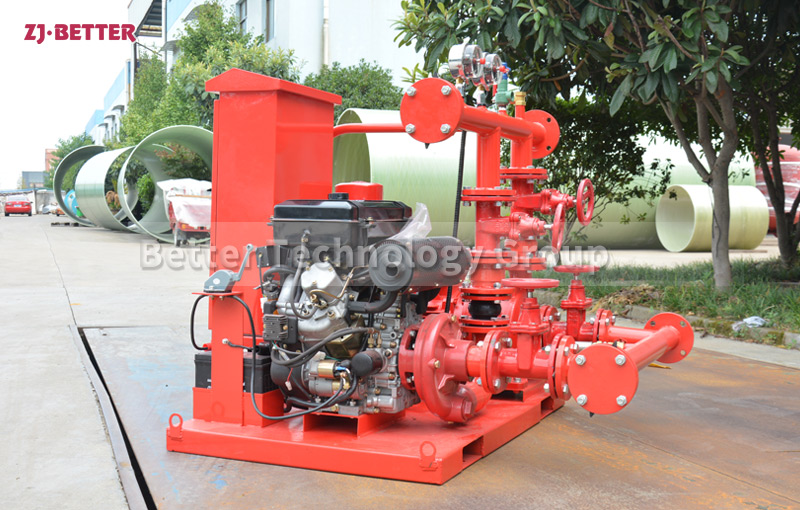
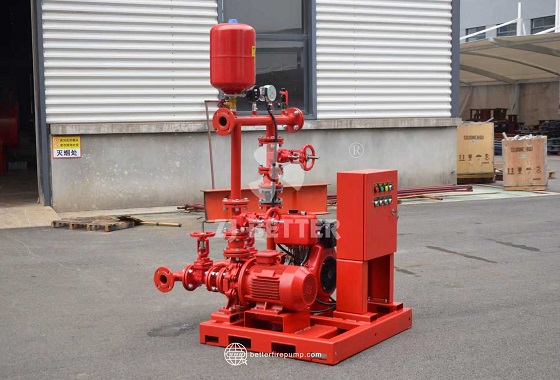
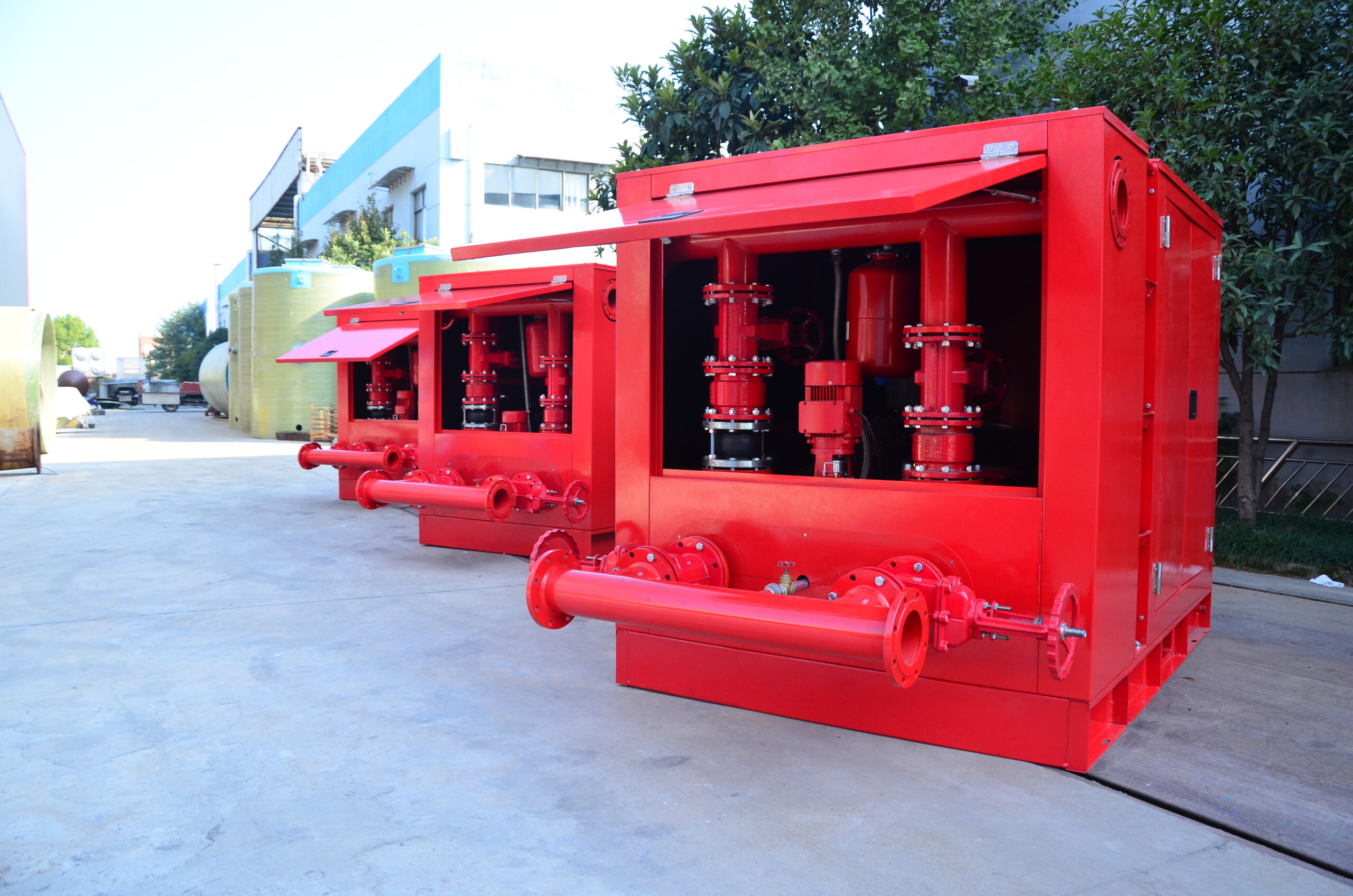
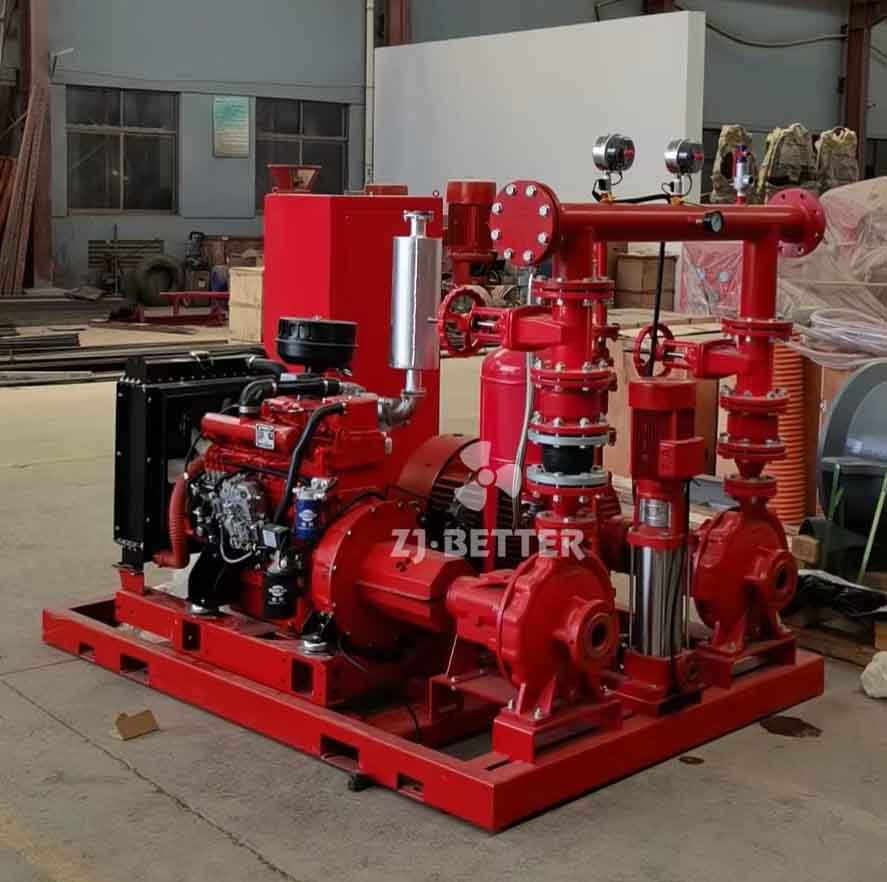
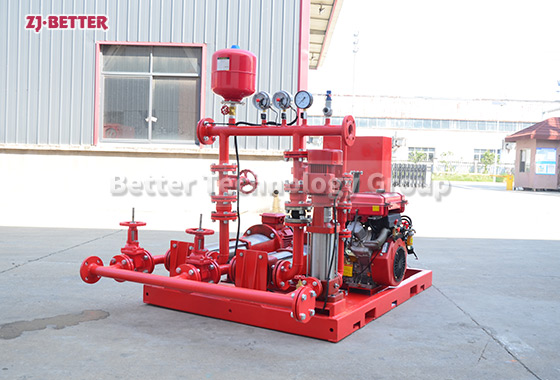
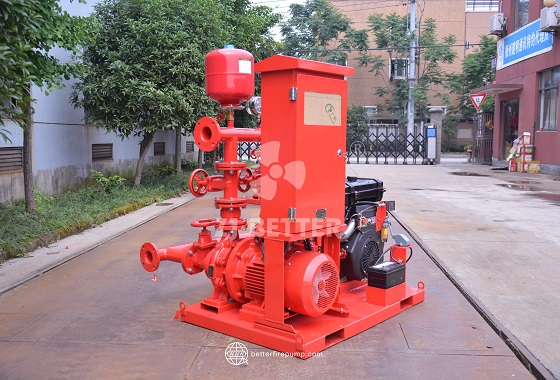
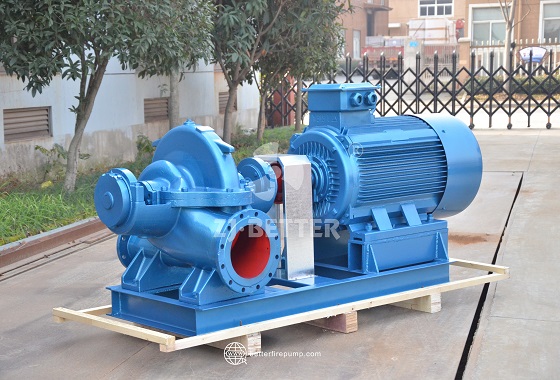
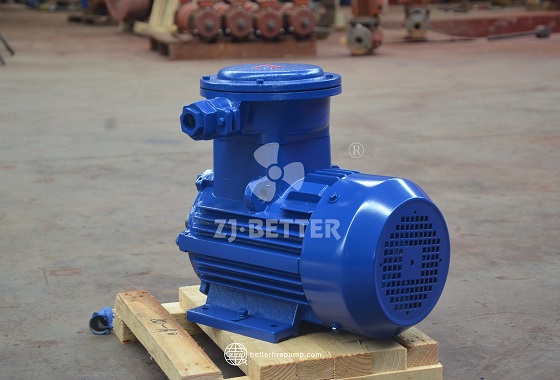
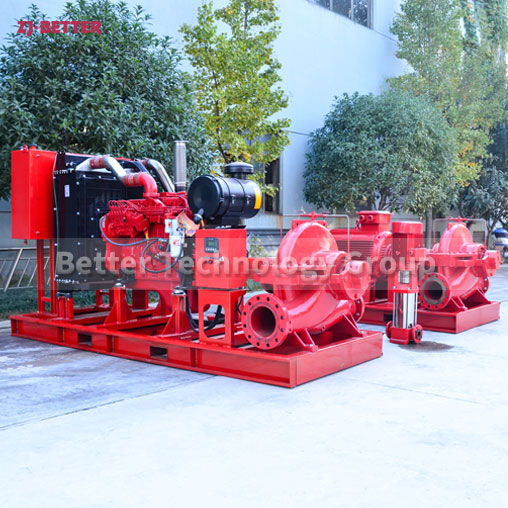
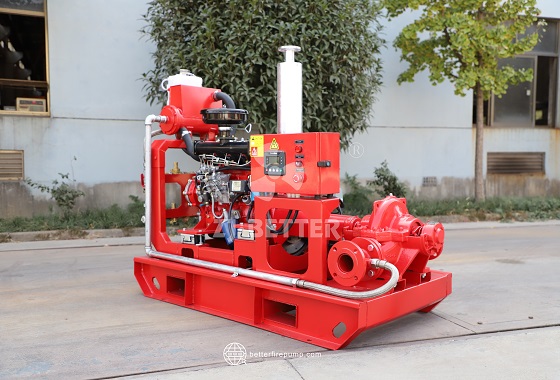
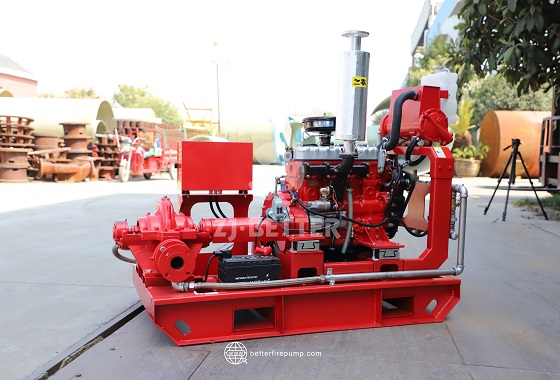
A high-flow split-case fire pump system is a professional fire water supply equipment designed with a double-suction split-case centrifugal pump structure. It mainly consists of a diesel engine or electric drive system, a split-case double-suction fire pump, an intelligent control system, a cooling system, a coupling assembly, and a common base. The split-case design allows the pump body to split horizontally in the middle, facilitating equipment inspection and maintenance. Simultaneously, the double-suction impeller design allows liquid to enter the pump body from both sides of the impeller simultaneously, significantly improving flow output capacity and reducing axial force, ensuring stable and efficient operation even under high flow conditions. Thanks to this unique structure, high-flow split-case fire pump systems are widely used in large-scale fire water supply projects and have become an important component of modern fire protection networks.
High-flow-rate water supply capacity is one of the most prominent performance advantages of split-case fire pump systems. Modern large-scale buildings and industrial projects typically have extensive fire piping systems and numerous fire terminal devices. When a fire occurs, multiple sprinkler zones, fire hydrant systems, and fire monitors may be operational simultaneously, placing extremely high demands on the fire water supply system. High-flow split-case fire pump systems, employing an optimized double-suction impeller and wide-flow-channel pump body structure, can provide a large volume of fire-fighting water in a short time and maintain a stable output. Even when multiple fire zones are using water simultaneously, the system can still ensure sufficient water supply, providing continuous support for firefighting operations.
High-efficiency operation is a key reason for the system’s widespread market popularity. The double-suction impeller structure allows liquid to enter both sides of the impeller evenly, significantly reducing inlet velocity and hydraulic losses, thus improving overall efficiency. Compared to traditional single-suction centrifugal pumps, split-case fire pumps offer higher energy efficiency and lower operating losses under the same flow conditions. For fire protection systems requiring long-term standby and regular testing, this high-efficiency design not only reduces energy consumption but also minimizes equipment wear, effectively lowering the overall project’s lifecycle operating costs.
Stable pressure output is crucial for fire protection systems. Firefighting equipment can only achieve optimal fire suppression when supported by sufficient pressure. High-flow split-case fire pump systems achieve an optimal balance between flow and pressure through advanced hydraulic model design and precision machining. Even under high-flow operation, they maintain stable pressure output, providing reliable water supply for automatic sprinkler systems, fire hydrant systems, water cannon systems, and special fire suppression facilities. For large industrial projects and ultra-large-area buildings, this stability significantly improves the overall operational effectiveness of the fire protection system.
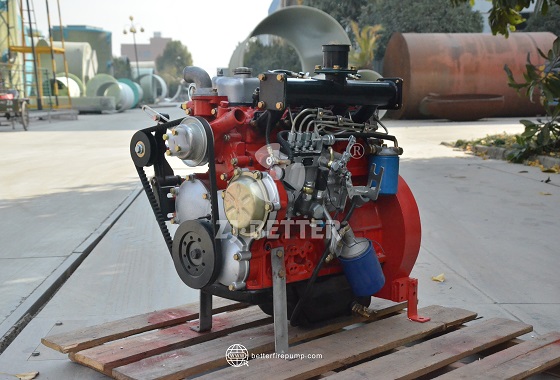
The diesel-powered drive further enhances the equipment’s emergency response capabilities. In the event of a fire, the power supply system may be affected or forced to shut down, while the fire water supply system must ensure continuous operation. High-flow split-case fire pump systems use industrial-grade diesel engines as their core power source, allowing independent operation without relying on an external power grid. The engines feature strong power output, high fuel efficiency, long continuous operating time, and strong environmental adaptability, ensuring stable operation even in high-temperature, low-temperature, humid, or dusty environments, providing reliable power support for the fire water supply system.
Rapid start-up performance is a crucial indicator of the quality of fire-fighting equipment. The initial stage of a fire is critical for controlling its spread; therefore, the fire water supply system must be operational in the shortest possible time. High-flow split-case fire pump systems employ intelligent start-up control technology and an automatic response mechanism, rapidly completing engine start-up, pump operation, and pressure build-up upon receiving a fire signal. The entire response process is highly automated, requiring no complex manual operation, thus effectively shortening the water supply start-up time and improving fire-fighting efficiency.
Structural reliability is a fundamental aspect of modern fire-fighting equipment design. Fire pumps may be in standby mode for extended periods, but must be able to start successfully on the first attempt in critical moments. High-flow split-case fire pump systems utilize high-strength cast pump bodies and heavy-duty bearings. Key components undergo rigorous durability testing and quality inspection, enabling them to withstand frequent testing and long periods of standby operation. The double-suction structure effectively balances impeller axial forces, reducing bearing load and mechanical wear, improving equipment operational stability, and extending service life.
The split-case design significantly simplifies equipment maintenance. Traditional fire pumps often require the removal of numerous pipes and connecting components during maintenance, while split-case fire pumps allow direct inspection of the impeller, bearings, and sealing components simply by opening the pump body cover, drastically reducing maintenance time and costs. For large projects, this ease of maintenance reduces equipment downtime, increases fire protection system availability, and lowers overall operation and maintenance costs.
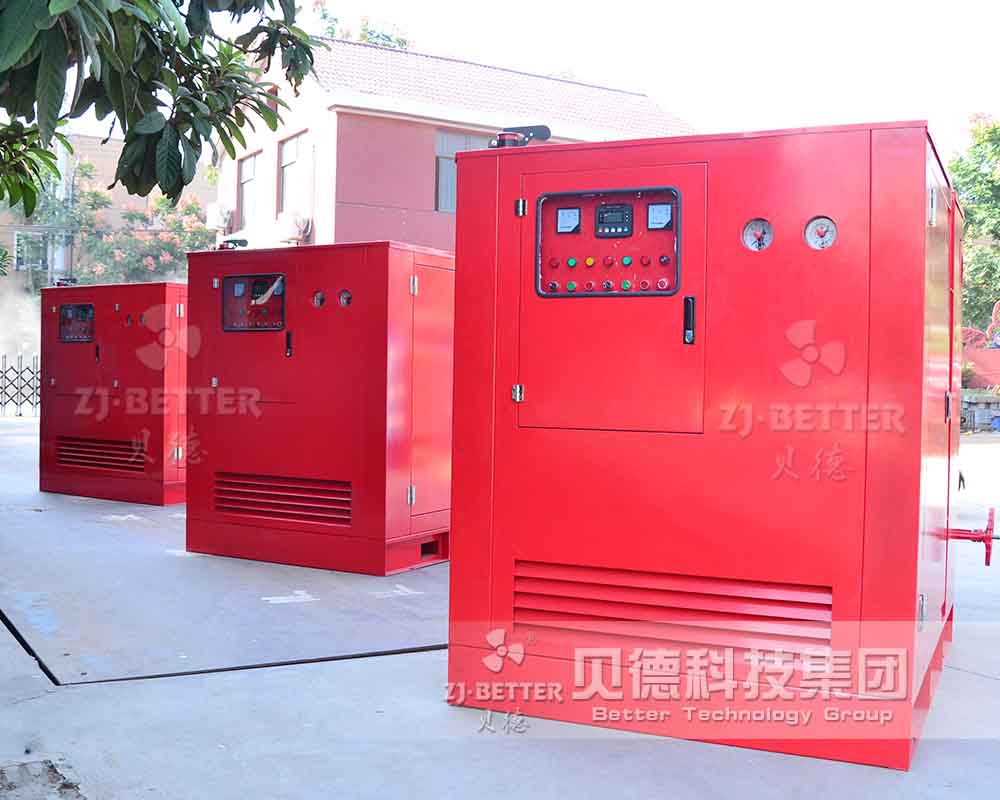
The application of intelligent control systems further enhances equipment management. Modern high-flow split-case fire pump systems are typically equipped with digital control platforms that can monitor key parameters such as pressure, flow rate, engine speed, fuel level, oil pressure, and coolant temperature in real time. The system features automatic alarm, fault diagnosis, and protection functions, promptly issuing warnings and implementing protective measures when abnormal conditions occur. Some advanced configurations also support remote monitoring and network communication, enabling managers to monitor equipment operation status in real time via computer or mobile terminal, achieving intelligent fire protection management.
Continuous operation capability is a crucial performance indicator of particular concern in large-scale fire protection engineering projects. In large-scale fire accidents or complex rescue missions, fire-fighting equipment may need to operate continuously for extended periods. High-flow split-case fire pump systems employ efficient cooling and optimized lubrication system designs to ensure continuous and stable operation of the engine and pump unit under high load conditions. A large-capacity fuel reserve design further extends the continuous operating time of the equipment, providing a reliable water supply for firefighting operations.
From a practical application perspective, high-flow split-case fire pump systems have an extremely wide range of applicability. In large industrial parks and manufacturing plants, high-flow-rate fire pump systems can provide stable, high-volume water supply for complex fire-fighting pipe networks; in petrochemical and energy projects, they can meet the fire protection needs of high-risk areas; in airport, port, and transportation infrastructure projects, they can provide reliable fire protection for critical facilities; in high-rise buildings and commercial complexes, they can support the operation of large-area sprinkler and fire hydrant systems; and in warehousing and logistics centers and data center projects, they can provide continuous fire protection for important assets and equipment.
With the continuous improvement of global fire protection standards and the ongoing advancement of smart fire protection construction, high-flow-rate split-case fire pump systems are developing towards digitalization, intelligence, and efficiency. Future equipment will further integrate IoT technology, remote operation and maintenance platforms, big data analytics, and predictive maintenance systems to achieve real-time monitoring and intelligent management of equipment operating status. Through the analysis of historical operating data, the system can predict potential failures in advance and formulate maintenance plans, thereby improving equipment reliability and reducing operation and maintenance costs. Furthermore, more efficient hydraulic designs and environmentally friendly power technologies will be continuously applied to next-generation fire pump products, further improving energy utilization and environmental friendliness.
Overall, high-flow split-case fire pump systems have become key equipment in modern fire protection network construction due to their superior high-flow-rate water supply capacity, high-efficiency operation, stable pressure output, independent diesel power, rapid start-up response, reliable structural design, intelligent control functions, and convenient maintenance. Whether in large-scale industrial projects, commercial buildings, energy facilities, or public infrastructure, this system provides a robust water supply guarantee for fire safety. With the continued growth in global demand for fire protection engineering and technological advancements, high-flow split-case fire pump systems will play an even more important role in the future fire protection industry, building a safer, more efficient, and more reliable fire protection network for modern society.