Protective Enclosure Trailer Pump Set – Reduced Exposure of Components and Optimized Equipment Layout
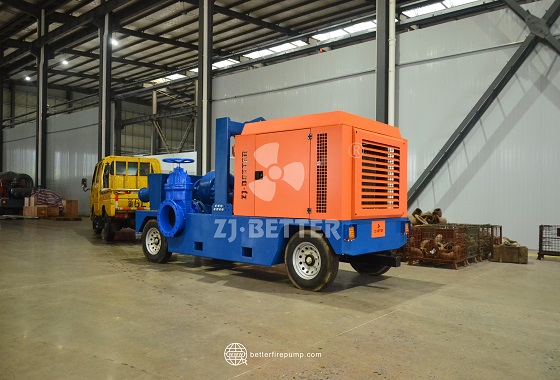
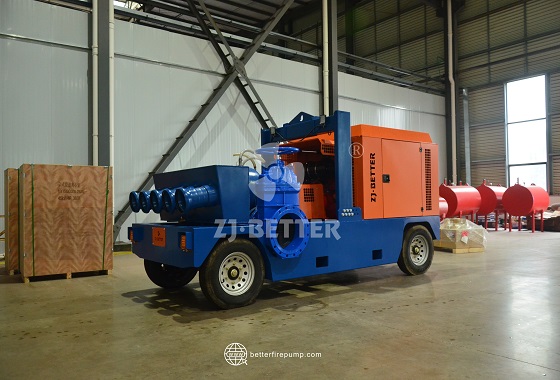
The protective enclosure-style trailer pump unit features an enclosed equipment compartment, ventilation louvers, and a dual-axle trailer chassis. By housing the power unit and auxiliary components within a single, integrated structure, it minimizes equipment exposure and facilitates easy transport and deployment—making it well-suited for temporary water supply, emergency drainage, and outdoor pumping operations.
A trailer-mounted enclosed pump unit is a comprehensive pumping system that integrates a water pump, a power source, and auxiliary components onto a mobile trailer platform. It is designed for water supply and drainage scenarios that require flexible relocation, temporary deployment, or outdoor operation. The unit is built on a trailer chassis, with the pump assembly and piping connections positioned at the front, while the power source and auxiliary equipment are housed within an enclosed, orange-colored cabinet—creating a self-contained equipment compartment. Compared to open-frame designs where key components are fully exposed, this enclosed configuration protects internal parts from rain, dust, and other environmental factors, while also reducing the risk of damage from external impacts during transport or on-site operations. The cabinet features side-mounted ventilation louvers to ensure airflow within the compartment; the specific ventilation rate and heat dissipation capacity are determined based on the heat output of the internal power equipment and the design of the enclosure. The pump is positioned outside the cabinet, with clearly accessible inlet and outlet ports, facilitating the connection of suction and discharge hoses as well as routine inspections and piping adjustments. The unit utilizes a dual-axle trailer chassis, allowing it to be towed by a compatible vehicle; this mobility enables the system to be moved between different work sites, eliminating the need for fixed pumping stations and their associated infrastructure requirements. The chassis serves as a unified foundation for the pump, the enclosure, and all other components, resulting in a compact, integrated layout that simplifies transport, on-site positioning, and equipment management. Depending on project requirements, the unit can be equipped with an independent power source—such as a diesel engine—enabling operation in areas lacking a fixed power supply. The specific type of pump, power rating, and auxiliary systems are selected based on the required flow rate, head, and the nature of the fluid being handled. The enclosed design not only enhances the unit’s appearance and overall organization but also allows for the centralized management of electrical and power components, minimizing the number of exposed parts and making inspection and maintenance more systematic. During maintenance, tasks are performed by accessing the unit through cabinet doors or designated service openings; regular checks should also be conducted to ensure that ventilation louvers remain unobstructed, cabinet fasteners remain secure, and all internal equipment is functioning correctly. These mobile pump units can be configured for a variety of applications, including temporary fire-fighting water supply, industrial emergency water supply, on-site drainage, and other engineering tasks requiring mobile pumping capabilities. They are particularly well-suited for projects where the construction of a fixed pumping station is impractical or where equipment needs to be deployed across multiple locations. For fire-fighting applications, the pump type, flow rate, head, power system, and control mechanism must be selected in accordance with fire protection system design requirements, ensuring compatibility with the on-site water source and piping infrastructure. Featuring a design that integrates a protective enclosure, an externally mounted pump, and a trailer chassis, the unit offers a comprehensive solution for outdoor or temporary pumping operations—balancing component protection, ease of access to pumping connections, and overall mobility. Specific performance parameters, enclosure protection ratings, ventilation and cooling designs, and power configurations should be determined based on the actual model and relevant technical documentation.