Deep Water Source Fire Pump – Separate Layout of Submerged Pump and Above-Ground Piping
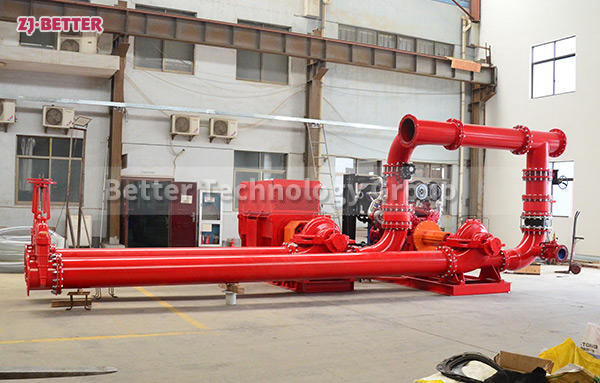
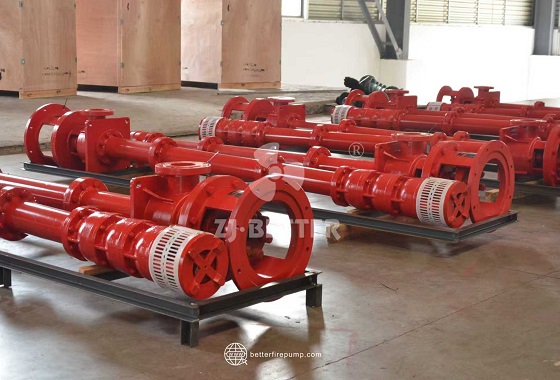
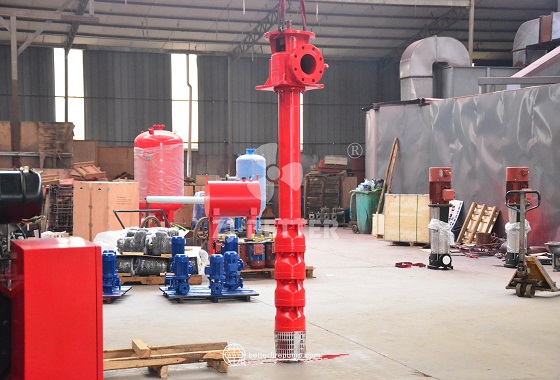
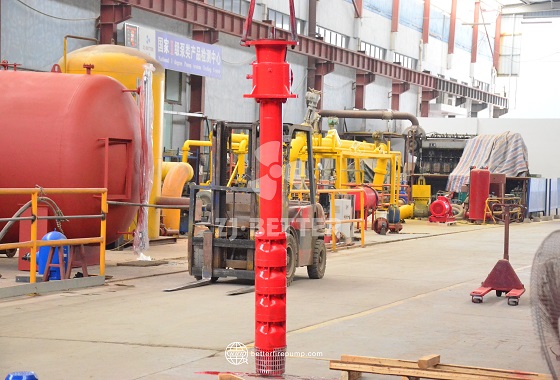
Deep-source fire-fighting water extraction pumps utilize a vertical turbine design, featuring a submerged pump unit separated from the surface-mounted drive assembly and discharge piping. Water from deep wells, fire-fighting reservoirs, or other low-lying sources is lifted via a long drive shaft and column pipes. These pumps are suitable for industrial applications and large-scale fire-fighting water supply systems.
A deep-source fire-fighting pump is a type of vertical turbine pump designed for applications requiring water extraction from deep wells, fire-fighting reservoirs, or other low-lying water sources. It features a design that combines a submerged pump unit with a surface-mounted drive and discharge assembly, utilizing a long drive shaft and column pipe system to transmit power and lift water. Unlike conventional horizontal fire-fighting pumps, this vertical configuration allows the pump body and impeller assembly to be submerged, positioning the intake close to the actual water level—an ideal solution for projects where fire-fighting water must be drawn from significant depths. The submerged portion consists primarily of the pump body, impellers, and intake components, while the surface-mounted section includes the pump head and a discharge interface that connects to the fire-fighting water supply network. The column pipes serve both as a conduit for water transport and as a housing for the internal drive shaft. During operation, the surface-mounted drive unit rotates the submerged impellers via the drive shaft; as water passes through the internal flow-guiding structures, its pressure is increased in stages before it is conveyed up through the column pipes to the surface discharge outlet and into the fire-fighting supply network. This separation of the drive mechanism from the pumping components makes the system well-suited for specialized water sources, such as deep wells or large reservoirs, and eliminates the need to submerge the entire drive assembly. Depending on the depth of the water source and specific installation requirements, the column pipes and drive shafts can be configured in various lengths and segments, with options for either flanged or threaded connections—facilitating transport, on-site assembly, and adaptation to well depth. For projects requiring a higher delivery head, the number of impeller stages can be adjusted based on hydraulic calculations to ensure the pump’s performance aligns with the requirements of the fire-fighting system. The surface-mounted discharge elbow and flanged interface provide convenient connection points for downstream piping, valves, and other related accessories. Because the primary drive unit is located above ground, it is easily accessible for routine inspections and maintenance; the submerged pump unit, meanwhile, requires periodic inspection based on the specific water source conditions, installation depth, and equipment design. Depending on the specific model, this type of equipment can be used to extract water from sources such as wells, rivers, lakes, and fire-fighting reservoirs. It is suitable for fire-fighting water supply systems in industrial facilities, energy installations, storage depots, and large-scale infrastructure. When selecting a model, it is necessary to comprehensively consider factors such as the minimum water level of the source, the dimensions of the wellbore or reservoir, required flow rate, total head, pipeline losses, drive mechanism, and water quality. Furthermore, the installation depth of the pump unit, the length of the column pipes, the configuration of the drive shaft, and the number of impeller stages must be determined appropriately. For water sources with high sand content or complex water quality, the materials for flow-path components and the design of the water intake structure should be selected based on specific site conditions. By utilizing a design that separates the submerged pump unit from the surface-mounted drive and discharge piping, these deep-source fire-fighting pumps integrate deep-water extraction, vertical transport, and connection to surface piping networks. This provides an effective solution for accessing low-lying water sources or deep wells—scenarios where conventional surface-mounted pumps are often unsuitable. Specific parameters—including flow rate, head, rotational speed, and material specifications—should be determined in accordance with the selected model and the technical requirements of the project.